Polypropylene fiber for mortar does one job well: it holds a fresh, thin cement layer together while it is still soft and losing water, so fewer early shrinkage cracks open in renders, screeds, block mixes and patch repairs. For that job you want a micro monofilament grade, usually 6 mm in thin mortar and render and 12 mm in screed, dosed per cubic metre of finished mortar. But it is not a cure for a weak base, a thick coat or a wall nobody cured. It also is not the answer for gypsum plaster or bitumen.
What micro fiber does in a thin cement layer
Micro fibers are fine filaments, about 0.01 to 0.3 mm across. According to ACI's note on micro and macro fibers, their main use is control of plastic shrinkage cracking, and they add little to hardened properties.
In the first hours, water rises to the surface while the solids settle. If the surface dries faster than that water arrives, the top shrinks over a layer that cannot follow, and it cracks. Researchers at Istanbul Technical University also name concrete temperature, air temperature, humidity and wind as the drivers. Since a render or screed has a large drying surface for a small volume, it sits right in that risk zone.
A 2016 paper on cement screeds with polypropylene fibers by Radulović, Jevtić and Radonjanin makes the same point for thin layers. The authors also note that the fibers cut through the capillary pores and slow bleeding. However, their shrinkage results show the limit too. Fiber made a clear difference at four days, yet by 126 days the fiber and plain mixes had nearly the same total shrinkage. So micro fiber works early, then the rest is up to the mix, the joints and the curing.
Also keep the role straight. The NPCA tech note on fiber reinforcement says micro fibers are not structural and should never replace steel reinforcement.
Choosing polypropylene fiber for mortar: 6 mm or 12 mm
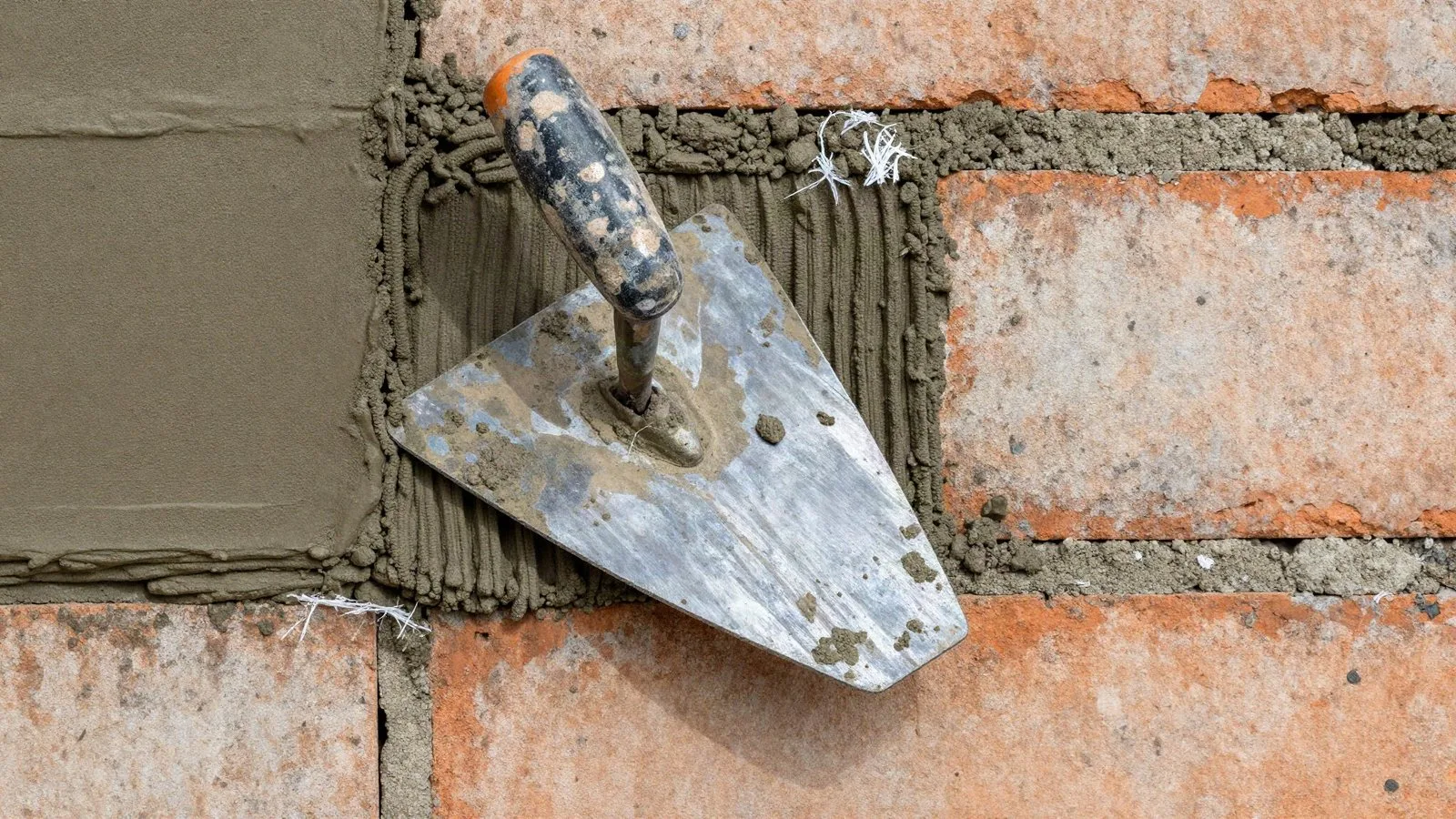
Our polypropylene concrete fibers page lists the micro grade, PG MS-12, in 6, 12 and 18 mm. For mortar work the choice is usually between the first two.
For screed, the screed paper gives a rule: fiber length about 3 to 3.5 times the largest aggregate grain. Therefore, with 0/4 mm sand, the rule gives 12 mm, which is what the authors used.
For render, thin mortar and patching, we suggest 6 mm. That is our reasoning, not a test result: finer sand and thin coats point the same rule to a shorter fiber, which is easier to keep under the trowel. For finish coats and decorative layers, see our decorative mortar guide. Still, a trial panel settles the choice in every case.
Dosing by the cubic metre of mortar, not by the bag
The dose for PG MS-12 is 0.6 to 1.2 kg per cubic metre. In mortar, that means per cubic metre of mixed mortar, not per bag of cement. For reference, the screed study used 12 mm fiber at 900 to 1000 g per cubic metre of mortar, inside the same band. Also, our technical team sets the exact figure for your mix and layer at no cost.
Site crews think in bags, so convert. First, find the volume one mixer load really makes. Fill a bucket of known volume and count the buckets per load. Then multiply that volume by the dose. For example, if a load fills twelve 10-litre buckets, it makes 120 litres, or 0.12 m³. At 0.9 kg/m³, therefore, that load takes 108 g of fiber. If you use a pre-bagged dry mortar, take the yield printed on the bag instead.
| Mortar per load | At 0.6 kg/m³ | At 0.9 kg/m³ | At 1.2 kg/m³ |
|---|---|---|---|
| 50 litres | 30 g | 45 g | 60 g |
| 100 litres | 60 g | 90 g | 120 g |
| 150 litres | 90 g | 135 g | 180 g |
One trap is the packaging. Our fiber comes in 3 kg and 5 kg water-soluble bags, and one 3 kg bag doses 2.5 to 5 m³ of mortar. Therefore, never drop a whole bag into a small mixer. Instead, open it, weigh each load on a cheap scale, and keep the rest dry and closed. The PP fiber dosage guide explains the concrete side of dosing.
Mixing fiber in a small site mixer
Because drum and paddle mixers have far less shear than a plant mixer, even dispersion takes care. ACI's FAQ on mixing fibers says batch size or mixing time may need to change.
- First, load sand, cement and most of the water, and mix until the mortar is uniform. NPCA notes that fibers rarely go in at the start, because loose fibers in an empty drum can clump.
- Next, tease the weighed fiber apart by hand and sprinkle it in while the mixer runs.
- Then mix for a few extra minutes and check a handful. If you still see knots, mix longer or make the next load smaller.
- Finally, resist the hose. Fibers do not need extra water, as ACI explains on workability, and extra water makes a weaker, more crack-prone mortar.
Render, screed, blocks and repair mortar, job by job
Cement render on walls
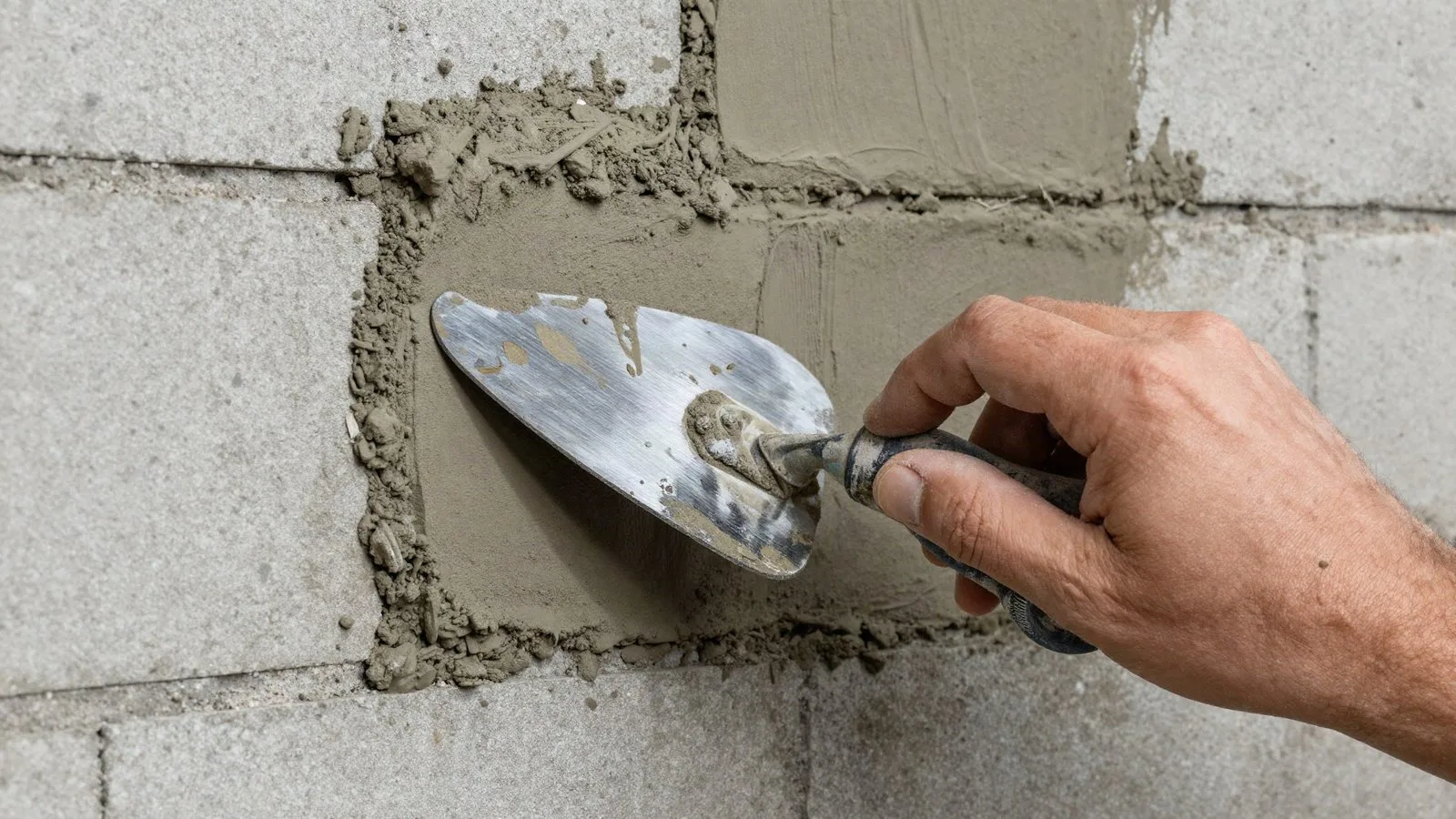
Wall render is the plainest case for polypropylene fiber for mortar. In particular, the fiber helps against the fine early cracks that open when fresh render dries too fast in sun or wind. But each coat still needs the right thickness, a sound base and moist curing.
Floor screeds
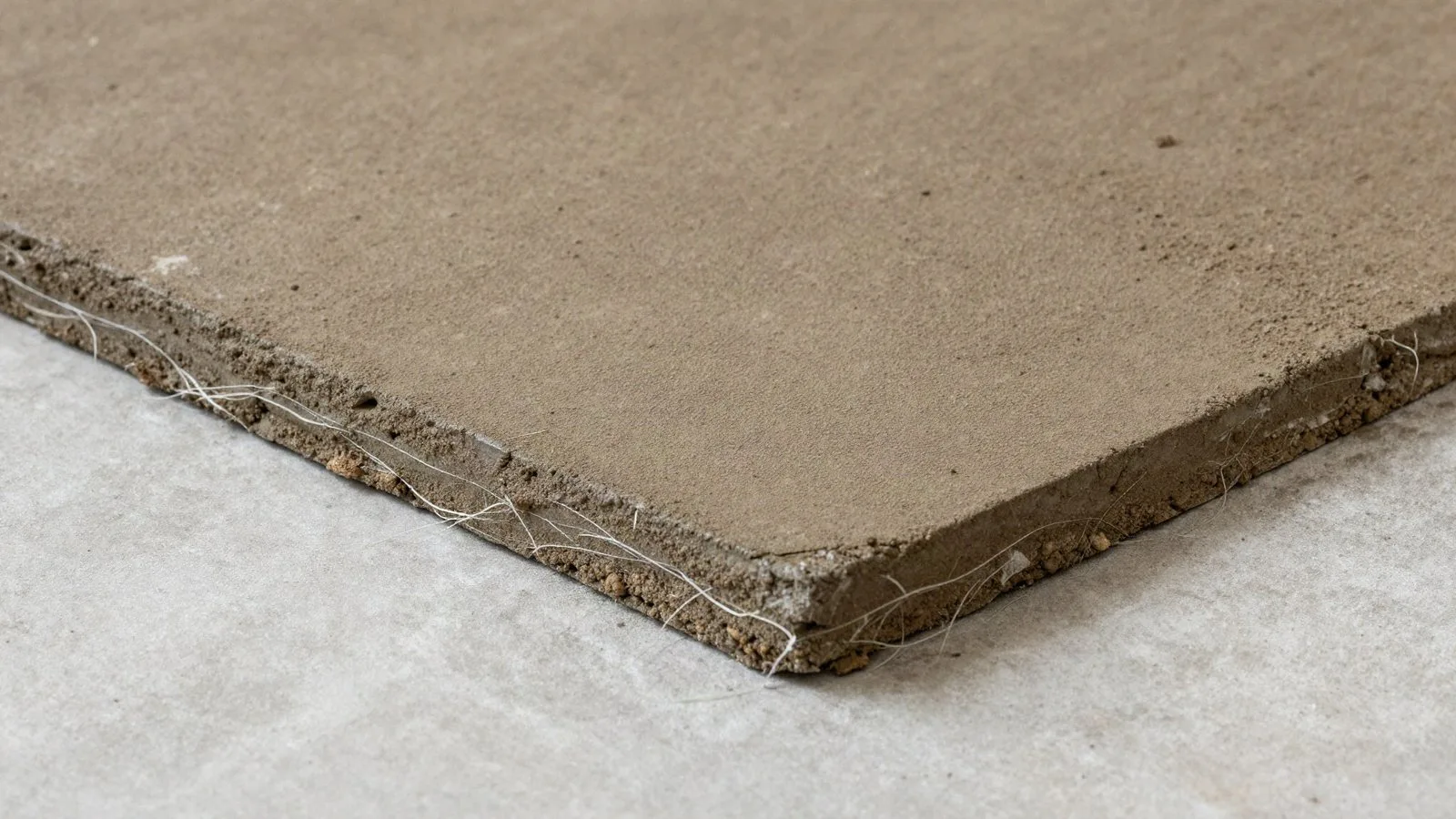
Here, 12 mm is the usual length. If your specification cites EN 13813, remember it is a material standard. It covers properties such as setting time, strength, wear and shrinkage, plus conformity and marking. Its scope says nothing about fiber, so any fiber you add still needs testing against the classes your screed must meet.
Concrete blocks and small precast
Block machines run very stiff, low-water mixes. That matters, because NPCA notes that balling usually comes from adding fibers to mixes that are too dry or short of fines. So run a trial on your own machine before a production day, and break a few cured units to look for clumps. Also see our precast quality article for the wider picture.
Repair mortars
Many repair mortars come pre-bagged with their own additives. If the data sheet already lists fiber, or does not allow additions, add nothing. For a site-mixed patch mortar, however, treat it like render: 6 mm fiber, a clean and damp base, and curing.
Gypsum plaster, bitumen and joint filler
Buyers on online shops often ask whether the same fiber suits gypsum plaster, blocks, bitumen or joint filler. Blocks are covered above. The other three need a narrower answer.
However, gypsum plaster uses a different binder from cement. We have not found a published test on site-added PP micro fiber in gypsum plaster that we would cite, so we make no claim for it. If you want to try, do a trial patch on the real wall and judge it yourself.
Bitumen and asphalt are another field. For asphalt mixes there is a separate grade, PG AS-20, dosed by mix weight, and the asphalt page explains it. For bituminous or sealant joint fillers, first ask the sealant maker before adding anything.
What fiber will not fix in render and screed
Fiber cannot rescue bad practice. The screed study found hand-placed samples reached a density of only 1400 to 1700 kg/m³, against about 2000 kg/m³ when vibrated. In other words, compaction decided quality more than any additive.
Similarly, walls follow the same rule. A render laid too thick in one pass, left uncured in wind, or put on a dusty, weak or dry base will crack with or without fiber. Micro fiber also does not replace movement joints, and it does little for drying shrinkage later on. So fix those first, then use polypropylene fiber for mortar to deal with the early hours.
Before a large job, run a small trial. Our trial mix plan suits mortar too, and we send a free sample. If you are comparing suppliers, our virgin fiber checks show what to ask a concrete fiber supplier for, including a batch QC certificate.
Frequently Asked Questions
Should I use 6 mm or 12 mm polypropylene fiber in mortar?
For floor screed with 0/4 mm sand, 12 mm follows the rule of about 3 to 3.5 times the largest grain used in a published screed study. For thin render and patch mortar we suggest 6 mm, which is practical reasoning rather than a test result, so confirm it with a trial panel.
How much polypropylene fiber do I add to a small mixer of mortar?
Work out how much mortar one load makes, then multiply by the dose. PG MS-12 is dosed at 0.6 to 1.2 kg per cubic metre of finished mortar, so a 100-litre load takes 60 to 120 g. Weigh it instead of adding a whole bag.
Does polypropylene fiber work in gypsum plaster?
We have not found a published test on site-added PP micro fiber in gypsum plaster that we would cite, so we make no claim for it. If you want to try it, make a trial patch on the real wall first.
Do I need to add more water when I add fiber to mortar?
No. Fibers do not need extra water, and extra water weakens the mortar. Mix a little longer instead, and check a handful for clumps.
Will fiber stop my render from cracking?
It helps with early plastic shrinkage cracks while the render is fresh. It will not fix a coat that is too thick, a render left uncured in sun or wind, or a weak, dusty or dry base.