Price fiber reinforced ready mix concrete the way you price any other product: build the cost per cubic metre from its line items, then add the margin you choose. The lines are the fiber, the extra drum time, any admixture change, dosing labour, quality control and an allowance for rejected loads. None of them needs a guess. Each one is a short formula fed by your own plant records.
This guide takes the plant's side, but buyers run their own sum: see how buyers work out concrete fiber cost per cubic metre.
Decide the products before the price
Contractors ask for a screed that will not craze, or a warehouse floor with fewer joints, not for "fiber concrete". So start with a short menu of standard mixes, each tied to one kind of job. Then every quote points to a product code, and nobody invents a dose on the phone.
Micro fiber controls plastic shrinkage cracking in the first hours. Macro fiber, however, carries load across a crack after it opens, so its dose comes from a design. The bands below are Polyguard's published ranges.
| Standard mix | Typical jobs | Fiber grade | Dose band (kg/m³) |
|---|---|---|---|
| Micro flatwork mix | Screeds, footpaths, house slabs | PG MS-12 micro, 6, 12 or 18 mm | 0.6–1.2 |
| Crack-control slab mix | Slabs where the design uses fiber for crack control | PG EC-45 macro, 45 mm | 2–4 |
| Industrial floor mix | Warehouse floors, slabs on ground | PG MF-54 macro, 54 mm | 3–7, designed dose |
| Shotcrete mix | Tunnel and slope lining | PG SC-48 macro, 48 mm | 4–9, designed dose |
Keep the micro mix as a fixed product with one dose. For macro mixes, fix the base concrete and let the dose vary by order. The micro grade is one of our polypropylene concrete fibers, while the floor and shotcrete grades are macro synthetic fibers for concrete. All of them are on the products page.
The cost model for fiber reinforced ready mix concrete
Write the surcharge as a sum, with every term per cubic metre:
Surcharge = fiber + mixing + admixture + dosing + QC + rejects + margin
1. Fiber cost per cubic metre
This is the easy line: fiber cost per m³ = dose (kg/m³) × price per kg. But the plant buys in bags, so also check how bags fit your loads. Polyguard packs fiber in 3 kg and 5 kg water-soluble bags. For example, a 0.9 kg/m³ dose on a 6 m³ load needs 5.4 kg, which is not a whole bag count. However, 1.0 kg/m³ on the same load is exactly two 3 kg bags. So for a fixed micro product, pick a dose inside the band that splits into whole bags. Part-bags also cost labour, because Iran's Code 120-4 asks for opened and left-over bags to be weighed again.
2. Extra mixing time and the truck cycle
Fiber also needs drum revolutions. For a transit mixer, ACI advises adding fibers steadily into the turning drum after all other ingredients, at 10 to 12 rpm. Then mix for at least 40 revolutions, about 4 to 5 minutes. With a central mixer, mixing time is similar to plain concrete. The NPCA fiber best-practice note is more cautious: 3 to 5 minutes at high speed, or 70 revolutions in a mixer truck. Your trial batches decide.
Then cost it: extra minutes ÷ 60 × truck cost per hour ÷ load volume. If the truck mixes under the plant, add the bay's time too, because the next truck waits.
3. Plasticiser adjustment
Fiber lowers the slump reading, but part of that loss is only apparent. ACI notes that fibers do not need extra water. At low to moderate doses, a water reducer usually holds the slump without changing the water-cement ratio. So the line is extra admixture dose × admixture price, plus any added paste at higher doses. Take the figure from your trial batch. Never price in water, because water changes the mix you sell.
4. Dosing labour and the dispensing method
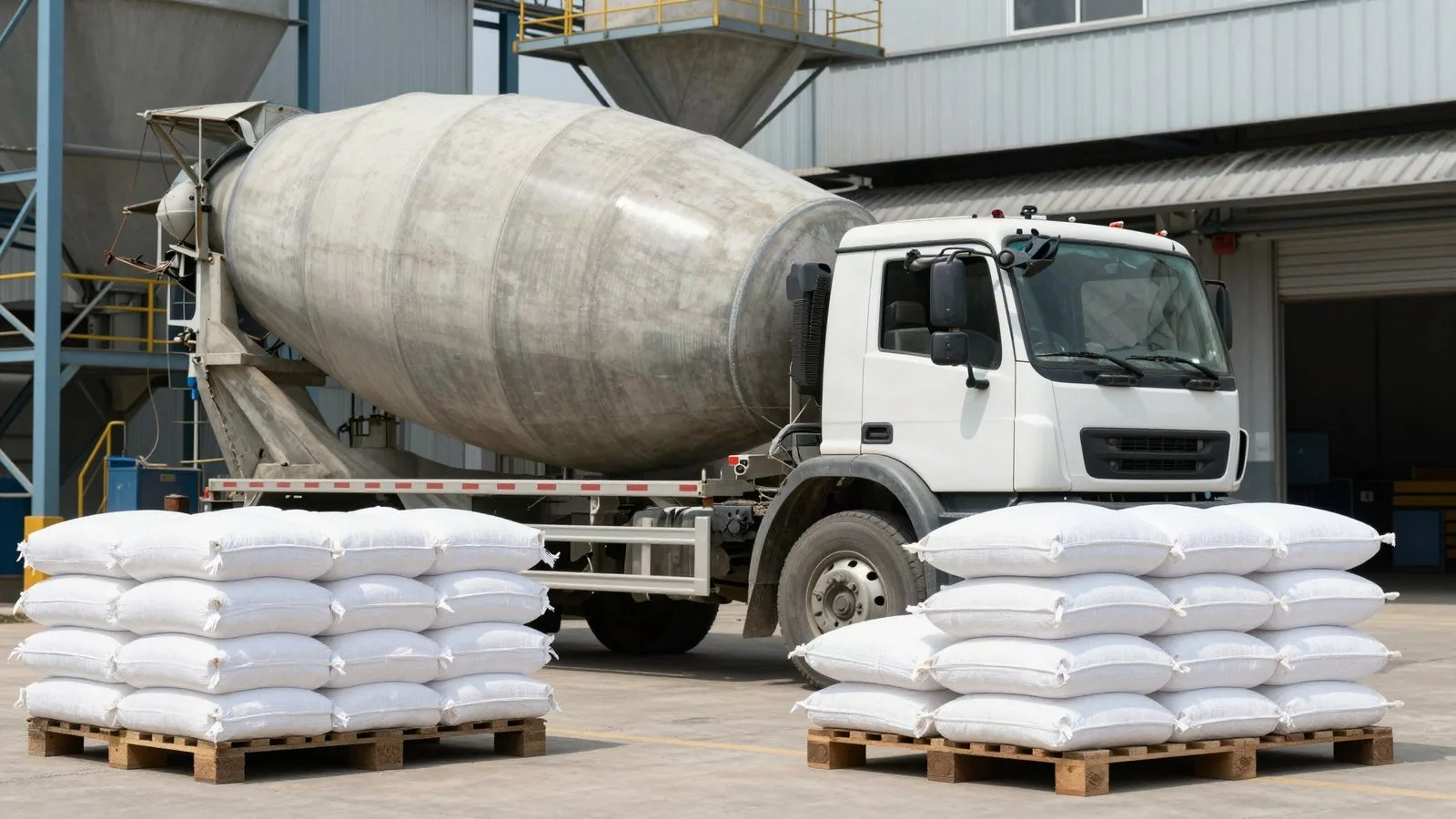
There are three common methods. First, whole water-soluble bags dropped in by hand. Second, loose fiber weighed for each load. Third, a blower tied to the batch computer. Bags cost least to set up and are easy to check, because you count bags, not grams. Weighing suits odd doses, but it adds a scale, a person and a record. A blower costs money up front, yet it logs the dose on every ticket.
Sequence matters too. NPCA notes that plants rarely add fiber at the start of batching, since loose fibers in an empty drum can clump. So follow your supplier's instruction on where the bags go. Then cost the line: labour minutes per load × rate ÷ load volume, plus any equipment cost spread over your yearly fiber volume.
5. Quality control: washouts, records and sampling
A plant that sells fiber reinforced ready mix concrete should be able to prove the dose, and a washout check does that. Take a known volume of fresh concrete from the chute and wash it over a sieve. Then dry and weigh the fibers and compare the result with the ticket. The check also shows whether fibers came out separate or in balls.
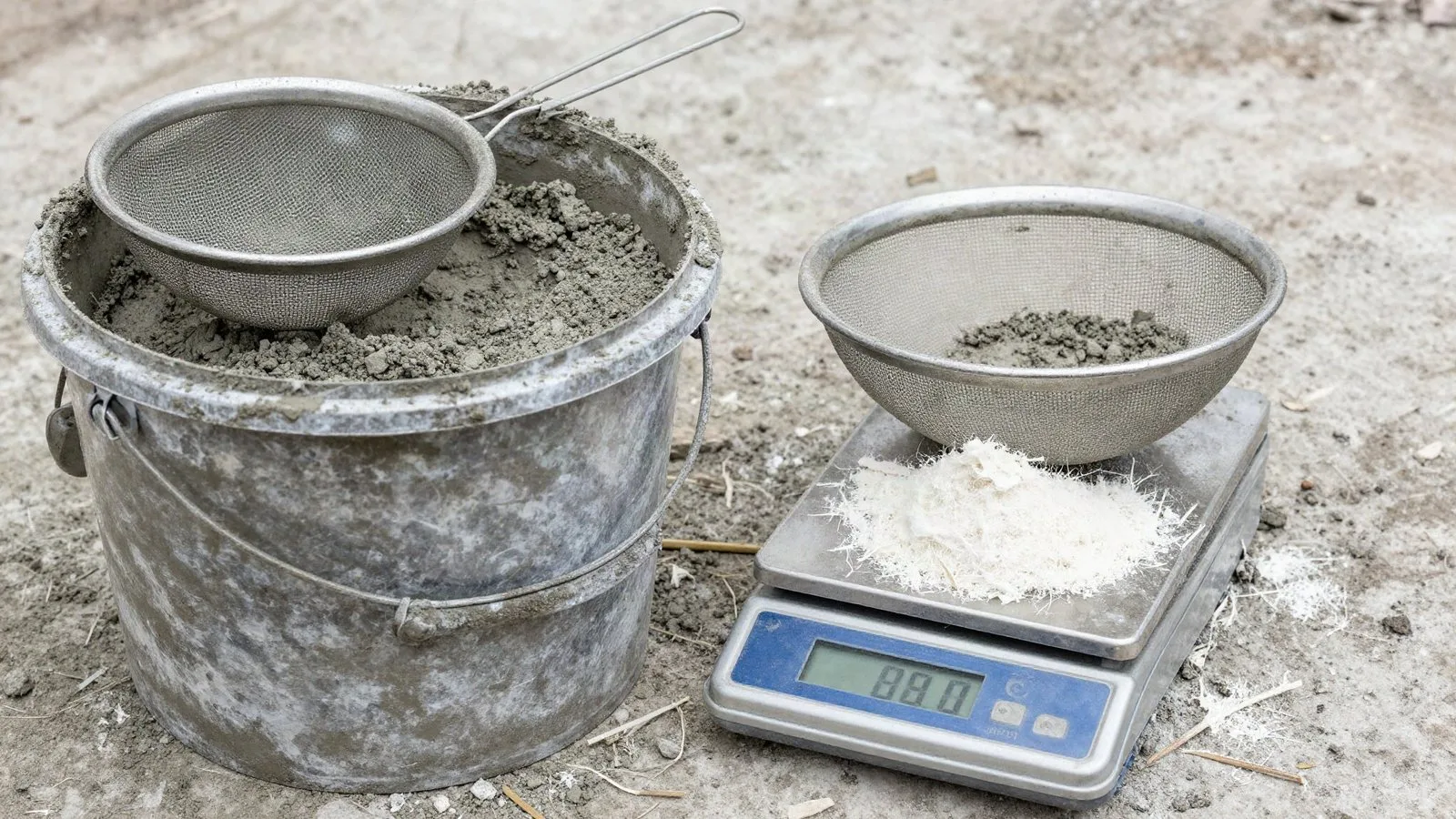
In Iran, Code 120-4, the quality-control guideline for concrete with polyolefin fibers, sets the minimum sampling rate for hardened fiber concrete. That is one sample per 115 m³ for batch mixing, or per 19 m³ for continuous mixing, and at least once a day for each class. It also requires delivered concrete free of balled fibers. So the QC line is the month's washout, test and record costs ÷ fiber cubic metres sold that month.
6. Returns and rejections
Balling is the classic reason a site turns a fiber load away. NPCA links it to mixes that are too dry, mixes short of fines, and fibers added into an empty drum. Most of those causes sit at the plant, so the cost sits there too. Price it from your own records: rejected m³ ÷ fiber m³ sold × full cost of one rejected m³. Until you have that history, use your trial results and review the figure every month.
Setting the per-cubic-metre surcharge
Add the six lines, then your margin, and you have one surcharge for each standard mix. For macro products, a two-part quote is cleaner: a fixed handling surcharge per m³, plus fiber at dose × price per kg. Then a dose change on the drawing changes one number only.
- Show the fiber grade and dose on the quote and the delivery ticket.
- Set a minimum load if part-bags make small loads expensive.
- Run the sum again when the fiber price, haul pattern or reject record changes.
The fiber calculators handle the dose-to-kilograms arithmetic for each load.
What contractors ask before they order
- Will it lose strength? At typical doses, ACI calls the effect on compressive strength marginal to negligible.
- Can we add water on site? No. The plant adjusts workability with admixture.
- Does it replace mesh? Fiber can replace crack-control mesh and temperature steel where the design permits it. It never replaces rebar or structural reinforcement.
- What dose do we need? Micro mixes have one fixed dose. A macro dose comes from the design, for example on industrial floors.
Why documentation sells fiber concrete
Engineers buy evidence. First comes a ticket with grade, dose and bag count. Second comes the supplier's paperwork, which you pass on. Polyguard issues a QC certificate for every production batch and a data sheet, and on request it issues test reports for the method a specification names. The fiber is 100% virgin polypropylene, made under an ISO 9001 quality system. Then add your own washout and test records, so a consultant can approve your fiber reinforced ready mix concrete from one file.
Launch with a trial, then publish the list
Before the first paid load, run each standard mix on your own trucks. Then record slump before and after fiber, revolutions, washout results and any balling. Polyguard supplies a free sample for trial batching, and its technical team designs the macro dose from section, loading and exposure at no charge. For industrial floors, the team can also attend the first pour on request. Our trial mix test plan lists what to measure. Finally, talk to a concrete fiber supplier that backs every bag with a certificate.
Frequently Asked Questions
How should a ready-mix plant work out the fiber cost per cubic metre?
Multiply the dose in kilograms per cubic metre by the price per kilogram. Then check that the dose times your usual load volume gives a whole number of bags, or allow for weighing loose fiber.
How long does fiber concrete need in a truck mixer?
ACI advises adding the fibers into the turning drum after all other ingredients and then mixing for at least 40 revolutions, about 4 to 5 minutes. With a central mixer, mixing time is similar to plain concrete. Trial batches on your own trucks set the final figure.
Should the plant add water when fiber lowers the slump?
No. Fibers do not need extra water. At low to moderate doses a water reducer usually holds the slump without changing the water-cement ratio, so price the extra admixture, not water.
How often should hardened fiber concrete be sampled?
Iran's Code 120-4 sets at least one sample per 115 cubic metres for batch mixing, or per 19 cubic metres for continuous mixing, and at least once a day for each class.
Should the fiber surcharge be one figure or two?
For micro mixes with a fixed dose, one surcharge per cubic metre works. For macro mixes, quote a fixed handling surcharge plus fiber at dose times price per kilogram, so a dose change on the drawing changes only one number.