Fiber reinforced shotcrete can take the place of welded mesh in the sprayed facing of an excavation or a cut slope. However, it does so only where the designer permits it, and only after sprayed test panels prove the dose. The nails, anchors and any structural steel stay where they are. What changes is the slowest step of the cycle: fixing mesh to an uneven wall before each spray pass. This guide covers how the choice works on site, what it means for rebound, how the ASTM C1550 round panel test fits in, and where a macro fiber dose of 4 to 9 kg/m³ comes from.
Where sprayed facings carry the job
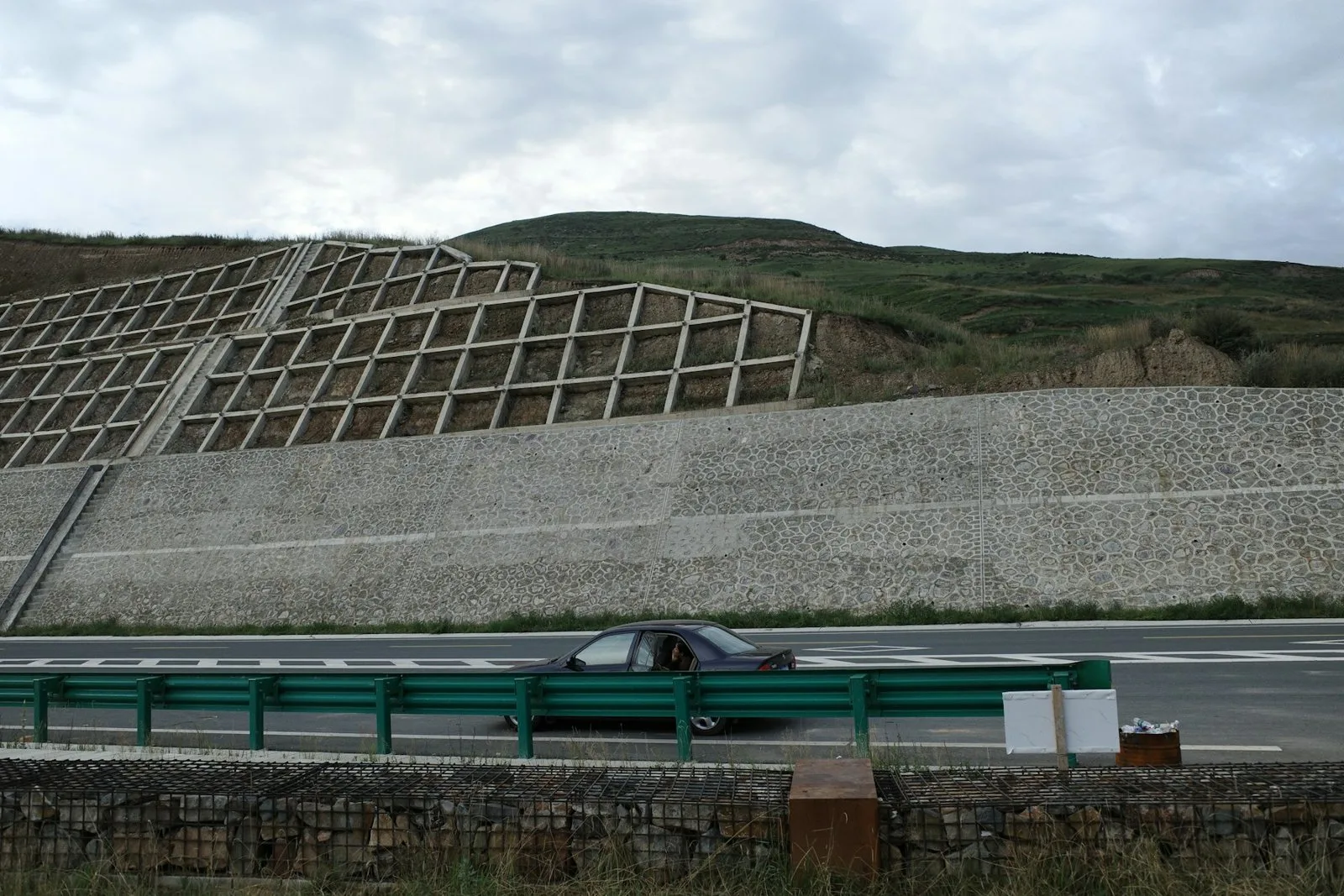
A deep basement in a city, a road cut or a rail cutting all share one problem. The ground has to stand while the work goes on. On most such sites the crew digs in shallow lifts. Then they drill and grout soil nails or anchors, and spray a facing that holds the soil between them. The classic facing is steel mesh pinned to the face, then covered with shotcrete.
Fiber offers another route. ACI's guide to fiber-reinforced shotcrete lists slope stabilization and retaining structures among its applications. It also notes that macro synthetic fibers for shotcrete appeared in the mid-1990s. Since then, mines, tunnels and slope projects have used them more and more.
Fiber reinforced shotcrete or mesh: what changes on site
Mesh is simple on paper but slow at the face. Each sheet has to be cut, bent to a profile that is never regular, lapped and pinned. During that time people work under freshly cut ground. In addition, the bars stand in the way of the spray. Concrete can leave voids behind them, and the mesh catches rebound that then gets buried in the facing.
With fiber, the reinforcement arrives in the mix. It follows every bump of the excavated profile and spreads through the full thickness of the facing. Synthetic fiber also does not rust, which matters in a wet cut. For these reasons, the same ACI guide says fiber shotcrete is chosen where its flexibility and safer application beat bar or mesh, or where only limited tensile forces are expected.
| Point | Welded mesh facing | Macro fiber facing |
| Placing the reinforcement | Cut, bend, lap and pin at the face | Added to the mix at the plant or in the truck |
| Fit to an uneven profile | Never exact | Follows the sprayed surface |
| Spray path | Bars block it, with risk of voids behind them | No bars in the way |
| Corrosion in wet ground | Steel can corrode | Polypropylene does not corrode |
| Proof of performance | Bar size and spacing on the drawing | Sprayed panel tests to the specified standard |
What fiber does not replace
Fiber replaces crack-control mesh only where the design permits. It never replaces the nails, the anchors or the walers. It also does not replace structural reinforcement that a permanent wall needs for bending. If the drawing shows bars for that purpose, they stay.
Similarly, fiber at normal doses changes compressive strength very little. Iran's Code 120-4 for polyolefin fiber concrete says the same. So the mix still needs its own strength design, and the fiber adds post-crack capacity on top of it.
Rebound, and why the mesh matters
Rebound is the material that bounces off the wall instead of sticking to it. It falls at the toe of the slope, and good practice never sprays it back. Several things drive it: nozzle angle, distance, air pressure, mix and the surface itself. For example, a nozzle held at an angle instead of square to the wall throws off more material.
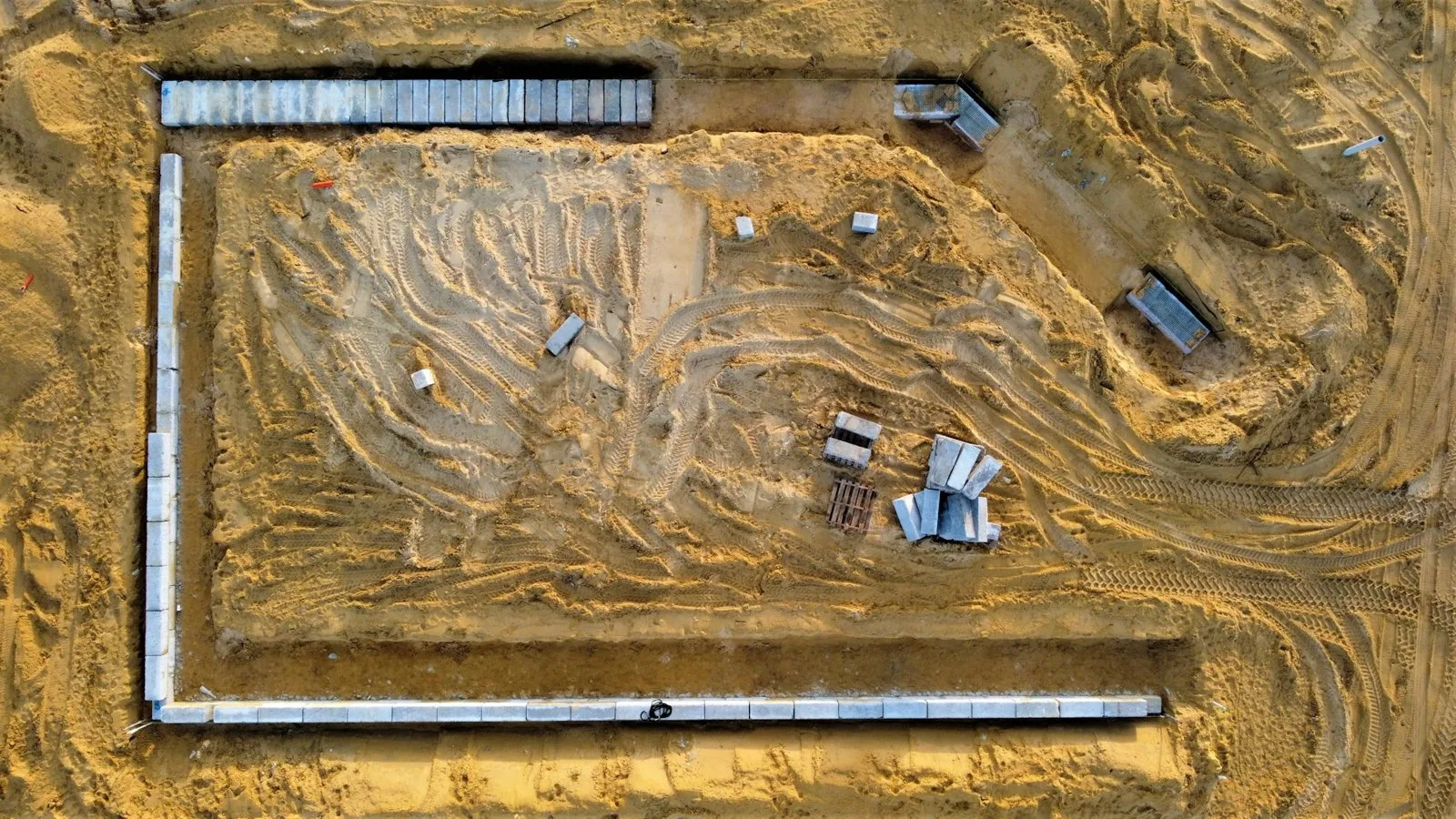
Mesh adds one more mechanism. When the crew sprays through a mesh curtain, the bars deflect the stream and trap rebound behind them. Taking the mesh away removes that mechanism. Still, actual rebound depends on nozzle technique, mix and profile, so no fiber turns a poor operator into a good one.
Rebound also explains why the test has to use sprayed concrete. Then the panel holds what actually stays on the wall, not what left the truck.
Choosing the fiber and the dose
A sprayed facing needs post-crack capacity. That is why fiber reinforced shotcrete for ground support relies on macro synthetic fibers for concrete. Fiber length matters here. According to ACI, shotcrete fibers are usually shorter than those used in cast concrete, because the hose diameter and the pump set the limit. Our shotcrete and tunnel grade, PG SC-48, is a 48 mm macro fiber made for wet and dry spraying.
Its dose band is 4 to 9 kg/m³ of concrete. Where a project sits in that band depends on the facing thickness, the ground, the exposure and the energy the specification asks for. Polyguard's technical team designs that dose free of charge from those inputs. Then a trial on your own mix confirms it.
Thin facings in sun and wind also crack early from plastic shrinkage. ACI notes that micro synthetic fibers are added to shotcrete for that reason. Here fine polypropylene concrete fibers such as PG MS-12 can go in at 0.6 to 1.2 kg/m³, each fiber at its own dose. Finally, never add extra water to a wet mix to make the fiber concrete spray easier. Fix workability with admixture instead, and record the amount.
Testing fiber reinforced shotcrete with the ASTM C1550 panel
ASTM C1550 tests a round panel 75 mm thick and 800 mm across. The panel sits on three pivots, and a load presses on its centre until it cracks and deflects. What it reports is the energy the panel absorbs up to a set central deflection.
The standard ties that deflection to the job. A 5 mm limit suits linings that must keep cracks tight, such as watertight final linings. A 40 mm limit, in contrast, suits ground that deforms a lot, such as mine linings or temporary linings in swelling ground. ASTM also notes that sprayed panels represent the real lining better than cast ones, because spraying aligns the fibers differently.

Code 120-4 also lists C1550 among the flexural tests for polyolefin fiber concrete, next to C1609 and C1399. In practice, the same crew sprays the panels with the same mix and pump before work starts. After that, production panels follow at the frequency the specification sets. Our Code 120-4 guide covers sampling for fiber concrete in more detail.
A sequence for the first fiber reinforced shotcrete wall
Most problems with a sprayed facing start before the first pass. Therefore it pays to fix the order of work early:
First, send the drawing, the ground report, the facing thickness and the required energy class.
Next, agree the grade and the dose band, and get the data sheet and the mixing sequence for wet or dry spraying.
Then run a trial mix and spray C1550 panels with the real crew and pump.
At the start of production, check the nozzle stream for balled fibers and stop if they appear.
Finally, keep spraying panels at the specified rate and log every batch.
If you are comparing a steel option too, our note on steel fiber for concrete sets out the differences. When you are ready to price a fiber reinforced shotcrete facing, a concrete fiber supplier should put the grade, the dose and the test plan in writing. Polyguard sends a free sample for the trial and issues a QC certificate with every production batch.
Frequently Asked Questions
Can fiber replace mesh in shotcrete for excavation support?
Yes, where the designer permits it. Macro fiber can replace the crack-control mesh in the sprayed facing, but the nails, anchors, walers and any structural reinforcement for bending stay as drawn.
What dose of macro fiber goes into fiber reinforced shotcrete?
For Polyguard's 48 mm shotcrete grade, PG SC-48, the band is 4 to 9 kg per cubic metre of concrete. The point in that band depends on facing thickness, ground, exposure and the energy the specification asks for, and a sprayed panel trial confirms it.
How is fiber reinforced shotcrete tested?
Usually with the ASTM C1550 round panel: a sprayed panel 75 mm thick and 800 mm across, supported on three pivots and loaded at the centre. The result is the energy it absorbs up to a set central deflection, such as 5 mm or 40 mm.
Does fiber reduce rebound in shotcrete?
Removing the mesh removes the bars that deflect the spray and trap rebound behind them. Actual rebound still depends on nozzle angle, distance, air, mix and surface.