Curing fiber reinforced concrete works the same way as curing plain concrete. You keep the slab moist and above 10 °C from the end of finishing, for at least 3 to 7 days or for as long as the specification says. Fiber controls how cracks form, but it adds no water and does not shorten that period. The parts that do change with fiber are at the surface: when you finish, how you keep fibers down, and which curing method a later coating will accept.
Why fiber does not replace curing
Curing keeps water and warmth in young concrete so the cement can keep reacting. NRMCA's guide to curing in-place concrete (CIP 11) says concrete left in a dry environment can lose as much as half of its potential strength compared with moist-cured concrete. It also links good curing to a harder, more wear-resistant surface, fewer cracks and more watertight concrete.
Fiber works on a different problem. NRMCA's note on plastic shrinkage cracking (CIP 5) says synthetic fiber can help resist tension while the concrete is still very weak. Later on, macro fiber at its minimum dose is enough to control shrinkage and thermal cracks, according to ACI. Control is not the same as prevention, though. Curing is what keeps cracking low and the surface hard. So a poorly cured fiber slab still cracks more and wears faster. That is why curing fiber reinforced concrete is never optional.
Protect the surface before curing starts
The risky hours come before any curing method goes on. CIP 11 asks for the surface to be protected from moisture loss until final finishing, using fogging or an evaporation retarder. A retarder only slows drying before the concrete sets, so it is never the final cure.
CIP 5 lists the conditions that dry a surface fastest. These are wind above about 8 km/h, low humidity and high air or concrete temperature. Micro fiber such as polypropylene concrete fibers at 0.6 to 1.2 kg/m³ targets this early cracking. However, it is one precaution among several, not a substitute for shade, windbreaks and fog.
Finishing time matters too. Fiber concrete bleeds evenly and can look ready before it is. If you trowel too early, you drag fibers up into the surface. Our guide to fibers sticking out of concrete covers the finishing sequence step by step.
Methods for curing fiber reinforced concrete
CIP 11 sorts the methods into two groups. One group adds water to the surface. The other keeps the mix water from escaping. Both work on fiber concrete. Therefore, choose by the job, the weather and what will go on the surface later.
Water curing
Continuous fogging or sprinkling is an excellent method, provided the air stays above freezing and water is always on hand. Ponding is the most thorough option, but it is rare and is mostly used on small slabs and bridge decks. Wet burlap or cotton mats also work. Keep them wet and weighted down, and use mats that will not stain the surface. Above all, do not let the slab dry out between soakings. CIP 11 is clear that alternate wetting and drying is not an acceptable curing practice.
Plastic sheets and curing paper
Sheets should conform to ASTM C171, and plastic should be at least 0.10 mm thick. Lay the sheet flat on the concrete as soon as you can without marking the surface. Then overlap and tape the edges, weigh them down, and let the sheet run past the slab edge by twice the slab thickness. Use white sheets in warm weather, since they reflect sunlight. In cool weather or shade, clear or black sheets are better because they absorb heat. Wrinkles leave dark streaks, so avoid plastic where appearance matters.
Liquid curing compounds
Membrane-forming compounds should meet ASTM C309 or C1315. Spray them at the maker's rate as soon as the water sheen has gone after final finishing. If you wait until the surface has dried, the film will not form properly. A white pigment reflects sunlight and also shows you where the coverage is thin. For even cover, CIP 11 suggests two coats at right angles to each other.
| Method | Suits | Watch out for |
| Fogging, sprinkling, wet burlap | Hot weather, steady water supply | Drying between soakings |
| Plastic sheet or curing paper | Slabs that can be covered early | Wrinkles, lifted edges, marks on show surfaces |
| Curing compound | Large floors, pavements | Late spraying, thin coverage, a later coating |
When to start and how long to cure
Timing is where curing fiber reinforced concrete most often goes wrong. Start curing as soon as placement and finishing are complete. Then keep it going for the period in the specification, or at least 3 to 7 days. Keep the concrete above 10 °C. Hot concrete gains early strength fast, but its later strength may be lower, and water curing helps keep it cool.
In cold weather, CIP 11 asks that concrete should not cool faster than 3 °C per hour in the first 24 hours. It also needs protection from freezing until it reaches at least 3.5 MPa. Finally, end the curing gently. Let covers dry before you lift them, and take insulation off in stages. The fiber dose changes none of these numbers.
Curing compounds, surface fibers and coatings
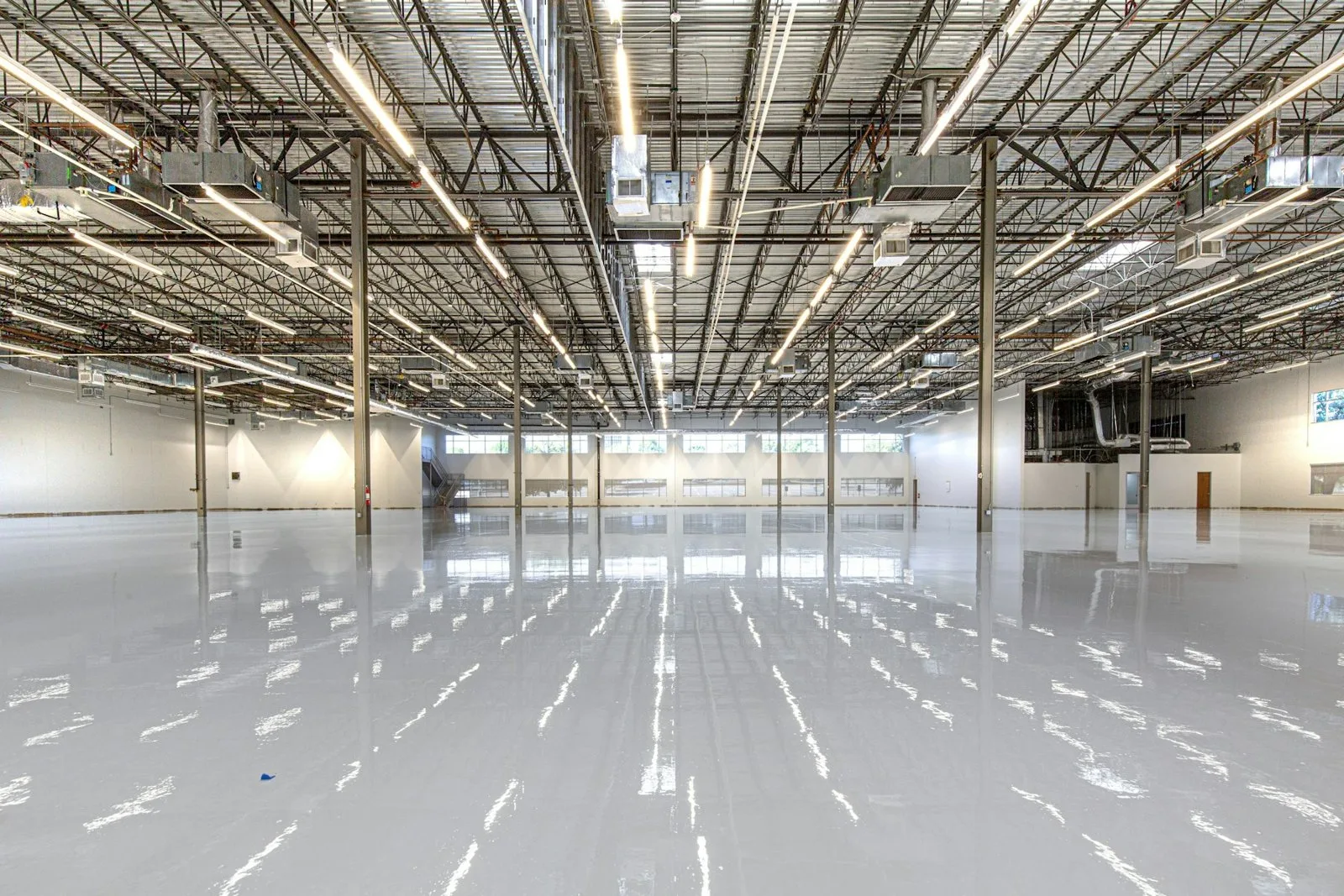
A floor that will get epoxy, a sealer or a bonded topping needs one extra decision when curing fiber reinforced concrete. Any coating bonds only to what is on top. For example, a curing film that stays on the slab can come between the concrete and the coating. CIP 11 therefore recommends wax-free curing materials for surfaces that will be painted or covered. It also notes that some compounds are made to break down over time and suit surface treatments.
So agree the curing method with the coating installer before the pour, not after. Our guide to epoxy over fiber concrete sets out that conversation in full. Still, do not skip curing just to make coating easier. The slab needs the curing more than the installer needs a clean surface.

Fibers that stand up from the surface are a finishing issue, not a curing one. A sheet or a sprayed film will not lay them back down. On coated floors, the installer usually deals with them during preparation, with a primer coat that stiffens the fibers before sanding.
A site checklist for curing fiber reinforced concrete
Before the pour, agree the curing method, and check it suits any coating planned for the floor.
Next, have sheets, compound and sprayers on site before the first truck arrives.
If wind, sun and dry air line up, set up shade, windbreaks and fogging.
Finish late, then start curing the moment finishing ends.
Also keep covers in contact with the slab and wet methods wet, with no dry gaps.
Finally, cure for the full specified period, then let the slab dry slowly.
If a fiber slab cracks despite all this, our guide to fiber reinforced concrete cracks helps you read the cause. For slabs on ground, the crack-control fiber is usually macro synthetic fibers for concrete, for example PG MF-54 at 3 to 7 kg/m³. It can replace crack-control mesh and temperature steel only where the design permits. As your concrete fiber supplier, Polyguard designs the dose from your section, loading and exposure. On request, our team also attends the first pour on industrial floors, where finishing and curing are agreed on the day. New to the material? Start with how concrete fiber works.
Frequently Asked Questions
Does fiber shorten the curing time of concrete?
No. Fiber controls how cracks form, but it adds no water and does not change hydration. Cure fiber concrete for the period in the specification, or at least 3 to 7 days, exactly as you would plain concrete.
When should curing compound go on a fiber concrete slab?
As soon as the water sheen has gone after final finishing. If the surface has already dried, the film does not form properly. Two coats at right angles give the most even cover.
Can I use a curing compound on a floor that will get epoxy?
Only one the coating installer accepts. NRMCA recommends wax-free curing materials for surfaces that will be painted or covered, and some compounds are made to break down over time. Agree the method before the pour.
Is wetting the slab once or twice a day enough?
No. Alternate wetting and drying is not an acceptable curing practice. Water curing has to keep the surface wet without breaks, or the slab should be covered with sheets or sprayed with a compound instead.