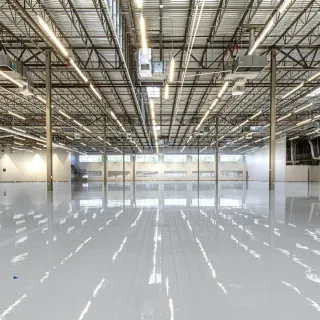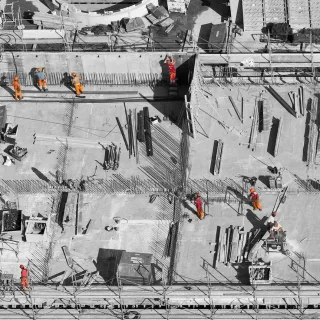

Fiber reinforced concrete for pools and water tanks does one job well: it controls cracking. Micro fiber limits the plastic shrinkage cracks of the first hours, and macro fiber keeps later cracks narrow. However, fiber does not make a shell watertight on its own. That still depends on the structural design, the mix, good compaction, sealed joints and proper curing. So treat fiber as one layer of protection, not as a replacement for the others.
Why pools and tanks are hard on concrete
A pool or a tank is a container first. Its walls and floor hold water on one face and often dry air or soil on the other. Because of that, any crack that runs through the section is also a leak path. A crack that would be harmless in a garage slab becomes a damp patch, a stain or a slow loss of water.
The American Concrete Institute treats these as a class of their own. Its code for environmental engineering concrete structures, ACI 350, covers concrete that stores or treats water. It names liquid-tightness and durability among the main service requirements, and it gives joints a chapter of their own. That tells you where the risk sits: in cracks and in joints, not only in the concrete between them.
Restraint makes things harder. A tank wall is usually cast on a floor that has already hardened, so it cannot shrink freely as it dries and cools. Similarly, a pool floor is held by the ground below and by its walls. Restrained concrete cracks at intervals unless something controls those cracks.
What fiber reinforced concrete for pools actually does
Fiber works at two stages, and each stage needs a different type of fiber.
In the first hours: micro fiber
While the concrete is still plastic, the surface can dry faster than bleed water reaches it. The result is plastic shrinkage cracking, often on a hot or windy day. ACI describes synthetic microfibers as mainly a tool against this kind of cracking, and it notes that they add little to the hardened concrete. Fine polypropylene concrete fibers are the usual choice here. For example, our PG MS-12 monofilament is dosed at 0.6 to 1.2 kg per cubic metre of concrete.
After hardening: macro fiber
Later, the concrete dries and cools, so it shrinks. If it is restrained, it cracks. Macro fibers bridge those cracks and help keep them fine. ACI's note on crack-width control lists macrofibers next to bars and wire mesh for shrinkage and thermal cracks. It gives a minimum of about 1.8 to 2.4 kg/m³ for synthetic macrofibers. The key word there is control. The cracks still form, but the fiber limits how wide they open.
Polypropylene also has a practical advantage in wet service. It is a polymer, so it does not rust the way steel near the surface can. That is one reason it suits water and marine structures, where corrosion is the usual enemy.
What fiber does not do in a pool or tank
This is where most disappointment starts. Fiber is not waterproofing, and a dose on the delivery ticket is not a leak guarantee. Here is what stays outside its reach:
It does not replace the structural steel. Walls and floors that carry water and soil pressure need the reinforcement the engineer designed. Fiber can take over crack-control mesh and temperature steel only where the design permits.
It does not seal joints. Water usually finds a construction joint long before it finds a fine crack.
It does not rescue a wet or poorly compacted mix. Extra water at the truck raises shrinkage and permeability, with or without fiber.
It does not replace curing. A shell that dries out in its first days will crack more, whatever it contains.
It does not make the concrete stronger in compression. Iran's Code 120-4 notes no noticeable change at low to moderate doses.
In short, fiber reinforced concrete for pools helps the designer and the builder, but watertightness remains their job.
Joints, waterstops and the pour sequence
Most pools and tanks are cast in stages: the floor first, then the walls, sometimes in several lifts. Every stop creates a construction joint, and every joint is a possible leak path. Waterstops, sealants and the joint layout all come from the design, not from the mix.
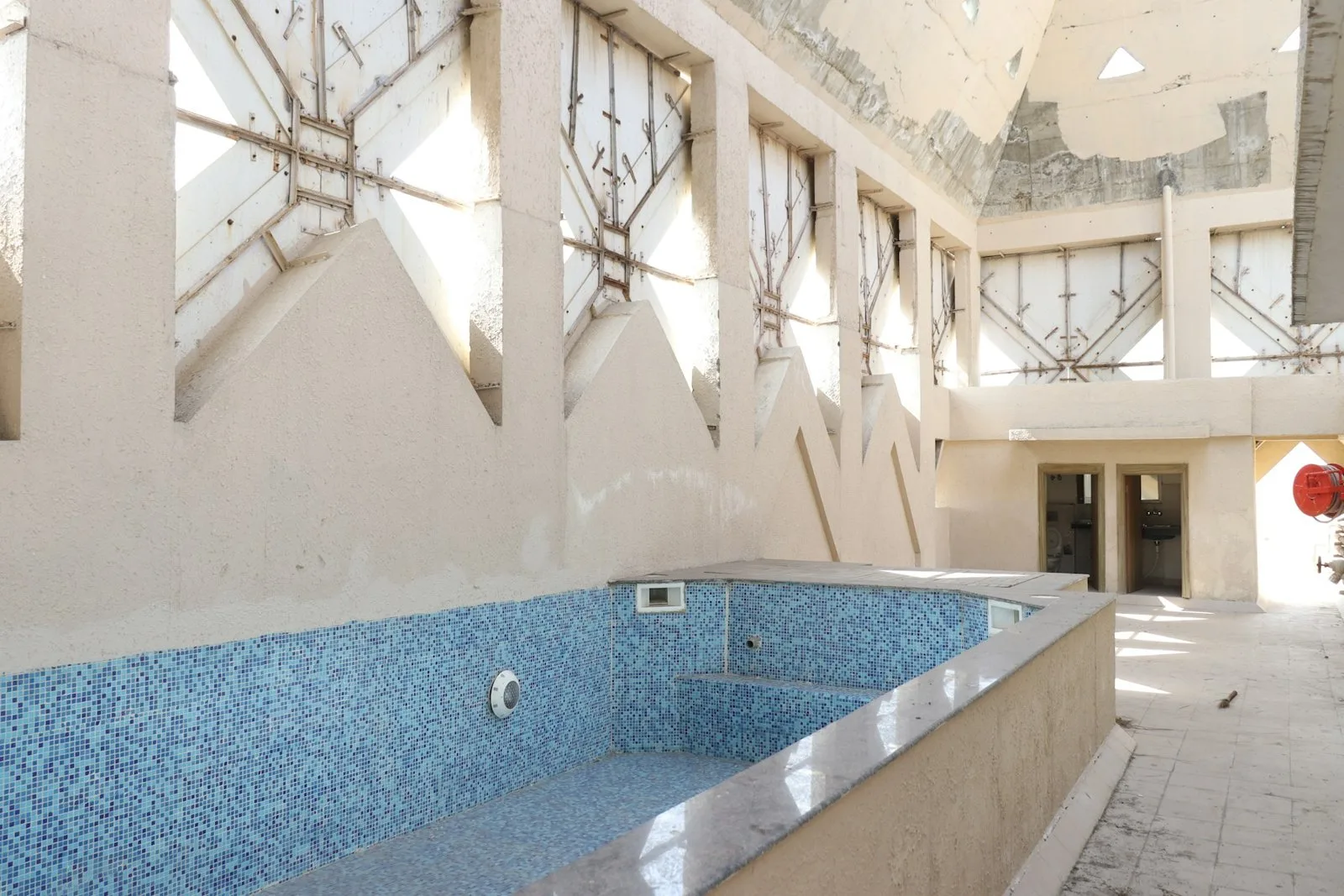
A few site habits matter more than any additive. First, keep the waterstop clean, centred and firmly tied before the next pour. Next, compact the concrete well around it, because a void beside a waterstop will leak. Then plan the pours so that no cold joints appear where the drawings show none.
Fiber helps here in a modest way, since it controls the shrinkage cracks that tend to start near joints and corners. Still, it does not move joints or remove them. Our guide to control joints in fiber reinforced slabs explains why joints stay, and the same logic applies to a pool floor.
Choosing the fiber and the dose
Start from the element and the job the fiber must do. Then pick the grade and stay inside its band.
| Element or need | Fiber type | Grade and dose band |
| Early-age surface cracks in walls and floors | Micro monofilament | PG MS-12, 0.6–1.2 kg/m³ |
| Shrinkage and thermal crack control, where the design allows | Macro, Class II | PG EC-45, 2–4 kg/m³ |
| Sprayed pool shell, with its designed steel | Macro for shotcrete | PG SC-48, 4–9 kg/m³ |
| Cement render under tiles | Short micro fiber | PG MS-12, short lengths |
The table is a starting point, not a design. A Class II grade such as PG EC-45 is for crack control. It is not a full replacement for the steel in a wall that holds water. If the engineer wants both early and later crack control, micro and macro fibers can go into the same mix, each at its own dose. Also, every dose is per cubic metre of concrete, never a percentage of cement. For render and plaster, our note on polypropylene fiber for mortar covers length and dose.
Where the job calls for macro synthetic fibers for concrete, ask for the dose to be designed from the section, the restraint and the exposure. That way, fiber reinforced concrete for pools is sized for the real shell rather than copied from another project. Our technical team does this free of charge from the drawings.
Curing and the water test
Curing is where many pool shells lose the benefit of a good mix. Start as soon as the surface allows, and keep the concrete wet or covered for the whole period the specification sets. Wet burlap, plastic sheeting or ponding all work, but only if nobody lets them dry out. In hot, windy weather, start earlier and protect the surface between finishing passes.
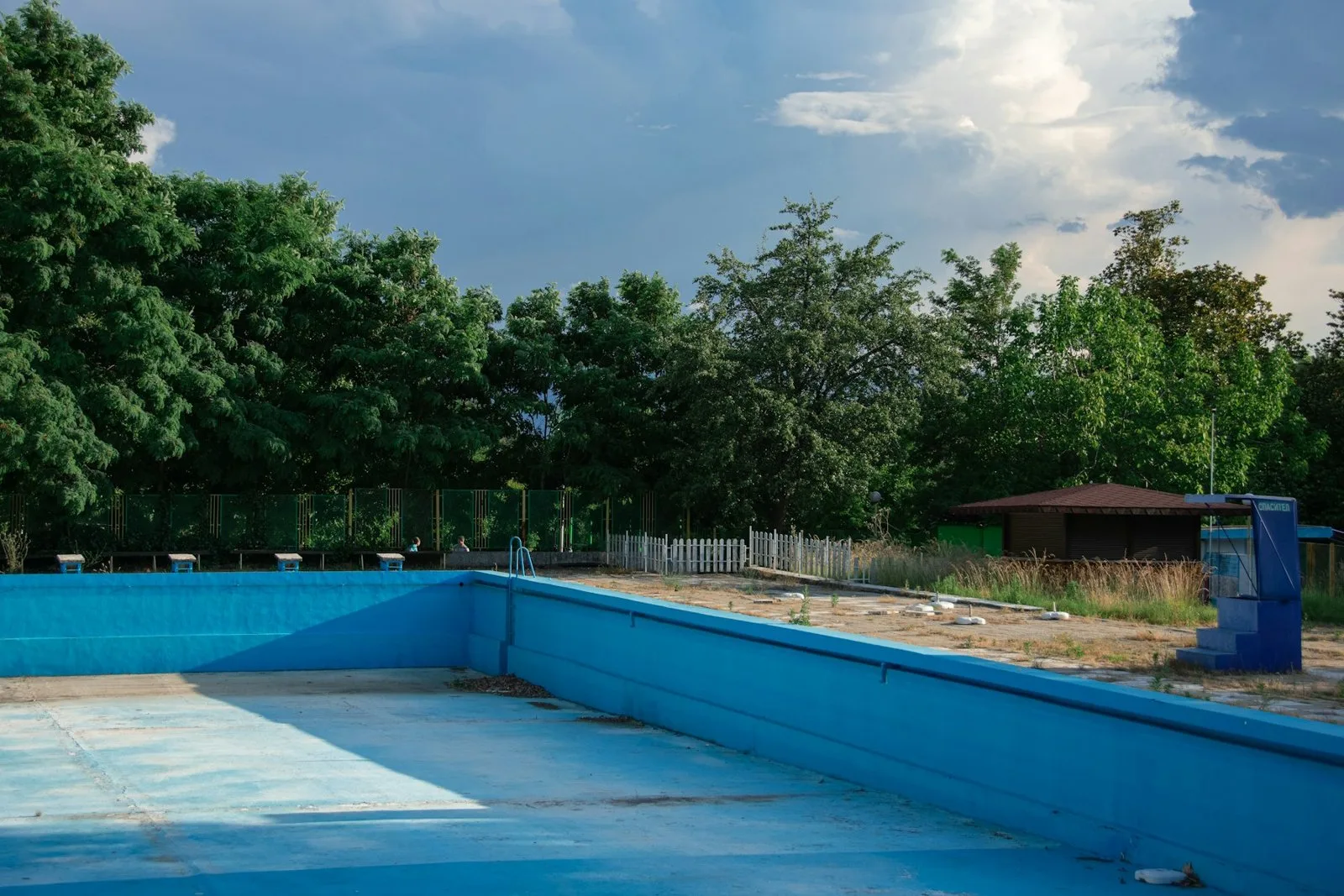
Before tiling or handover, the structure is normally tested with water. ACI publishes a separate specification for tightness testing of concrete structures, ACI 350.1, which includes a hydrostatic test for open tanks. You fill the structure, wait, and measure how far the water level drops over a set period. As a result, any leak shows up while it is still cheap to repair. If cracks do appear, our article on fiber reinforced concrete cracks helps you read their cause.
Ordering fiber reinforced concrete for pools
Write the fiber into the specification, not just the purchase order. Name the grade, the dose per cubic metre, the addition point at the plant and the mixing time. Then ask the plant to confirm that the concrete will arrive free of fiber balls, as Code 120-4 requires for polyolefin fiber concrete. Finally, run a trial batch with your own aggregates and admixtures before the first wall goes in.
As a concrete fiber supplier, Polyguard makes every grade from 100% virgin polypropylene and issues a QC certificate for each production batch. We also send a free sample for trial batching, with a data sheet that sets out the mixing sequence. Fiber reinforced concrete for pools works best when it is planned with the joints, the steel and the curing, not added at the last minute. To see how the fiber families differ, start with how concrete fiber works.
Frequently Asked Questions
Does fiber make a concrete pool watertight?
No. Fiber controls cracking, which helps, but watertightness depends on the structural design, the mix, compaction, sealed joints with waterstops and proper curing. Fiber is one layer of protection, not waterproofing.
Which fiber is used in pool and tank concrete?
Micro monofilament fiber controls plastic shrinkage cracks in the first hours, for example PG MS-12 at 0.6 to 1.2 kg per cubic metre. Macro fiber such as PG EC-45 at 2 to 4 kg per cubic metre keeps later shrinkage and thermal cracks narrow where the design allows.
Can fiber replace the rebar in a pool wall?
No. Walls and floors that hold water and soil pressure need the structural steel the engineer designed. Fiber can take over crack-control mesh and temperature steel only where the design permits.
Do pools and tanks still need waterstops and curing with fiber?
Yes. Construction joints are the usual leak path and need the waterstops the design calls for, and the concrete still needs wet or covered curing for the full specified period.