Fiber reinforced concrete cracks for the same reasons plain concrete does. Fiber does not stop a slab from shrinking, settling or carrying too much load. What it does is control how cracks form and how wide they open. So if your fiber slab cracked, the cause is usually a joint, the weather, the curing, the ground or the dose that really reached the truck. This guide shows you how to read the crack, what to check, and what to change next time.
What fiber can do, and what it never could
Start with the honest version. The American Concrete Institute lists fiber as one way to control crack width from shrinkage and heat, next to bars and wire mesh. The key word is control. NRMCA says the same about steel: mesh in a slab cannot prevent cracking, but it can keep cracks narrow.
The two fiber families also do different jobs. Micro fibers mainly control plastic shrinkage cracks in the first hours, and they add little to hardened concrete, according to ACI's micro and macro fiber note. Macro fibers are thicker. They work after the concrete has cracked, because they hold the two faces together and carry some load across the gap. That is why a slab with only micro fiber can still open a wide drying crack a month later. For the full mechanism, read why concrete cracks, and how fiber stops it.
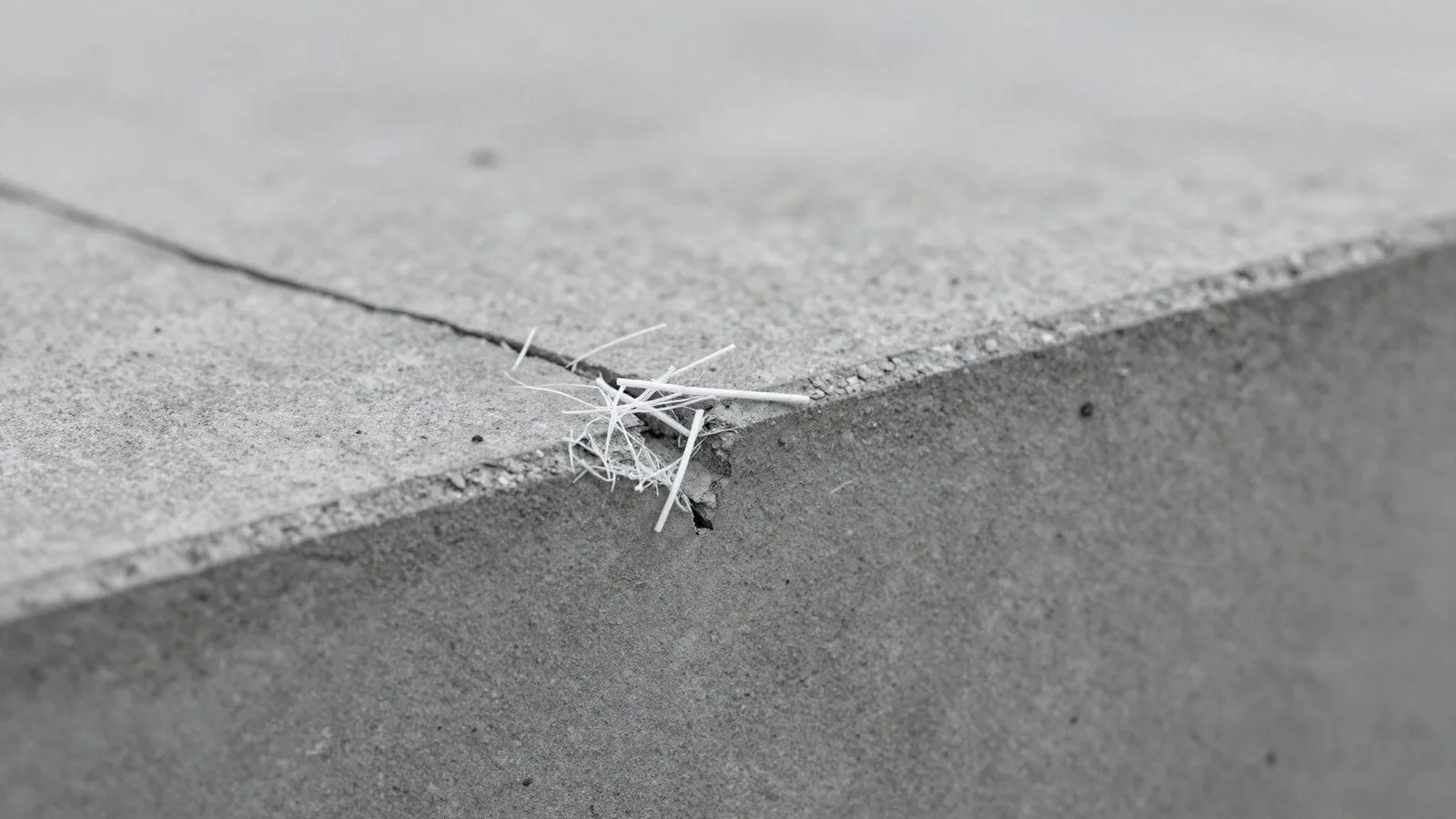
How to read fiber reinforced concrete cracks
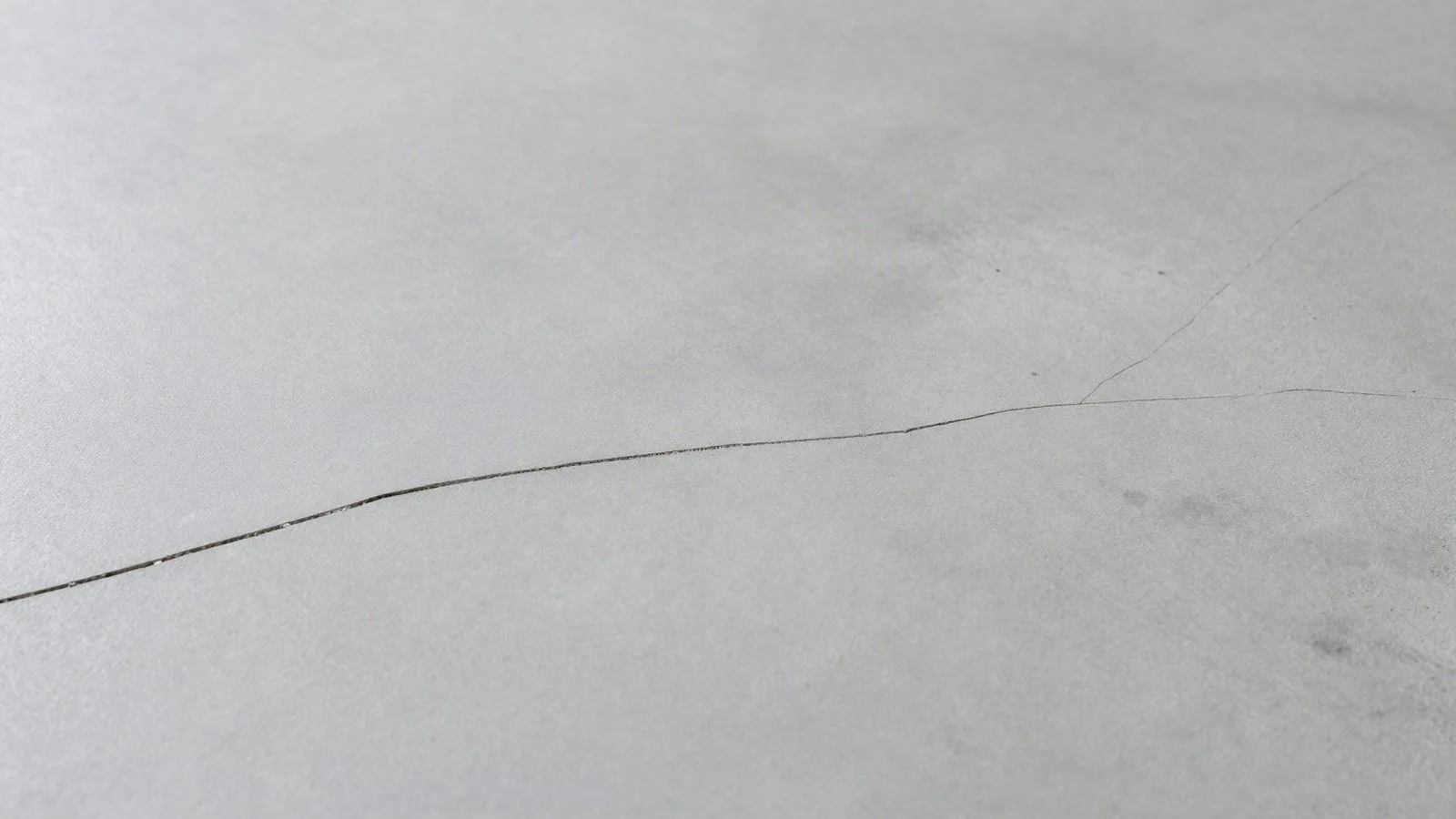
Three questions narrow the cause fast: when did the crack appear, what does it look like, and where does it sit? First, take photos with a tape or a crack card in the frame. Then write down the pour date, the weather that day and when the joints were cut. The table matches the common patterns to their usual causes.
| When it showed up | What it looks like | Usual cause |
|---|---|---|
| Within hours, before the slab set | Short, shallow, roughly parallel cracks about 0.3 to 0.9 m apart that stop short of the edge | Plastic shrinkage |
| Days to weeks | One straight crack across a panel, or one running from a column or a corner | Joints too far apart, cut late, or no isolation joint |
| Weeks to months | A crack over a trench or soft spot that keeps opening | Subgrade settlement or overload |
| First days, thick sections and walls | Vertical cracks rising from a footing, or cracks in a massive pour | Restraint or heat |
Causes that fiber does not fix
Joints missing, too far apart or cut too late
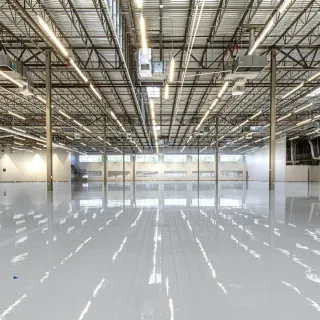
Concrete shrinks as it dries, so a slab needs planned weak lines where it can crack neatly. NRMCA's sheet on joints in slabs on grade gives the rule of thumb. Space contraction joints no more than 24 to 36 times the slab thickness, and keep them under 4.5 m. A 100 mm slab therefore gets joints about 3 m apart. Panels should be square or close to it, with the long side no more than 1.5 times the short side.
Timing matters as much as spacing. Conventional saw cuts go in within 4 to 12 hours after finishing, and early-entry saws run 1 to 4 hours after. The cut should reach at least a quarter of the slab depth. If the saw arrives the next morning, the slab may have picked its own joint already. Slabs also need isolation joints where they meet walls, columns and footings. Otherwise a crack often starts at the column corner.
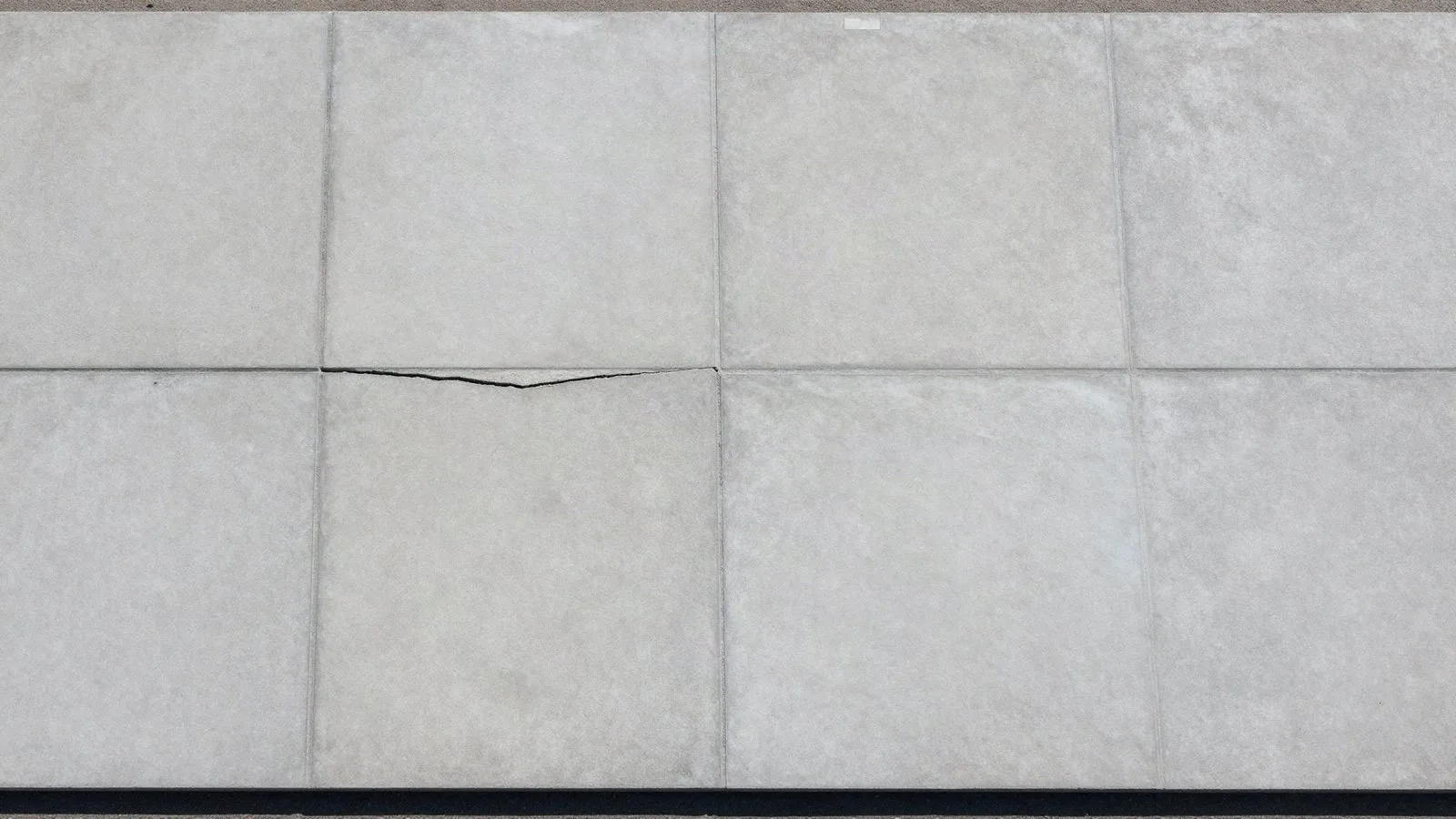
Plastic shrinkage on a hot, windy day
Plastic shrinkage cracks form when the surface loses water faster than bleed water can replace it. Wind above about 8 km/h, low humidity and high air or concrete temperature all raise the risk. Mixes that bleed little, such as rich or silica fume mixes, can crack even on a mild day. NRMCA's plastic shrinkage sheet lists synthetic fiber as one of eight precautions. The others are windbreaks and shade, fog sprays, a damp subgrade, cover between finishing passes, early curing and control of set time. So fiber alone on a dry, windy afternoon can still lose. That is how fiber reinforced concrete cracks on its first day, even with the right dose in it.
Poor curing and drying shrinkage
Curing should begin right after finishing and usually run 3 to 7 days, says NRMCA's curing sheet. A membrane compound goes on as soon as the water sheen disappears. The same sheet also warns that wetting and drying in turns is not curing. A slab that got one hose-down at lunch and then sat in the sun has not been cured, whatever fiber it holds. Extra water at the truck does similar harm. NRMCA names high slump and water added on site among the main causes of cracking, and ACI notes that fibers need no added water, since admixtures can restore slump.
Ground, restraint, heat and load
Soft spots, topsoil left in place and poorly compacted fill let a slab settle unevenly. No fiber dose bridges a slab that has lost its support. Restraint is the next suspect. For example, a wall cast on an older footing cannot shrink freely, so it cracks at intervals. Thick pours also crack when the core stays much hotter than the surface. Finally, a slab or beam that carries more than its design load cracks because of the design, not the mix. Those last two cases belong to the engineer.
Check what actually went into the truck
Sometimes fiber reinforced concrete cracks because the fiber never arrived in the amount on the drawing. Four checks cover most of it.
- The dose delivered. A washout test recovers the fiber from a known volume of fresh concrete, so you can weigh it. Our fiber reinforced concrete trial mix guide walks through it. ACI warns that a dose under the minimum for the fiber type behaves like plain concrete.
- Micro or macro. If the drawing called for macro fiber and the truck carried micro fiber, hardened cracks get no real help. Compare the bag label with the specification.
- Mixing. In a truck mixer, ACI says to add fiber last with the drum turning, then mix at least 40 revolutions. Balls of fiber in the chute mean poor spread.
- Water. Check the ticket and ask the crew. Any water added at the pour changes the mix the engineer approved.
Is the crack a real problem?
Often it is not. According to NRMCA, most random cracks that appear early look bad but rarely affect strength or service life. Still, plastic shrinkage cracks can let water and salts in, and they can become starting points for later cracks. Get an engineer before anyone fills or grinds if a crack keeps widening, if its edges move under traffic, or if it sits in a beam, suspended slab or wall that carries load.
What to change on the next pour
- Plan joint spacing and saw timing before the pour, and book the saw for the same day.
- Watch the forecast. If wind, heat and dry air line up, set up shade, windbreaks and fog sprays.
- Start curing the moment finishing ends, and keep it going for the full period.
- Match the fiber to the risk. Polypropylene concrete fibers such as PG MS-12 at 0.6 to 1.2 kg/m³ target plastic shrinkage. For hardened cracks in slabs on ground, use macro synthetic fibers for concrete, for example PG MF-54 at 3 to 7 kg/m³.
- Remember that macro fiber replaces crack-control mesh and temperature steel only where the design permits, never structural rebar.
- Run a washout on the first truck, and refuse water at the chute.
A good concrete fiber supplier should help with all of this. Our technical team designs the dose free from the section, loading and exposure, and every batch ships with its own QC certificate. For industrial floors, the team can also attend the first pour on request. If your fiber reinforced concrete cracks again after these steps, have the photos and the pour record ready when you contact the technical team.
Frequently Asked Questions
Will fiber stop my concrete slab from cracking?
No. Fiber controls cracking; it does not prevent it. Micro fiber mainly limits plastic shrinkage cracks in the first hours, and macro fiber holds cracks together and keeps them narrow once the concrete has hardened.
Why did my fiber concrete crack on the same day it was poured?
Short, roughly parallel cracks that appear within hours are usually plastic shrinkage. The surface lost water faster than bleed water could replace it, often because of wind, heat or dry air without windbreaks, fog sprays or early curing.
Does fiber concrete still need control joints?
Yes. Fiber does not stop a slab from shrinking, so it still needs contraction joints at the planned spacing, cut on time, and isolation joints at walls, columns and footings.
How can I check that the right fiber dose was delivered?
Run a washout test on a known volume of fresh concrete, weigh the recovered fiber and compare it with the specified dose. Also check that the bag label matches the specified type, micro or macro.
Are cracks in a fiber slab a structural problem?
Usually not. Most random cracks that appear early look bad but rarely affect strength or service life. A crack that keeps widening, moves under traffic, or sits in a beam, suspended slab or load-bearing wall needs an engineer's assessment.