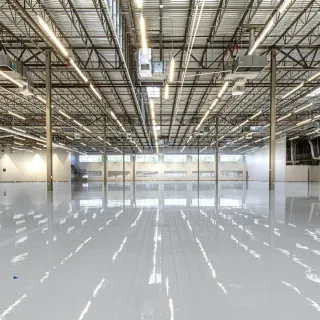
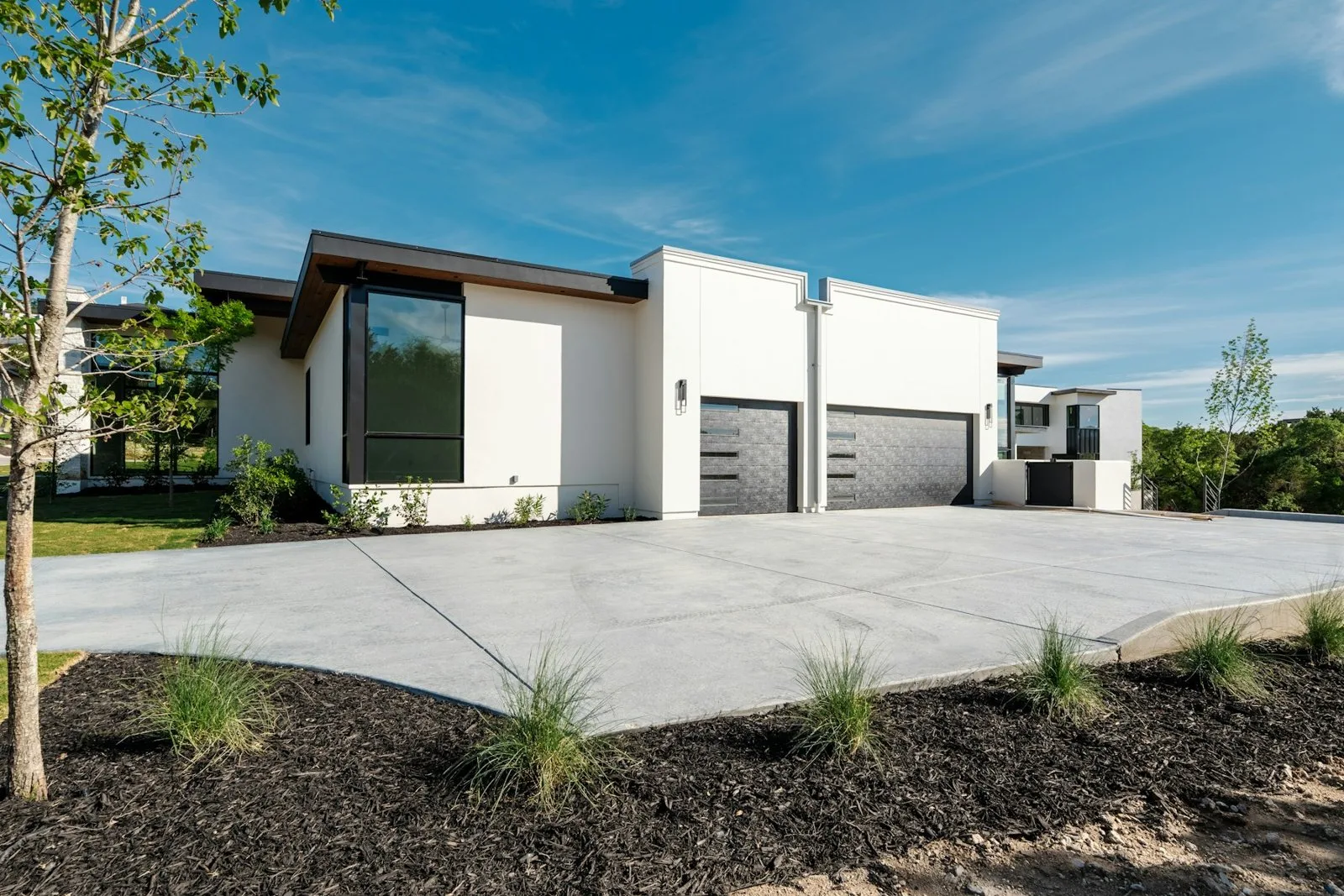
A fiber mesh concrete driveway is an ordinary driveway slab with short synthetic fibers mixed through the concrete. The fiber helps control cracking, but it cannot make up for a soft base, a slab that is too thin or joints in the wrong place. So get those three right first. Then choose micro fiber against early surface cracks, or macro fiber at a designed dose if it has to take over from crack-control mesh.
What "fiber mesh" means on a driveway
"Fiber mesh" is an old trade name that stuck. On a driveway it almost always means loose fibers that the plant adds to the truck, not a grid laid on the ground. The fibers spread through the full depth. As a result, nobody can tread them down to the bottom of the pour, which often happens to steel mesh. Our note on what fiber mesh concrete is explains both meanings of the term.
Two families of concrete fiber matter here. Micro fibers are fine monofilaments dosed at around one kilogram per cubic metre, and they work while the concrete is still soft. Macro fibers, on the other hand, are thicker and longer. They carry load across a crack once the slab has cracked. Because they do different jobs, the choice depends on what the driveway needs.
Start with the base, not the fiber
The US Federal Highway Administration makes the main point in its tech brief on bases and subbases for concrete pavements. A good foundation gives uniform support, and that matters more than its strength. In other words, a slab rests best on ground that behaves the same everywhere. For example, a soft patch, an old service trench, a rotting tree root or a wet corner each leaves a weak spot. Fiber does nothing about any of them.
For a driveway, uniform support comes from a few plain steps:
First, strip topsoil, roots and soft material down to firm ground.
Next, fill and compact in thin layers, so the whole area ends up equally firm.
Add a granular base if the soil is weak or holds water, and compact that too.
Give the surface a fall, so rain runs off the slab and not under it.
Finally, dampen a dry base just before the pour, but leave no standing water.
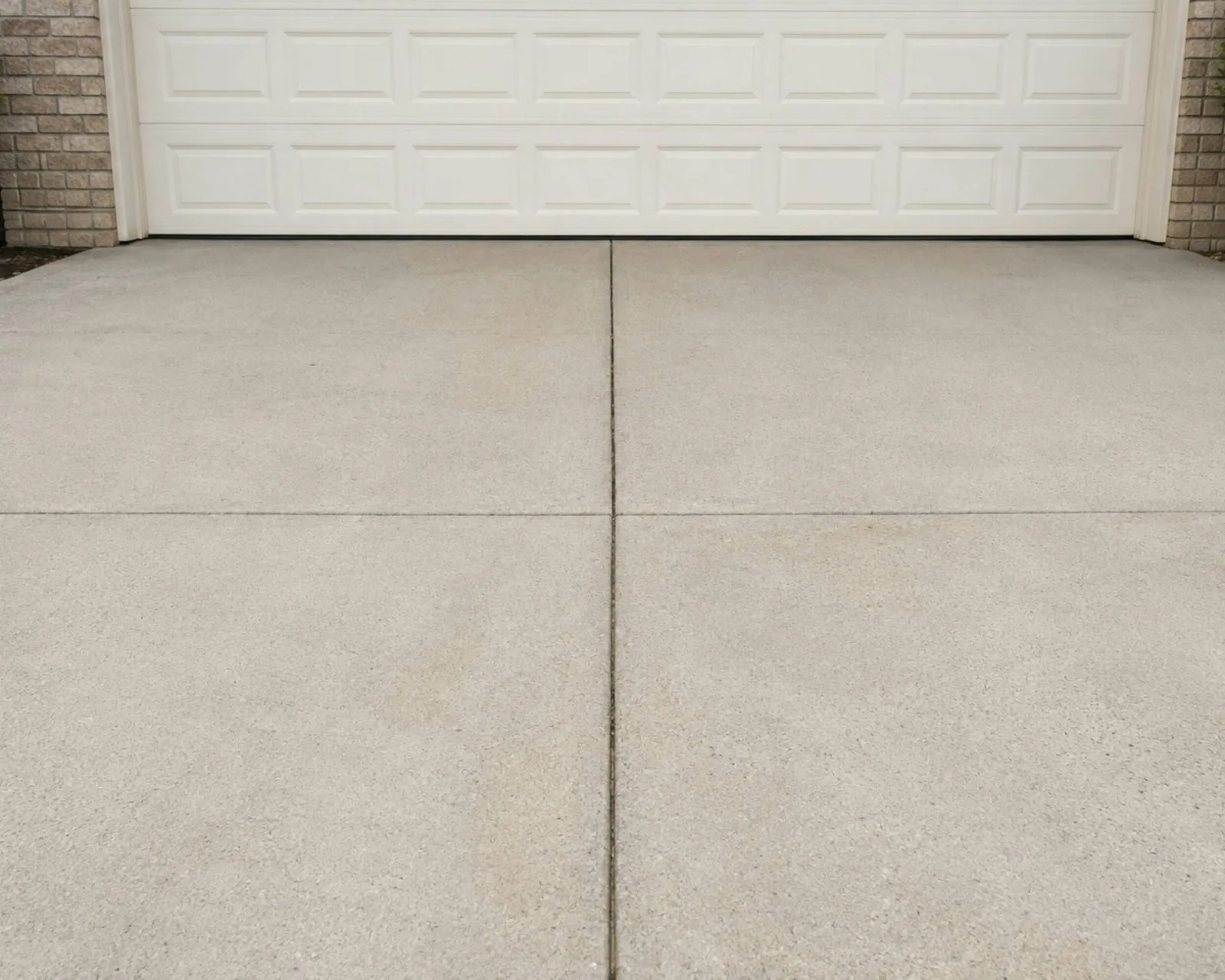
The same brief notes that the base gives a working platform for site traffic and keeps the support even. It also says that in most designs, a slightly thicker slab costs less than a base built up for strength. Therefore, treat the base as the layer that keeps support even, and the slab as the layer that carries the load.
Thickness follows the heaviest vehicle
ACI's guide to concrete parking lots (ACI 330R) makes a point that suits driveways as well. Where only cars use a slab, the material and the weather often set its thickness, not the wheel loads. However, the guide also warns that some driveways in parking areas carry relatively heavy loads. Access for refuse trucks, for example, may need special attention.
So ask one question before anyone talks about fiber. What is the heaviest vehicle that will ever use this slab? A family car, a delivery van, a refuse truck and a fire engine each give a different answer. The designer then sets the thickness from that answer and from the base. Do not count on fiber to make a thin slab carry a heavy truck, because that is a thickness and base question.
Joints in a fiber mesh concrete driveway
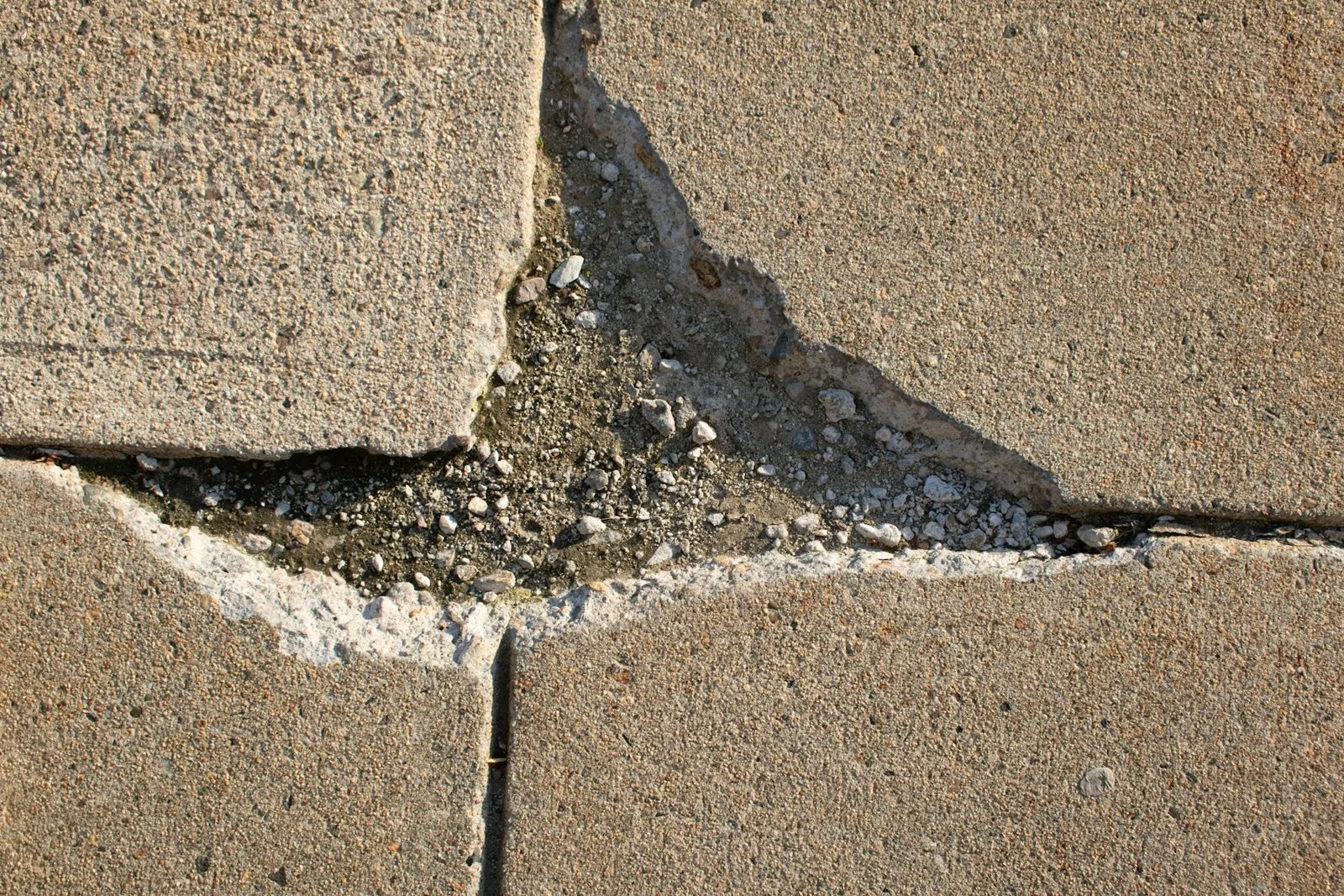
Concrete shrinks as it dries, and fiber does not stop that. NRMCA's sheet on joints in concrete slabs on grade describes joints as cracks you plan in advance. A fiber mesh concrete driveway still needs them, since the slab will crack somewhere. The joints decide where.
Contraction joints
The NRMCA sheet gives these rules of thumb for slabs on grade:
Space joints at 24 to 36 times the slab thickness, and no more than 4.5 m apart. For a 100 mm slab that is about 3 m.
Keep panels square or close to it. The long side should not exceed 1.5 times the short side, and avoid L-shaped panels.
Make the groove at least a quarter of the slab depth, and never less than 25 mm.
Run early-entry saw cuts about 1 to 4 hours after finishing, and conventional saw cuts within 4 to 12 hours.
| Slab thickness | 24 to 36 times thickness | Spacing to use |
| 100 mm | 2.4 to 3.6 m | Up to 3.6 m |
| 125 mm | 3.0 to 4.5 m | Up to 4.5 m |
| 150 mm | 3.6 to 5.4 m | Up to 4.5 m (the cap) |
Isolation joints
The same sheet also asks for isolation joints where a driveway meets walks, curbs, garage slabs, stairs and other fixed objects. These joints let each part move on its own. Otherwise, the driveway tends to crack where it pushes against the garage floor or a step.
Fiber changes little here. Micro fiber at its normal dose leaves joint spacing where the rule of thumb puts it. Macro fiber keeps any crack between joints narrow, but only a designer can space joints further apart on the strength of it. Our article on control joints in fiber reinforced slabs covers that decision.
Micro or macro fiber for a driveway?
Early cracks on hot, dry days: micro fiber
Micro fiber does its work in the first hours. ACI 302.1R notes that synthetic fibers help reduce segregation and shrinkage cracks while the concrete is plastic. However, it adds that most synthetic fibers at typical doses do not restrain cracking once the concrete hardens. That is why micro fiber never replaces joints or mesh.
On a warm, windy day, fine polypropylene concrete fibers are a simple guard against plastic shrinkage cracks. Our PG MS-12 monofilament comes in 6, 12 and 18 mm lengths, at 0.6 to 1.2 kg/m³. Still, it works alongside good curing, not instead of it.
When fiber has to replace mesh: macro fiber
If the drawing uses fiber in place of crack-control mesh, the job needs macro synthetic fibers for concrete at a designed dose. Fiber replaces crack-control mesh and temperature steel only where the design permits. It never replaces rebar that carries load, for example in a suspended ramp.
For a driveway or a light yard, PG EC-45 (45 mm, 2 to 4 kg/m³) suits crack control, although it is not a full replacement for reinforcement. For truck traffic, PG MF-54 (54 mm, 3 to 7 kg/m³) is our grade for slabs on ground. Some slabs also use both types, each at its own dose.
Pour day: placing, finishing and curing
On the day, agree these points with the plant and the crew first:
The plant adds the fiber and mixes it fully, so no fiber balls reach the chute.
If the mix looks stiff, the plant adjusts the admixture. Nobody adds water at the truck.
The crew waits for the bleed water to go before the broom finish, because early work drags fibers to the top.
Curing starts as soon as finishing ends, and traffic stays off until the specification allows it.
If fibers show on the surface after all, our guide to fibers sticking out of concrete explains the causes and fixes.
Yards and parking areas: what changes
A yard or a shared parking area is a bigger version of a fiber mesh concrete driveway, with heavier traffic and more turning. In particular, turning trucks, parked loads and bin stores put more stress on joints and edges. As a result, the thickness, the base and the joint layout need a designer. The same goes for any decision to drop mesh in favour of macro fiber.
When you ask a concrete fiber supplier for a quote, ask for the grade, the dose and the mixing instructions in writing. Polyguard's technical team designs the dose free from the slab section, the loads and the exposure. We also send the data sheet, a QC certificate for each production batch and a free sample for a trial batch. Then the order stays the same on every fiber mesh concrete driveway: base, thickness and joints first, and the fiber after them.
Frequently Asked Questions
Does a fiber mesh concrete driveway still need joints?
Yes. Concrete shrinks as it dries and fiber does not stop that. NRMCA's rule of thumb spaces contraction joints at 24 to 36 times the slab thickness, no more than 4.5 m apart, with isolation joints where the driveway meets the garage slab, walks, curbs and steps.
Should I use micro or macro fiber in a driveway?
Micro fiber, such as PG MS-12 at 0.6 to 1.2 kg/m³, guards against plastic shrinkage cracks in the first hours. Macro fiber at a designed dose is the choice when the fiber has to take over from crack-control mesh. Some slabs use both, each at its own dose.
Can fiber replace the steel mesh in my driveway?
Macro fiber can replace crack-control mesh and temperature steel where the design permits. It never replaces rebar that carries load.
Can I pour a thinner driveway because it has fiber?
Do not count on it. The designer sets the thickness from the heaviest vehicle that will use the slab and from the base under it, not from the fiber.