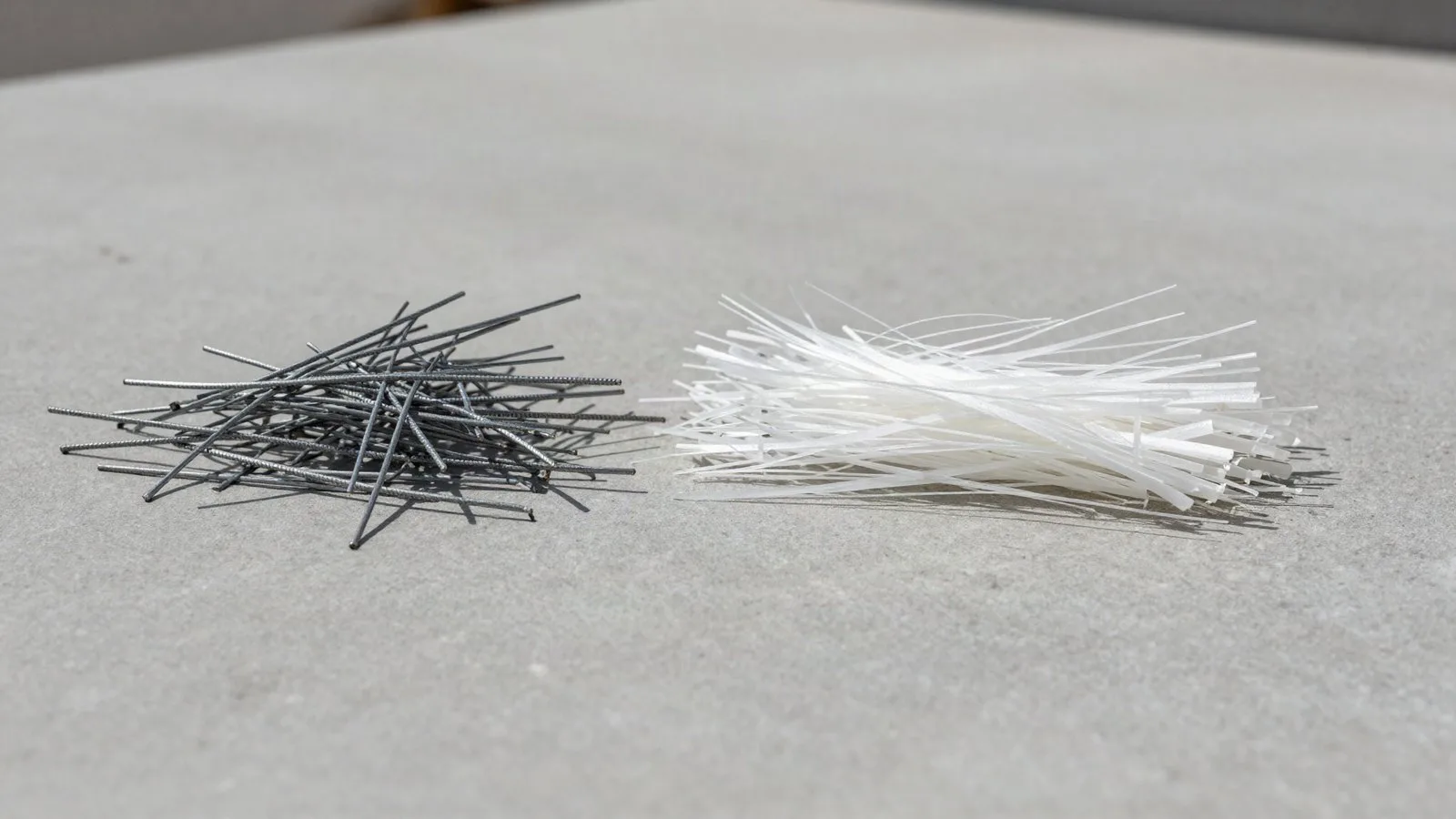
Steel fiber vs synthetic fiber is not a contest that one material wins on every job. Both are macro fibers, and both carry load across a crack once it opens. Steel is stiffer and holds its load straight after cracking. Macro synthetic fiber, on the other hand, cannot rust, weighs far less per cubic metre and leaves no rust spots on a finished face. So the right choice comes from the element, its exposure and the residual strength the design asks for. Then both fibers should be judged by the same test.
What the two fibers share, and where they part
ASTM C1116 sorts fiber concrete by the fiber material. Steel fiber concrete is Type I and synthetic fiber concrete is Type III, as the NPCA fiber best-practice note lists. In both cases the fiber that works in hardened concrete is a macro fiber. Fine micro fibers are a separate product for plastic shrinkage, and they never stand in for steel reinforcement.
However, the two macro families behave differently after the first crack. A peer-reviewed study from the University of Sharjah describes the gap clearly. With steel fibers, tensile capacity drops only a little after cracking and then fades slowly. With synthetic fibers, the load falls sharply at the first crack. Then, as the fibers slip and their grip builds, it climbs again to a second peak.
The same paper on macro synthetic fiber concrete also notes that most design models were first built on steel fiber data. So if your designer uses one of those models, ask how it treats a synthetic fiber. Neither fiber makes concrete noticeably stronger in compression at normal doses. For more on the metal option itself, see our article on what steel fiber for concrete is.
Dose and weight: why kilos do not compare
The American Concrete Institute gives minimum doses for slabs on ground. For synthetic macro fibers, its guidance on minimum fiber dosage is 1.8 kg/m³, or 0.2% by volume. For steel fibers it is 9 to 12 kg/m³, or 0.11 to 0.15% by volume. So the steel minimum fills less of the concrete. Yet it weighs five to almost seven times as much.
That gap changes the site work. Our fiber, for example, comes in 3 kg and 5 kg water-soluble bags that go into the mixer whole. It also means the price per kilo tells you nothing. Compare the cost of the dose that meets the specification instead, as our guide to concrete fiber cost per cubic metre explains.
Both types can ball in the mixer if the mix is too dry or short of fines. NPCA adds that steel fibers also ball when they are not fed at a steady rate. Either way, a trial batch shows the problem before the pour.
| Point | Steel fiber | Macro synthetic fiber |
| Minimum dose in slabs on ground (ACI) | 9 to 12 kg/m³ | 1.8 kg/m³ |
| Load just after the first crack | Small drop, then a slow fade | Sharp drop, then a climb to a second peak |
| Fiber exposed at the surface | Rusts to the depth of carbonation and leaves small spots | Does not rust |
| Beam test for slabs and precast | ASTM C1609 | ASTM C1609 |
| Panel test for shotcrete | ASTM C1550 | ASTM C1550 |
Steel fiber vs synthetic fiber in slabs on ground
For an industrial floor or a yard slab, ACI says both fibers control shrinkage and thermal cracks at their minimum doses. Higher doses also add bending capacity after cracking. Our grade of macro synthetic fibers for concrete for this job is PG MF-54. It is dosed at 3 to 7 kg/m³, designed from the section, loading and exposure.
Either fiber can replace crack-control mesh and temperature steel, but only where the design permits. Neither replaces rebar that carries structural load. Joints stay too, because fiber controls crack width but does not stop shrinkage. Our note on control joints in fiber reinforced slabs covers spacing and timing.
The surface is where the two part ways. NPCA explains that steel fibers at the surface corrode to the depth of carbonation, which leaves small reddish spots. It also says this is cosmetic and no risk to capacity, because the fibers deeper down stay protected. Still, on a polished, sealed or coated floor, the owner will see those spots. Synthetic fiber cannot rust. But it can still show at the surface if crews trowel too early, so the finishing sequence matters with either fiber.
Shotcrete and tunnel linings
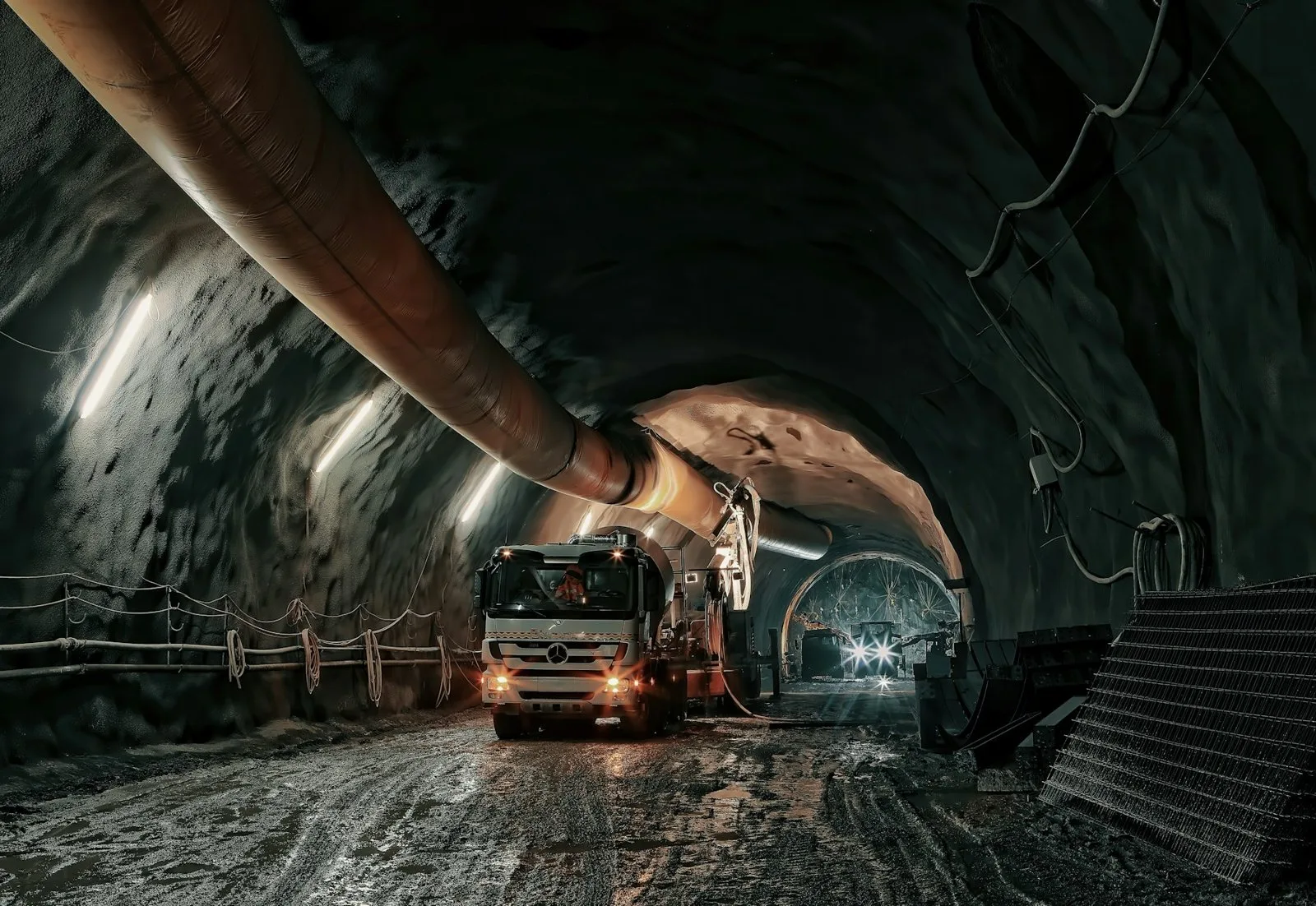
Sprayed concrete is where the steel fiber vs synthetic fiber debate is oldest. The ACI guide to fiber-reinforced shotcrete covers both. It records steel fiber shotcrete in North America from the early 1970s. Macro synthetic fibers for shotcrete came later, in the mid-1990s, and have since been used in mining and slope stabilization.
The test for lining work is ASTM C1550. It loads a round panel at the centre and measures the energy the panel absorbs as it deflects. So write the requirement as that energy at a stated deflection, and let each fiber reach it at its own dose. For our PG SC-48 grade the band is 4 to 9 kg/m³. Our page on shotcrete and tunnel work gives the grade details.
Rebound and wear on the pump and hose also cost money on a spraying job. The ACI guide treats rebound as a topic of its own. Yet the numbers depend on the rig, the mix and the nozzle operator. Therefore, measure both during the trial panels on your own equipment rather than taking them from a brochure.
Precast and facade elements
In a precast yard, the look of the finished face matters as much as strength. NPCA is the precast industry's own association, and its note is frank about steel. Steel fibers exposed at the surface, even galvanized or stainless ones, may show signs of corrosion after some time. On a grey utility box that may not matter. On an architectural panel, however, the owner will see it as a defect.
For facade and thin precast units, our PG PC-40 grade runs at 2 to 5 kg/m³. NPCA's general rule for mixing fiber is at least 3 to 5 minutes at high speed, or at least 70 revolutions in a truck mixer. It also says fibers are rarely added at the very start of batching. Our precast and facade page lists where the grade fits.
How to compare two offers fairly
A fair steel fiber vs synthetic fiber comparison uses the same test, the same specimen and the same deflection points. For beams, ASTM C1609 reports residual strengths at set deflections, often written as L/600 and L/150. For shotcrete, use the C1550 panel energy. Then ask each supplier for the report at the dose they propose, not at a dose they tested years ago.
First, state the residual strength or panel energy the design needs, then ask for the dose that meets it.
Next, check that the report names the test method your specification names.
Also price the full dose per cubic metre, plus handling and finishing, not the kilo.
Finally, run a trial batch with your own aggregates and admixtures.
As a concrete fiber supplier, Polyguard issues test reports for the method a specification names, on request. Every production batch also ships with its own QC certificate. Our technical team designs the dose free from your section, loading and exposure, and we send a free sample for trial batching. If you are still choosing between fiber families, start with how concrete fiber works.
Frequently Asked Questions
Is steel fiber stronger than synthetic fiber in concrete?
Steel is stiffer and holds load with only a small drop after the first crack, while macro synthetic fiber drops sharply and then climbs to a second peak. Which one suits a job depends on the residual strength the design needs, measured with the same test (ASTM C1609 or C1550) at the dose each supplier proposes.
Why is the synthetic fiber dose so much lower in kilograms than the steel fiber dose?
Steel is far denser. ACI gives minimums for slabs on ground of 1.8 kg/m³ (0.2% by volume) for synthetic macro fiber and 9 to 12 kg/m³ (0.11 to 0.15% by volume) for steel, so the steel minimum fills less volume but weighs five to almost seven times as much.
Do steel fibers rust in concrete?
Steel fibers at the surface corrode to the depth of carbonation and leave small reddish spots. NPCA describes this as cosmetic rather than a risk to capacity, because the fibers deeper in the concrete stay protected. Synthetic fiber cannot rust.
Can steel or synthetic fiber replace rebar?
No. Either fiber can replace crack-control mesh and temperature steel where the design permits, but neither replaces rebar that carries structural load.