Fiber reinforced concrete pros and cons come down to one trade. On the plus side, fiber cuts early surface cracking, holds later cracks tight, cannot rust and goes in at the batching plant. On the minus side, the mix looks stiffer, the finish needs more care, and the fiber adds a line to the budget. It also does nothing for compressive strength, and it never replaces structural rebar. Below, each point comes with the reason behind it, so you can weigh it for your own slab, screed or precast unit.
What fiber does well
Most of the benefits depend on picking the right family. Micro and macro fibers are different products, not two strengths of one product. ACI describes synthetic microfibers as mainly a tool against plastic shrinkage cracks, with a minimal effect on hardened concrete. Macrofibers, in contrast, are designed to improve the hardened concrete, especially after it cracks.
It cuts early surface cracking
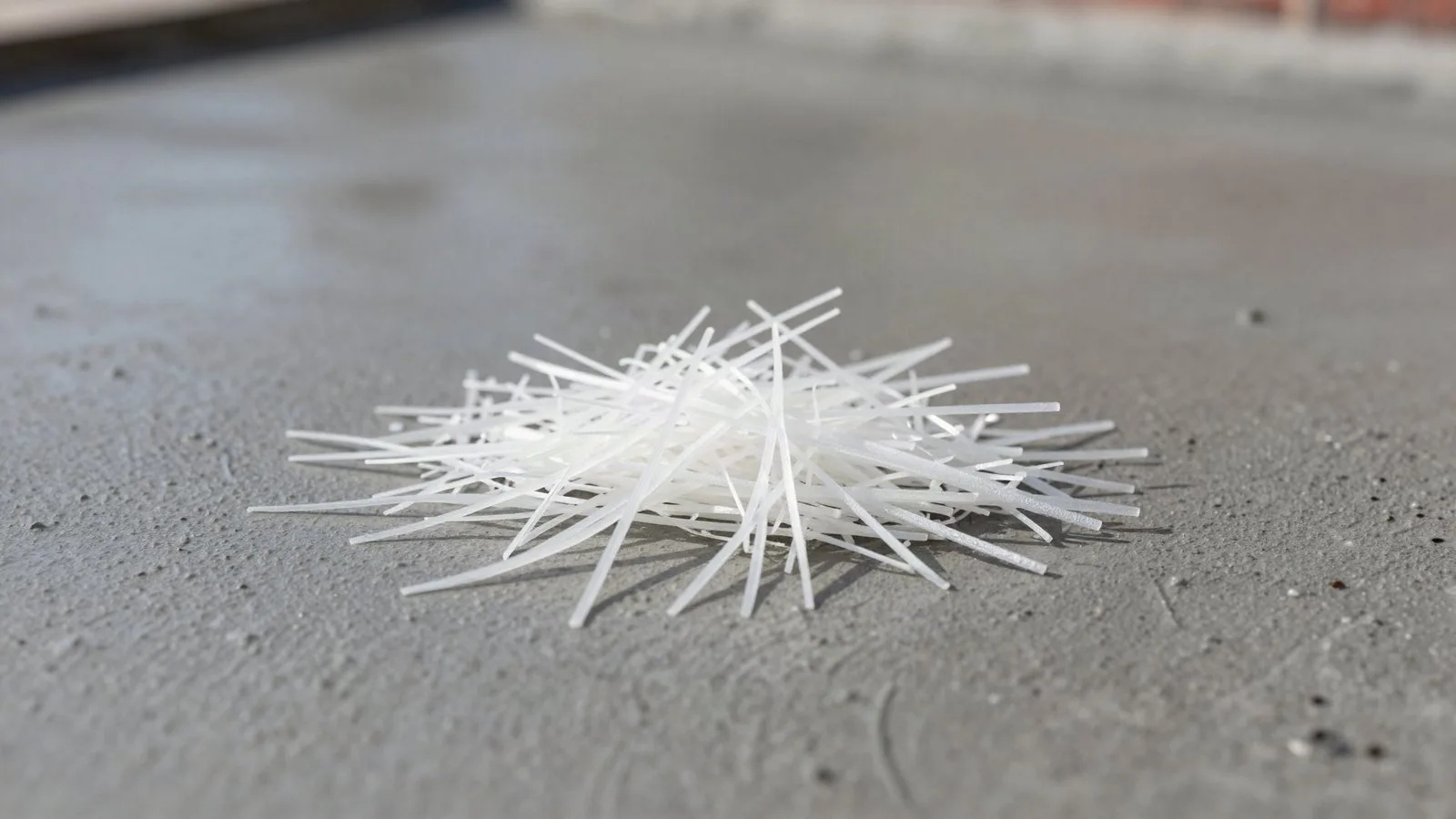
In the first hours, fresh concrete has almost no tensile strength. If wind, sun and dry air pull water from the surface faster than bleed water replaces it, fine plastic shrinkage cracks open. Fine monofilament polypropylene concrete fibers spread through the paste and resist those first movements. Our micro grade, PG MS-12, is dosed at 0.6 to 1.2 kg/m³ for this job. That is why micro fiber is common in screeds, renders, thin toppings and precast faces. In fire-exposed concrete, PP micro fiber is also one of the recognised methods to reduce the risk of explosive spalling.
It holds cracks tight after they form
Slabs crack as they dry and as the temperature changes, and fiber does not stop that. However, a macro fiber that crosses a crack is anchored on both sides. As a result, the crack stays narrow and the section keeps part of its capacity. ACI gives a minimum of about 1.8 to 2.4 kg/m³ of synthetic macrofiber to control shrinkage and thermal cracks in slabs. That capacity after cracking is measured as residual strength. It is also the reason a designed dose of macro synthetic fibers for concrete can replace crack-control mesh and temperature steel, where the design permits.
It cannot rust, and it cannot be misplaced
Polypropylene does not corrode, so there is no rust stain on an exposed face. Because the fiber is spread through the full depth, there is also no sheet for the crew to walk down to the bottom of the slab. For a longer list, see our article on the benefits of synthetic fiber in concrete.
It takes a trade off the critical path
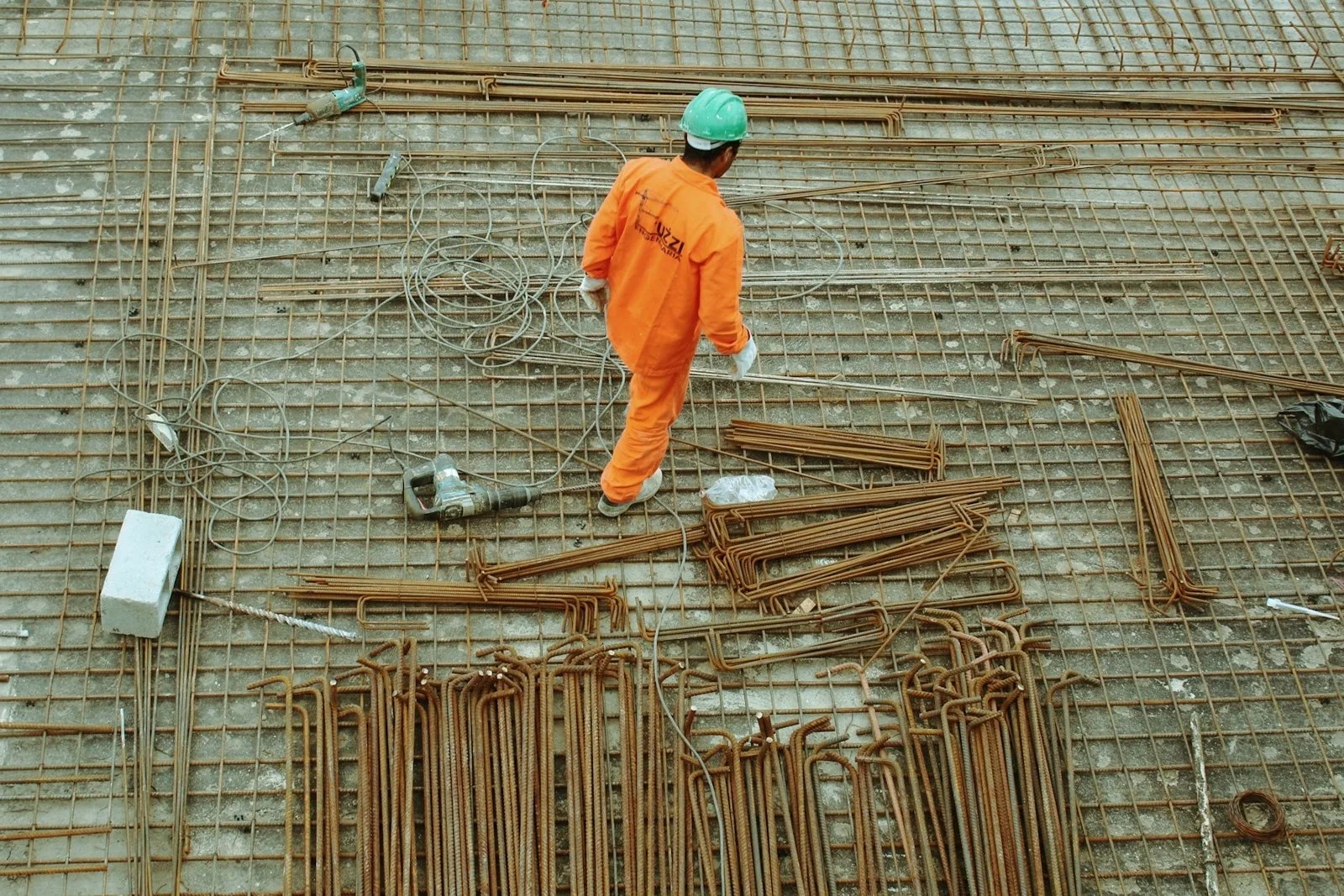
Mesh has to be cut, carried, placed and set on chairs before the pour can start. Fiber, on the other hand, goes into the mix at the plant or into the truck. That removes one step from the morning of the pour. Still, the mixing needs care, as the next section shows.
The cons of fiber reinforced concrete
Most lists of fiber reinforced concrete pros and cons keep this part short. None of the points below is a reason to avoid fiber. Each one, however, costs time or money if nobody plans for it.
The slump reading drops
Add fiber and the slump cone reading falls. According to ACI, fibers change how the mix flows, so part of this is an apparent slump loss. The energy needed to place and consolidate the concrete is not greater than for plain concrete. Fibers also do not need extra water. At low to moderate doses, a mid-range or high-range water reducer keeps the slump without changing the water-cement ratio. At higher doses, the mix may need more paste to coat the fibers. So the con is real but manageable. It means a mix adjustment, agreed with the plant before the first truck.
Finishing changes, and fibers can show
Fiber concrete bleeds evenly and can look ready to trowel before it is. If the power trowel goes on too early, it drags fibers to the surface. ACI notes that fiber concrete can take on a hairy appearance if the fibers are not evenly spread or the finishing is wrong. Its advice is proper finishing technique plus a finishing trial or mockup before the real pour. On a floor that will be coated or polished, this is the con that matters most. Our guide to fibers sticking out of concrete covers the finishing sequence step by step.
It is an extra material line
Fiber rarely wins on material cost per cubic metre. It wins on installed cost, and only when it really removes the mesh, the chairs and the labour to place them. If the design keeps the steel and adds fiber as well, the fiber is an added cost, not a saving. Our article on concrete fiber cost per cubic metre shows how to set up that sum with your own rates.
It needs mixing discipline
Fiber only works where it ends up. If it is dumped into a truck at the last minute and mixed briefly, it can form balls. For that reason, Iran's Code 120-4, the quality-control instruction for polyolefin fiber concrete, requires the concrete to arrive free of balled fibers. So agree the addition point and the mixing time with the plant in advance.
What fiber does not do
Some cons are really false expectations. These three cause most of the disappointment:
More compressive strength. At typical doses below 0.5% by volume, ACI rates the effect on compressive strength as marginal to negligible. Code 120-4 says the same about low to moderate doses.
Replacing structural rebar. Fiber can replace crack-control mesh and temperature steel where the design permits. But it does not replace steel designed for bending in beams, columns or suspended slabs.
Replacing joints and curing. Fiber controls crack width, yet it does not stop concrete from shrinking. A slab still needs the joints its designer drew and the curing the specification asks for.
Fiber reinforced concrete pros and cons side by side
| Pro | Con or limit |
| Fewer early surface cracks (micro fiber) | Lower slump reading; fix it with admixture, never water |
| Cracks held narrow after they form (macro fiber) | Finishing needs care and a trial |
| No rust, nothing to misplace | Extra material cost unless it removes mesh |
| Added at the plant, off the critical path | Needs an agreed addition point and mixing time |
| Can replace crack-control mesh where the design permits | Never replaces structural rebar, joints or curing |
When the pros clearly win
The balance tips toward fiber where cracking is the main risk and the steel is not structural. For example:
Screeds, renders and thin toppings: micro fiber, such as PG MS-12 at 0.6 to 1.2 kg/m³.
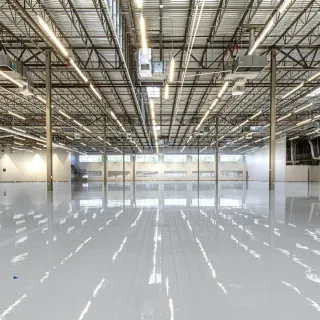
Industrial floors and slabs on ground: macro fiber, such as PG MF-54 at 3 to 7 kg/m³, at a designed dose.
Precast and facade units: PG PC-40 at 2 to 5 kg/m³.
Shotcrete and tunnel linings: PG SC-48 at 4 to 9 kg/m³, tested on ASTM C1550 round panels.
On the other hand, the cons weigh more on a decorative or polished surface. They also weigh more where the drawing already carries full steel. In those cases, test first, or ask what the fiber actually adds to the job.
How to keep the cons small
Every con above is cheapest to deal with before the pour. First, ask for the grade, the dose in kg/m³ and the mixing instructions in writing. Next, run a trial batch with your own aggregates and admixtures. Then do a finishing trial on the surface you will actually hand over. Polyguard fiber is 100% virgin polypropylene, made under an ISO 9001 quality system, and every production batch has its own QC certificate. Our technical team designs the dose free of charge from your section, loading and exposure. We also send a free sample for the trial. When you are ready, talk to us as your concrete fiber supplier. That way, the fiber reinforced concrete pros and cons on your project are known before the first truck arrives.
Frequently Asked Questions
Does fiber make concrete stronger?
Not in compression. At typical doses below 0.5% by volume, ACI rates the effect of fibers on compressive strength as marginal to negligible. The value of fiber is crack control and capacity after cracking.
Why does fiber concrete look stiffer in the slump test?
Fibers change how the mix flows, so part of the slump loss is only apparent. Restore workability with a water reducer, never with extra water; at higher doses the mix may need more paste to coat the fibers.
Can fiber replace rebar?
Fiber can replace crack-control mesh and temperature steel where the design permits. It never replaces structural reinforcement designed for bending in beams, columns or suspended slabs.
How do you stop fibers showing on the finished surface?
Make sure the fibers are evenly mixed, wait until the concrete is really ready to trowel, use proper finishing technique and do a finishing trial or mockup before the real pour.
Is fiber cheaper than steel mesh?
Rarely on material cost per cubic metre. It can be cheaper installed when it removes the mesh, the chairs and the labour to place them; if the design keeps the steel, the fiber is an added cost.