Hot weather concreting with fiber works when everyone knows what the fiber is there for. Micro polypropylene fiber helps the fresh surface resist the early tension that opens plastic shrinkage cracks on a hot, dry or windy day. However, it does not cool the concrete, slow evaporation or cure the slab. Shade, windbreaks, fog sprays, good timing and early curing still do most of the work. This guide splits the jobs, so nothing is left to the fiber that the fiber cannot do.
What counts as hot weather for concrete
Hot weather is not one number on a thermometer. ACI 305R, as summarised in the NRMCA sheet on hot weather concreting, uses five conditions. They are high air temperature, high concrete temperature, low relative humidity, high wind speed and strong sun. Any mix of them that harms fresh or hardened concrete counts. So a warm but dry and windy day can qualify.
Heat changes the concrete in several ways at once. Hot concrete needs more water for the same slump, and that extra water lowers strength and durability. It also loses slump faster and sets sooner, so the crew has less time to finish. In addition, concrete that cures hot at an early age ends up weaker at later ages than the same mix cured near 20 °C. Finally, a hot day followed by a cool night can open thermal cracks.
Why the surface cracks on a hot afternoon
Fresh concrete bleeds. As the solids settle, water rises to the top. On a hot, dry or windy day, though, the surface can lose water faster than bleeding replaces it. According to the NRMCA sheet on plastic shrinkage cracking, the receding water then pulls the surface into tension. If the concrete is still too weak to resist, it cracks. Wind above about 8 km/h, low humidity and high air or concrete temperature all raise the risk.
These cracks are easy to recognise. Most are shallow and roughly parallel, about 0.3 to 0.9 m apart, and they rarely reach the edge of the slab. Still, they let water and aggressive chemicals in, and later cracks can start from them.
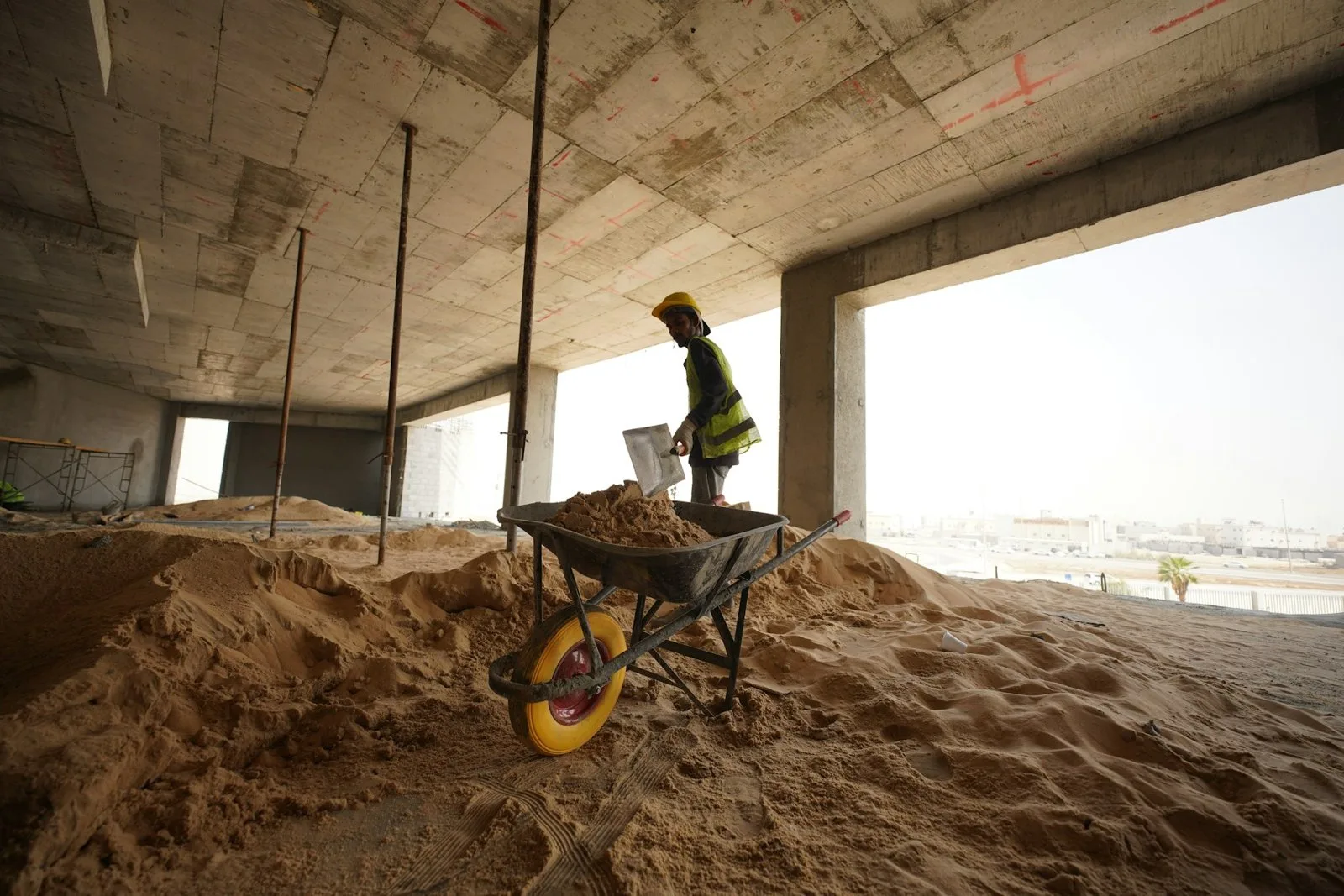
Two details catch crews out. First, some mixes bleed very little, for example rich mixes, mixes with silica fume or high fines, and thin sections. These can crack even when evaporation is low. Second, anything that delays setting keeps the surface weak for longer. That includes set retarders, which many summer mixes contain. As a result, a retarded mix needs more surface protection, not less.
Hot weather concreting with fiber: what the fiber does
Micro fiber works in the first hours, which is exactly when hot weather does its damage. NRMCA notes that synthetic fiber in the mix can help the concrete resist tension while it is still very weak. Its plastic shrinkage sheet also lists synthetic fibers to ASTM C1116 among the precautions. Similarly, ACI says synthetic microfibers mainly control plastic shrinkage cracks, while their effect on hardened concrete is minimal.
In practice, that means fine monofilament polypropylene concrete fibers spread through the whole mix. Our PG MS-12 grade is dosed at 0.6 to 1.2 kg per cubic metre of concrete. It comes in 6, 12 and 18 mm lengths, and our guide to polypropylene fiber length explains which suits which job.
Be clear about the limits, though. Micro fiber does not stop drying shrinkage weeks later. It does not stop thermal cracks from a hot day and a cold night either, and it does not raise compressive strength. If a slab needs crack control after it hardens, use macro synthetic fibers for concrete at a designed dose. Even then, fiber replaces crack-control mesh and temperature steel only where the design permits, never structural rebar.
What fiber does not replace
Fiber helps a weak surface hold together. But it does nothing about the conditions that make the surface weak. In hot weather concreting with fiber, every other precaution on the NRMCA list still applies, because each one tackles evaporation or timing directly. The table shows how the jobs split.
| Risk | The fiber's part | What still has to happen |
| Surface dries before it sets | Helps the weak surface resist tension | Windbreaks, sunshades, fog sprays, cover between finishing passes |
| Hot concrete, fast slump loss | None | Cooler ingredients, water reducers or retarders, cooler hours |
| Dry, absorbent subgrade | None | Dampen subgrade and forms, with no standing water |
| Water added at the chute | None, and the water undoes the fiber's work | No water beyond the mix design; admixture for slump |
| Moisture loss after finishing | None | Curing as soon as finishing ends, for at least 3 days |
| Drying and thermal cracks later | Micro fiber: very little. Macro fiber: crack-width control where designed | Joints, curing and the engineer's design |
Planning a hot weather pour, step by step
Before the pour
Check the forecast for wind, humidity and temperature, not just the daily high. ACI 305R has a chart for estimating the evaporation rate, but NRMCA warns that it is not infallible. So plan for the worst afternoon. If conditions look critical, start in the late afternoon or early evening. In very hot weather, however, an early morning start gives better control of concrete temperature. Book enough crew and tools so every truck can discharge at once. Then set up windbreaks and sunshades, and dampen the subgrade and forms without leaving puddles.
At the plant
Ask the plant how it will keep the concrete cool. Producers shade and sprinkle aggregate piles, and they can use chilled water or ice in the mix. NRMCA puts the drop at up to 6 °C with chilled water and up to 12 °C with ice. Water reducers and retarders also help control slump loss and setting time. Agree when and how the fiber goes in, too. Iran's Code 120-4 expects fiber concrete to arrive free of balled fibers, so do not let a hot day cut the mixing time short.
On the slab
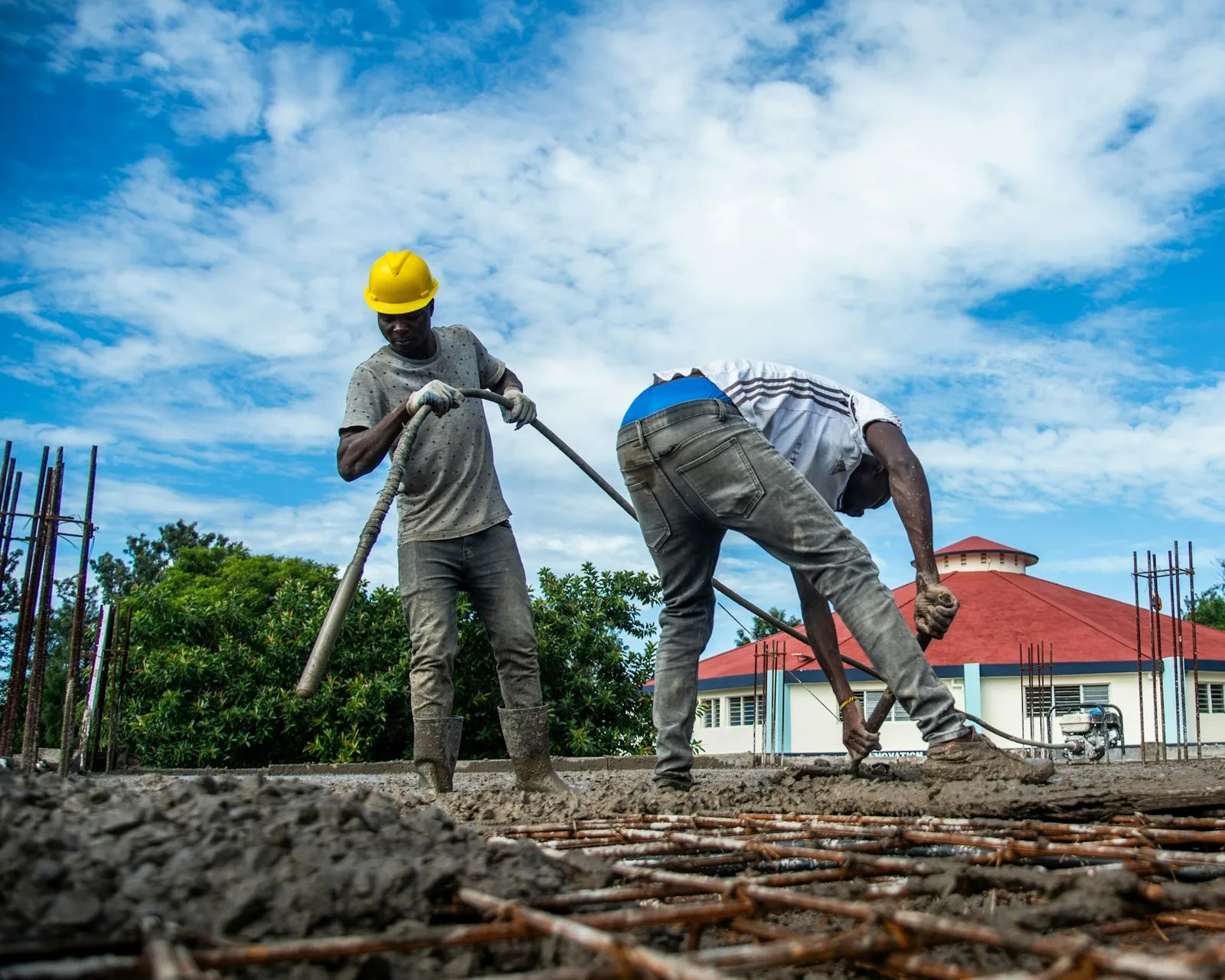
Place and finish without delay. Aim fog sprays upwind so the mist hangs in the air above the surface, and keep them running until curing starts. If finishing stalls, cover the concrete with wet burlap or plastic sheeting between passes. Some contractors also spray an evaporation retardant just behind the screed. Never sprinkle water on the surface to ease finishing. Wait until the water sheen has gone before final finishing, since early troweling is a common reason fibers stick out of concrete.
After finishing
Start curing as soon as finishing ends. NRMCA asks for at least 3 days, with wet burlap under plastic sheeting, water curing or a liquid membrane curing compound. A white pigmented compound shows where it has gone and reflects heat from the surface. Your specification may ask for longer, so follow it. One hose-down at lunch, followed by an afternoon in the sun, is not curing.
Slump, water and fiber on a hot day
On a hot day, two things lower the slump at the same time. Heat speeds up real slump loss. Fiber also causes an apparent drop, because it changes how the mix flows. ACI says fibers do not inherently require additional water, and at low to moderate doses a water reducer usually restores the slump. So the answer to a stiff truck is admixture, never the hose.
NRMCA also says to avoid adding water to concrete that is more than 1.5 hours old. Extra water raises the water-cement ratio, which means more shrinkage and a weaker surface. That is the very layer the fiber was meant to protect. Our article on why a fiber slab still cracked lists water at the chute among the usual causes.
Ordering fiber for a summer pour
Hot weather concreting with fiber starts with the order, not on the slab. Tell your concrete fiber supplier the element, the season and the exposure. Then ask for the grade, the dose and the mixing time in writing. Polyguard makes every grade from 100% virgin polypropylene, and each production batch ships with its own QC certificate. Our technical team designs the dose free from your section, loading and exposure, and it sends a free sample for a trial batch. New to the material? Start with how concrete fiber works.
Frequently Asked Questions
Does fiber stop plastic shrinkage cracks in hot weather?
Micro fiber helps the weak fresh surface resist tension and is one of the recognised precautions. It works alongside windbreaks, sunshades, fog sprays and early curing, not instead of them, because it does nothing to slow evaporation.
Can I add water to fiber concrete that stiffens in the heat?
No. Fibers do not inherently need extra water, and a water reducer usually restores the slump. NRMCA also advises against adding water to concrete that is more than 1.5 hours old.
What micro fiber dose is used for a summer slab?
Polyguard's PG MS-12 micro fiber is dosed at 0.6 to 1.2 kg per cubic metre of concrete. The technical team sets the exact dose from the section, loading and exposure.
When is the best time to pour concrete in hot weather?
When conditions are critical, NRMCA suggests starting in the late afternoon or early evening. In very hot weather, an early morning start gives better control of concrete temperature.
Does fiber let me cure the slab for less time?
No. Start curing as soon as finishing ends and keep it going for at least 3 days, or longer if your specification asks for it. Fiber does not keep water in the concrete.