Fiber is easy to add to a concrete mix, but it is just as easy to waste. Most results people blame on the product actually come from a few habits on site and in the order book. Here are the seven concrete fiber mistakes we would most like to see disappear. Each comes with the reason it costs money and what to do instead. Every one of them is also cheap to avoid.
1. Adding water when the slump drops
Put fiber into a mix and the slump cone reading falls. The first reflex is to reach for the hose. Don't. The American Concrete Institute is direct about this. Part of the drop is only apparent, because fibers change how the concrete flows. It also says fibers do not inherently require additional water. At low to moderate doses a mid-range or high-range water reducer restores the workability without changing the water-cement ratio.
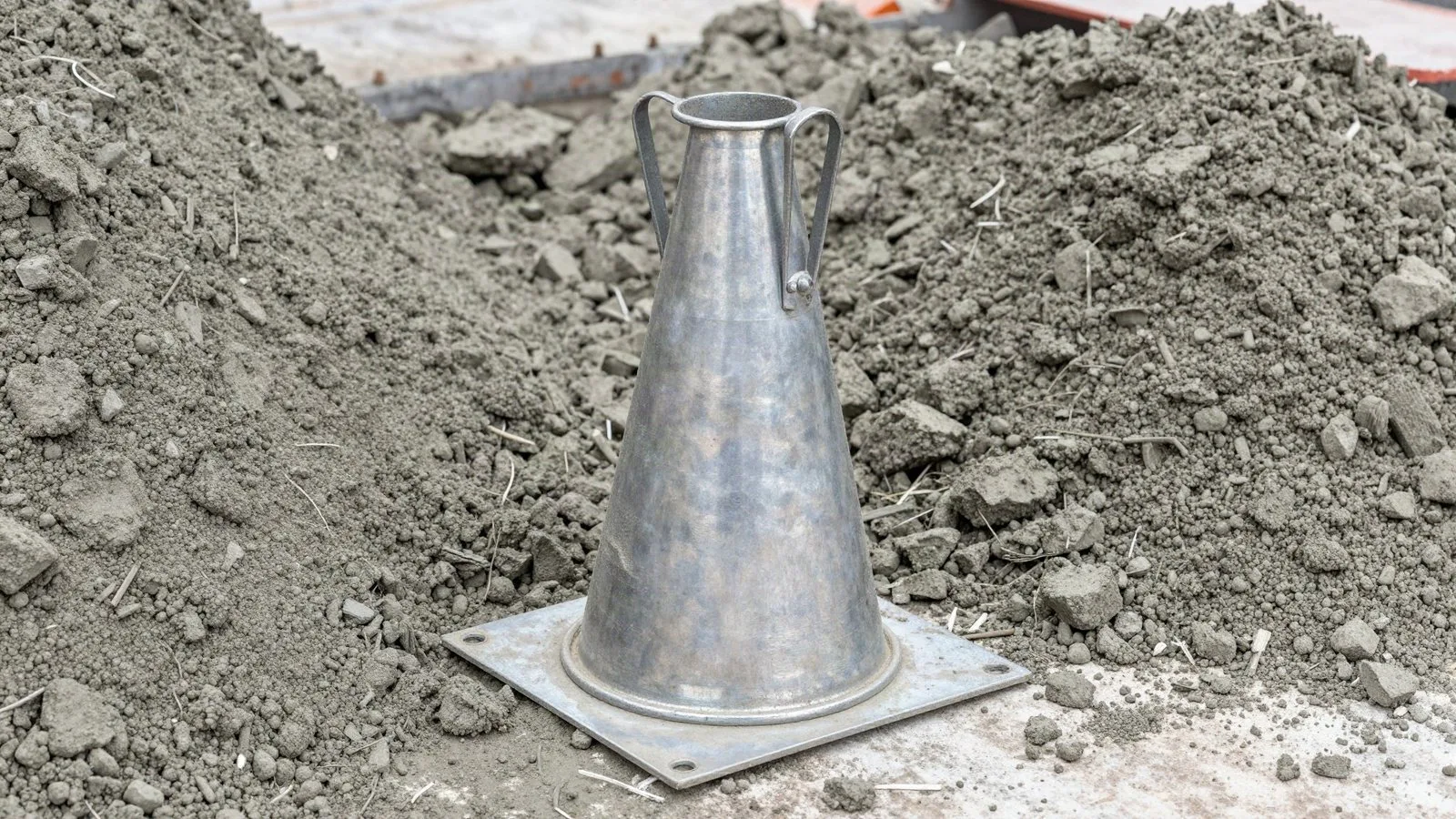
Extra water does the opposite of what you bought the fiber for. It lowers strength and increases shrinkage. It also weakens the surface, which is exactly where cracking starts. If the mix is too stiff at the pump, fix it with admixture and write down how much you needed.
2. Working out the dose as a percentage of cement
Some sellers still quote fiber doses as a percentage of cement weight. It sounds technical, but it gives absurd numbers. For example, take a mix with 350 kg of cement. Five percent of that is 17.5 kg of fiber per cubic metre. Yet no synthetic fiber in our range comes anywhere near that. Even the heaviest macro grade tops out at 9 kg.
The correct unit is kilograms of fiber per cubic metre of concrete, from the band of the grade you are using. Our grade table gives those bands, and the dosage guide explains how to apply them. If you only know the number of cement bags, first convert them to a volume of concrete. Then apply the dose to that volume.
3. Buying micro fiber for a macro job
Micro and macro fibers are different products, not two strengths of the same one. ACI describes synthetic microfibers as primarily for plastic shrinkage cracking, but notes they add little to the hardened concrete. Macrofibers, in contrast, improve the hardened concrete, especially after it cracks. EN 14889-2 similarly draws the line between Class Ia and Ib micro fibers and Class II macro fibers.
A fine monofilament is the familiar form of polypropylene concrete fibers. It is the right choice against early-age surface cracks, for example in a screed or a precast unit. But suppose the drawing asks the fiber to take over from crack-control mesh in a slab. That is a job for macro synthetic fibers for concrete at a designed dose. Swap one for the other because the bag is cheaper, and the slab will not do what the design assumed.
4. Going below the minimum, or above the band "to be safe"
Every fiber type has a minimum below which it stops working. In slabs on ground, ACI's guidance on minimum fiber dosages gives about 1.8 kg/m³ for synthetic macrofibers. It also warns that below this minimum there is too little fiber, so the concrete behaves like plain concrete. Cleverly shaped fibers do not change that.
The opposite mistake is quieter, but it still costs money. More fiber than the design needs does not buy more protection. Instead, it buys a stiffer mix that needs more paste to coat the fibers. It also needs more admixture, and the finish is often worse. The right dose is the one that meets the specified performance. Like the other concrete fiber mistakes here, a wrong dose is cheap to catch before the pour. So prove the dose first in a trial mix with your own materials.
5. Adding fiber late, or not mixing long enough
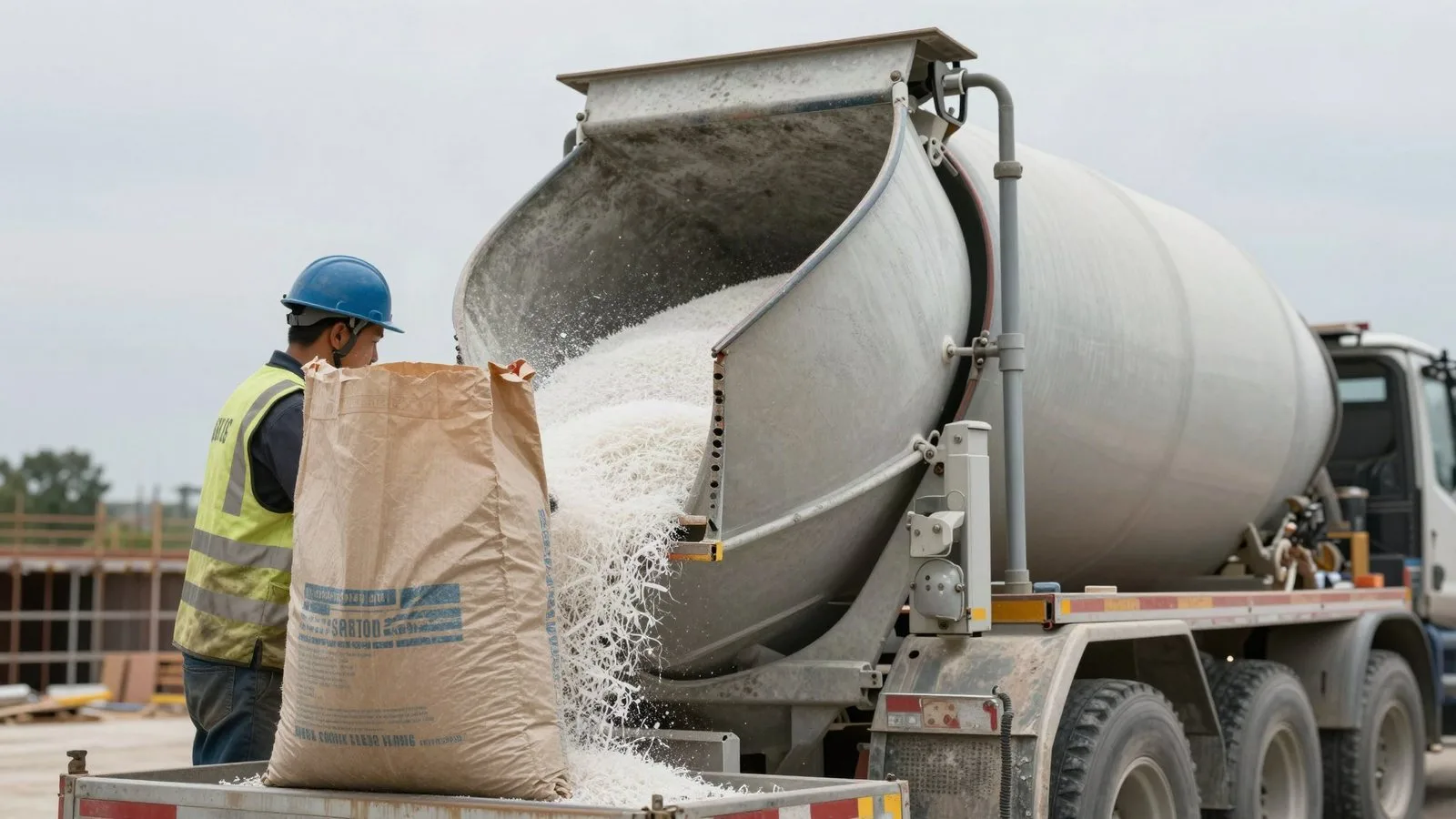
Fiber only works where it is. Because of that, ACI's note on mixing fibers into concrete says they must spread uniformly through the mix. For a truck mixer, it suggests feeding the fibers steadily into the turning drum, then mixing for about 40 revolutions. That is roughly four to five minutes, unless the manufacturer says otherwise.
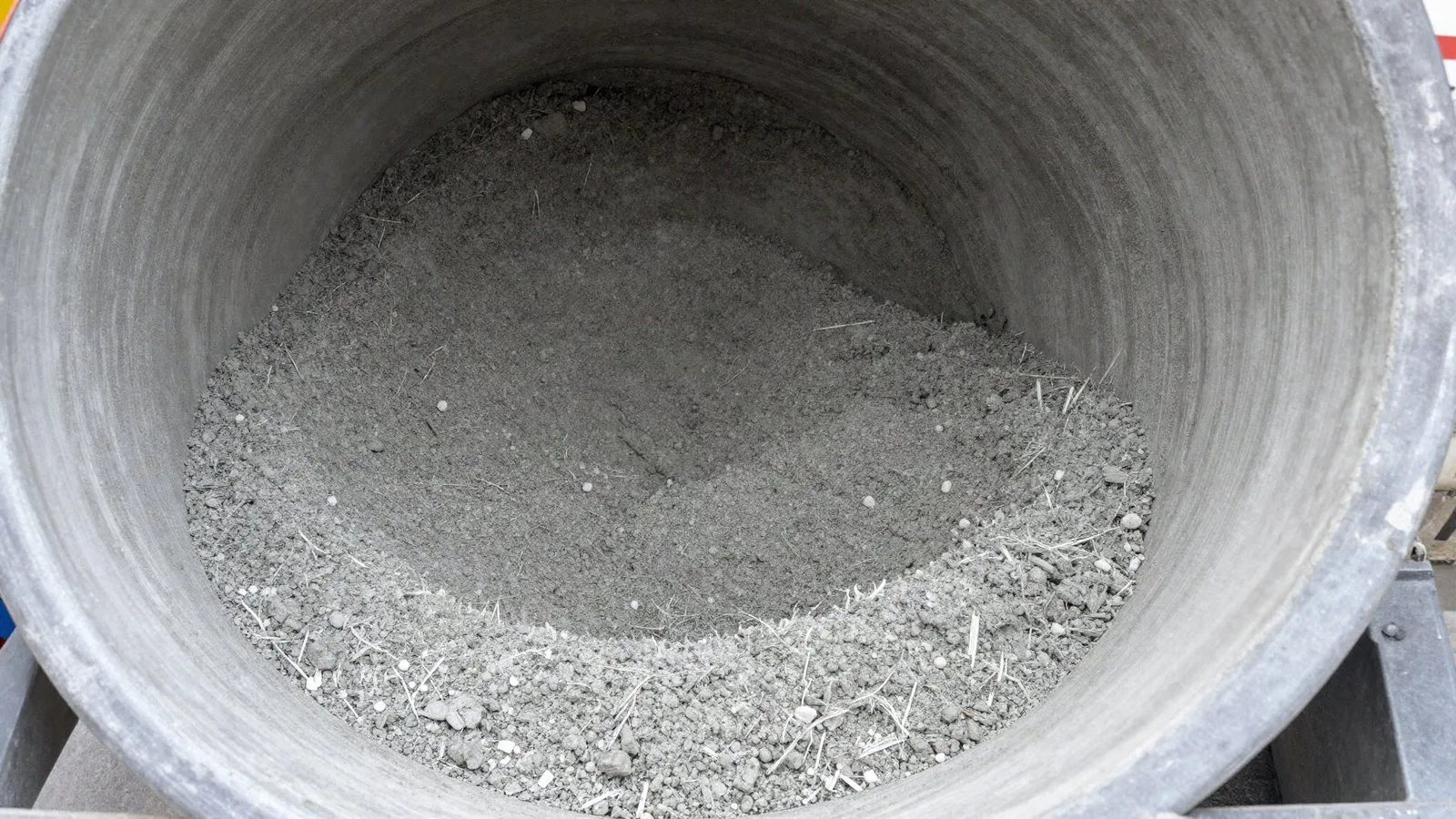
Fiber thrown in on site at the last minute, however, is where fiber balls come from. If site addition is unavoidable, the Texas Department of Transportation asks for at least 100 revolutions at mixing speed. Iran's quality-control code for polyolefin fiber concrete, Code 120-4, is blunt about the result it expects. Concrete must arrive free of balled fibers. So agree the addition point and the mixing time with the plant before the first load, not after.
6. Expecting fiber to make the concrete stronger, or to replace rebar
Fiber at normal doses barely moves compressive strength. ACI puts the effect at marginal to negligible below 0.5% by volume. Code 120-4 also says the same thing in its own words. If an advert or data sheet promises concrete several times stronger, it says more about the seller than the fiber.
The same caution applies to reinforcement. Fiber can replace crack-control mesh and temperature steel where the design permits. However, it does not replace structural reinforcement designed for bending, and no dose changes that. If the design calls for both, the fiber is an addition to the budget, not a saving. Our guide to concrete fiber cost per cubic metre shows why.
7. Treating fiber as a reason to skip joints, curing or patience
Fiber controls the width of cracks, but it does not stop concrete from shrinking. ACI's guidance describes macro fiber minimums as enough to control shrinkage and thermal cracks, not to prevent them. A slab still needs the joints its designer drew and the curing the specification asks for. If you leave either out, the concrete will crack where it chooses, fiber or not.
Patience also matters at the finishing stage. Fiber concrete bleeds evenly and can look ready before it is. Troweling too early is the main reason fibers end up on the surface. Our guide to fibers sticking out of concrete covers the finishing sequence step by step.
Concrete fiber mistakes at a glance
| Mistake | Do this instead |
| Water to recover slump | Water reducer, then record the dose |
| Dose as % of cement | Kilograms per cubic metre, from the grade band |
| Micro fiber for a mesh-replacement job | Macro fiber at a designed dose |
| Below the minimum, or far above the band | The dose that meets the specified performance, proven in a trial |
| Late addition, short mixing | Agreed addition point and mixing time, with no fiber balls at discharge |
| Expecting more strength or no rebar | Fiber for crack control and post-crack capacity, as designed |
| No joints, no curing, early troweling | Joints and curing as specified, then a late finish |
Most concrete fiber mistakes start before the pour, with a quotation that leaves out the dose, grade or mixing instructions. A concrete fiber supplier worth working with therefore puts all three in writing. Polyguard designs the dose from your section, loading and exposure. It also supplies the mixing sequence with the data sheet and sends a free sample for a trial. If you are new to the material, start with how concrete fiber works.
Frequently Asked Questions
Which concrete fiber mistakes cost the most?
Adding water and using micro fiber where macro fiber was designed. Both leave a slab that does not perform as the drawing assumed, and neither can be corrected once the concrete has set.
Is a small amount of water acceptable if the slump drops a lot?
Treat any water as a change to the mix design that the engineer has to approve. In practice an admixture adjustment almost always solves the problem without touching the water.
How do I convert cement bags to a fiber dose?
Work out how much concrete the bags make, using your mix design's cement content per cubic metre, then multiply that volume by the dose in kilograms per cubic metre. The dose follows the concrete, not the cement.
Can micro and macro fibers be used together?
Yes, when the job needs both early-age crack control and post-crack capacity. They are dosed together, each at its own rate, rather than one replacing the other.