Good concrete fiber manufacturers are easy to spot once you know what to ask. A real manufacturer extrudes the fiber in its own plant and tests every batch in its own laboratory. It ties a quality certificate to the batch number on your bags. It also sends test reports for the method your specification names, and it gives you a free sample to try in your own mix. If a seller cannot show you these five things, you are probably talking to a trader. The questions below will tell you which one it is.
Manufacturer or trader: why the difference matters
Many companies sell fiber, but far fewer make it. A trader buys fiber in bulk, often from more than one source, and then repacks or resells it. That is not dishonest in itself. However, a trader usually cannot tell you which polymer went into a given bag, which line made it or how the batch tested. When a slab cracks or a pump blocks, those are exactly the questions you need answered.
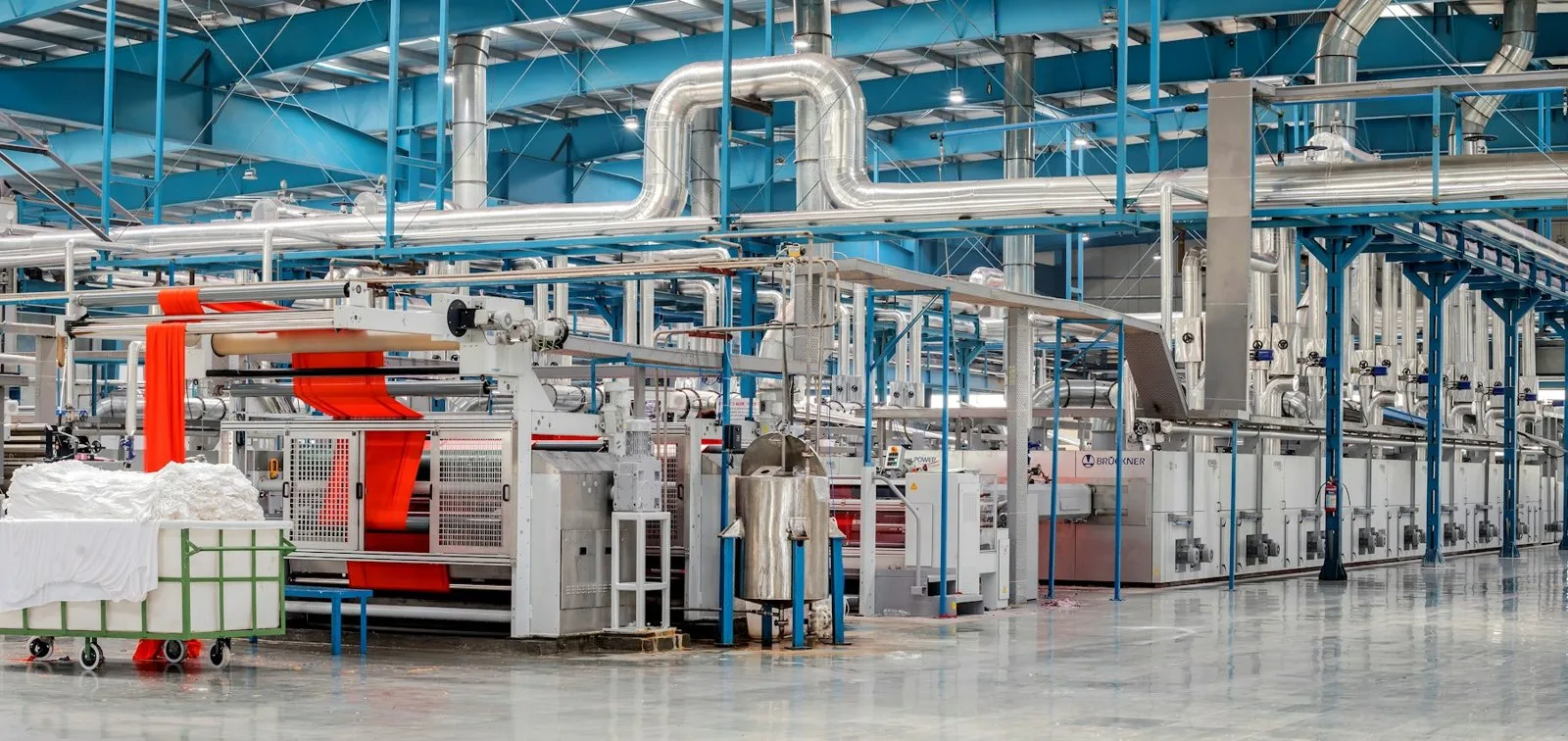
So start with the plant. Ask where the company extrudes the fiber and whether you can visit. Then ask which base polymer the company buys and whether any recycled material goes into the melt. A manufacturer answers at once, because it runs the line every day. If the answers are vague, or the "factory" turns out to be a warehouse, you have learned what you needed to know.
What concrete fiber manufacturers should test in their own lab
An in-house laboratory is what turns a production line into a controlled product. ASTM D7508, the specification for polyolefin chopped strands for use in concrete, names the properties that matter. They include denier, finish content, tensile strength and cut length. Therefore a serious plant measures them batch by batch, not once a year.
Iran's Code 120-4 for polyolefin fiber concrete puts numbers on several of these. For example, it treats fiber of 580 denier or finer as micro and 581 denier or coarser as macro. It also asks macro fiber for a tensile strength above 345 MPa. The code caps spin finish at 1.5% by weight for micro fiber and 1% for macro fiber. In addition, it checks length on a sample of 30 fibers and confirms the polymer by DSC to ASTM D7138. You do not need to run these tests yourself. Still, you should ask which of them the plant runs, and how often.
Next, look at the quality system around the lab. An ISO 9001 certificate shows that the plant writes its procedures down and an auditor checks them. It does not prove that the fiber is good. Instead, it tells you that the plant can trace a problem when one appears. Ask for the certificate, and check that its scope covers fiber production, not only sales.
Batch certificates that match your bags
Every bag should carry a batch or lot number, and every batch should have its own quality-control certificate. The two must match. A single certificate reused for every delivery tells you nothing about the fiber in front of you. Similarly, a certificate with no batch number cannot be linked to anything at all.
Check this at delivery, not after the pour. Pick a few bags from different pallets and compare their numbers with the paperwork. If the site engineer keeps one copy per delivery, any later question about the concrete has a clear starting point. Our guide to Code 120-4 for polyolefin fiber concrete lists what the supervisor checks on the concrete side.
Test reports for the method your specification names
A data sheet gives typical values. A test report, by contrast, shows what a named laboratory measured on a named product with a named method. Specifications usually ask for the second. For example, ASTM C1116 classifies fiber-reinforced concrete by fiber type, and synthetic fiber falls under Type III. A macro fiber for a slab may also need flexural results to ASTM C1609. Shotcrete specifications, on the other hand, usually rely on the round panel test of ASTM C1550.
So ask for the report that matches your specification, on the grade you are buying. A brochure figure for "the fiber" in general is not the same thing. Also, read base polymer values with care. Figures such as a tensile strength above 550 MPa or a melting point of 160 to 170 °C describe the polymer, not a batch guarantee. The batch certificate and the method report are what you can hold a supplier to.
Technical support before the order
The best concrete fiber manufacturers sell a dose, not just a bag. That starts with the right type. ACI notes that synthetic microfibers and macrofibers do different jobs. Microfibers mainly control plastic shrinkage cracks, while macrofibers improve how concrete behaves after it cracks. A supplier who offers one product for every job has skipped that step.
Next comes the dose. The supplier should design it from the section, the loading and the exposure, and it should sit inside the band of the chosen grade. For instance, our fine monofilament polypropylene concrete fibers go in at 0.6 to 1.2 kg/m³. In contrast, our macro synthetic fibers for concrete run from 2 to 9 kg/m³, depending on grade and use. Finally, ask whether fiber may replace mesh in your element. The honest answer is that it replaces crack-control mesh and temperature steel only where the designer permits, and never structural rebar.
A short checklist for the first call
| Ask | A good answer |
| Where is the fiber made? | On the company's own extrusion line, at an address you can visit |
| Which polymer goes in? | A named polymer, and no recycled material where virgin is claimed |
| How is each batch controlled? | A batch number on every bag and a certificate that matches it |
| Which test reports can you send? | The method your specification names, on the grade you are buying |
| How is the dose set? | Designed from section, loading and exposure, in kg per cubic metre |
| Can we trial it first? | A free sample for a trial batch with your own materials |
Samples and a trial mix with your own materials
No document replaces a trial. Ask for a sample large enough for a trial batch with your own cement, aggregates and admixtures. Then watch the slump, the dispersion and the finish. If the project needs residual strength, cast the beams or panels your specification calls for. Our trial mix test plan sets out the steps. For quick checks on the fiber itself, see six checks for virgin polypropylene fiber.

Look at the packaging at the same time. Fiber in pre-weighed bags that dissolve in the mixer goes into the drum unopened, so the dose stays right. Loose fiber, however, needs weighing for every load, and that is where errors creep in.
Red flags when comparing concrete fiber manufacturers
No batch number on the bag, or one certificate for every delivery.
The seller refuses a factory visit, or gives no plant address at all.
"Replaces rebar" with no conditions attached.
Doses quoted as a percentage of cement weight instead of kilograms per cubic metre.
Promises that fiber will multiply compressive strength. Code 120-4 itself expects no noticeable change at low to moderate doses.
Test values with no method, no laboratory and no date.
Polyguard is a manufacturer in this sense. We make every grade from 100% virgin polypropylene on automatic extrusion lines, under an ISO 9001 quality system with an in-house laboratory. Each production batch has its own QC certificate, and we issue test reports for the method your specification names on request. The fiber ships in 3 kg and 5 kg water-soluble bags. If you are comparing concrete fiber manufacturers for a project, send your drawings to our concrete fiber supplier desk. Our technical team designs the dose free of charge and sends a sample for your trial. If you are new to the material, start with how concrete fiber works.
Frequently Asked Questions
How can I tell if a concrete fiber company is a real manufacturer?
Ask where the fiber is extruded, whether you can visit the plant and which base polymer goes into the melt. A manufacturer answers at once because it runs the line every day; a trader usually cannot say which line made a given bag or how the batch tested.
What documents should a concrete fiber manufacturer provide?
A data sheet for the grade, a quality-control certificate for each batch that matches the batch number on the bags, and a test report for the method your specification names, on the grade you are buying. A free sample for a trial batch should come with them.
Is an ISO 9001 certificate enough to trust a fiber manufacturer?
No. ISO 9001 shows that procedures are written down and audited, so a problem can be traced. It does not prove the fiber is good, so you still need batch certificates, method test reports and your own trial mix. Check that the certificate's scope covers fiber production.
Can fiber from a good manufacturer replace rebar?
No. Fiber can replace crack-control mesh and temperature steel only where the designer permits, and never structural rebar. A seller who promises otherwise without conditions is a red flag.