Epoxy over fiber concrete works well, but only if you plan for the coating before the first truck arrives. The fiber, the finishing crew, the curing method and the coating installer all work on the same top few millimetres of slab. That is why the key decisions come before the pour: tell the coating or polishing contractor early, pick the grade the design needs, cast a mockup, and finish late with flat blades. After that come surface preparation, a primer coat that stiffens raised fibers so the installer can sand them off, and a moisture check before any resin goes down.
This guide is about the specification and the order of work. For a hairy surface on an ordinary slab, see our guide to fibers sticking out of concrete.
Why epoxy over fiber concrete starts at the design stage
A coating only bonds to what is on top. Curing compound, weak paste and loose fibers all become the coating's problem. Any fiber left standing in the surface ends up inside the coating film. Most of these problems are cheap to prevent but expensive to fix later.
So the first step is a phone call. Tell the coating or polishing contractor that the slab carries fiber, which grade and which dose. Then ask three questions:
- What surface do they want, and how will they prepare it?
- Which curing method can their system accept?
- How do they deal with raised fibers?
Write the answers into the concrete specification, not into a site memo. Also send the installer the fiber data sheet.
Micro or macro: choose by the design, then plan the finish
The coating does not change what the slab has to do. The American Concrete Institute separates the two families clearly. Synthetic microfibers are under 0.3 mm in diameter and mainly control plastic shrinkage cracking. Macrofibers are 0.3 mm or thicker, and they improve post-crack behavior.
So choose the grade by what the floor needs. For early-age crack control, Polyguard's PG MS-12 micro grade goes in at 0.6 to 1.2 kg/m³. For industrial floors and slabs on ground, the PG MF-54 macro grade is dosed at 3 to 7 kg/m³. Macro synthetic fibers for concrete can replace crack-control mesh and temperature steel where the design permits. However, they never replace structural rebar. Both grades are on our products page.
Do not swap macro for micro just because the floor gets epoxy, because a thin resin film does not control cracks in the slab. Instead, plan the finish around the fiber you need. Macro fibers are thicker and stiffer, so any that reach the surface stay upright. Fine polypropylene concrete fibers are softer, but they need the same care.
| Floor finish | What the fiber affects | Agree before the pour |
|---|---|---|
| Epoxy coating | Fibers raised by preparation | Surface profile, primer and sanding, curing |
| Clear sealer | Fibers visible under the film | Finish target, mockup |
| Polished concrete | Fibers cut at the grind depth | Exposure level, mockup |
Cast a mockup panel and test the whole system
ACI recommends a finishing trial or mockup before placement, so the crew gains practice and everyone confirms the look. For a coated floor, take it one step further.
First, cast the panel with the same mix, dose, crew and tools. Next, cure it the way the floor will cure. Then let the coating contractor prepare, prime and sand it, or let the polisher grind it to the planned depth. If fibers show through, you can still change the plan, since nothing has been poured. Our fiber reinforced concrete trial mix plan shows how to add a panel, and we supply a free sample for trial batching.
A finishing sequence that keeps fibers down
Every fiber you bury now is one the installer does not have to sand later. The precast association's note NPCA Tech Notes TN0420 sets out the main points:
- Use magnesium floats, not wood, because magnesium closes small tears around fibers.
- Wait. Fiber concrete bleeds evenly, so it can look ready too early.
- Do not trowel too early, because premature troweling pulls fibers to the surface.
- Keep the blades flat for as long as possible.
- If fibers appear during troweling, stop for about fifteen minutes.
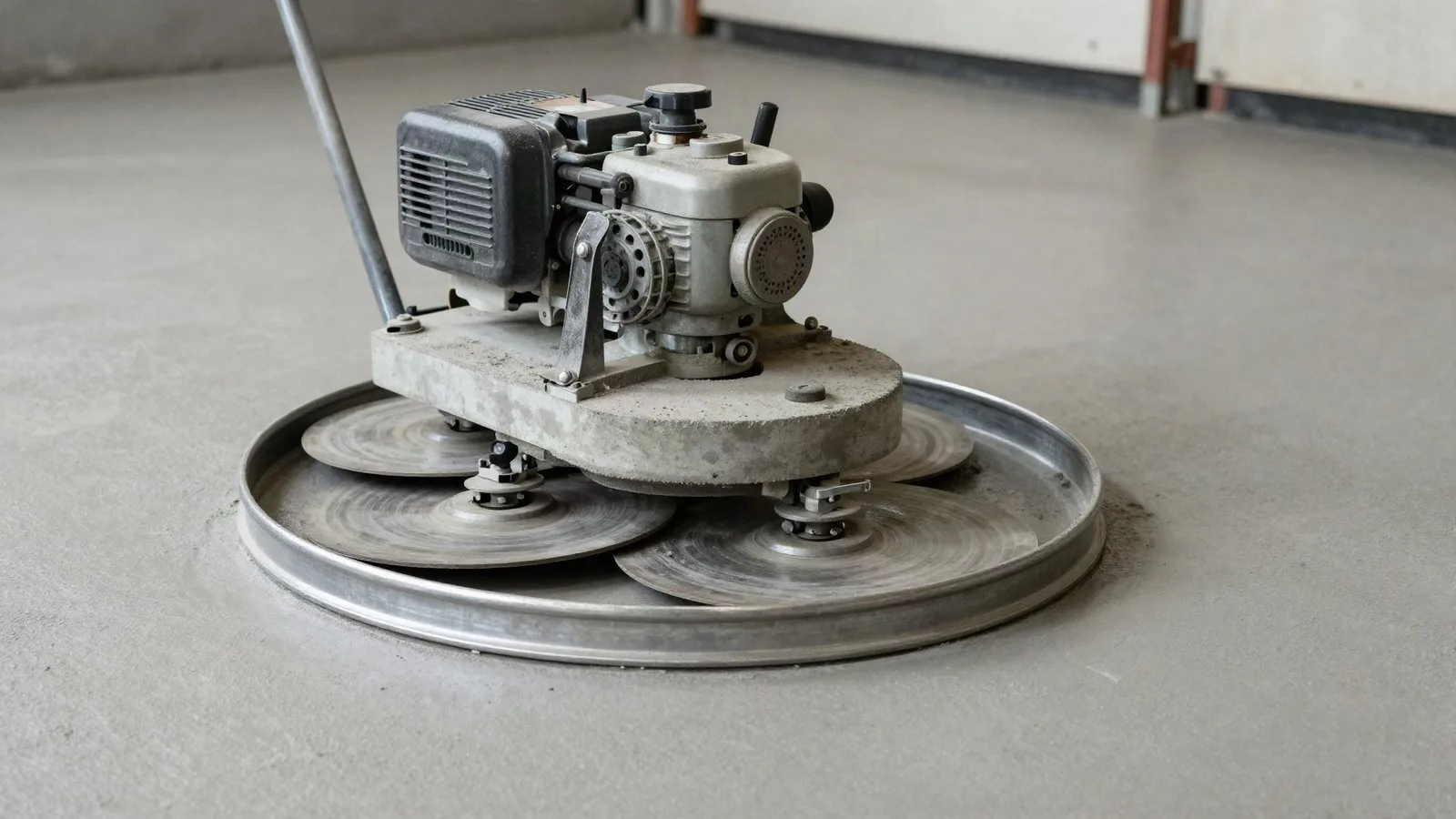
For industrial floors, our technical team can attend the first pour on request and go through this sequence with the crew. More on fiber in floors is on our industrial flooring page.
Surface preparation and profile for the coating
The industry yardstick here is ICRI Technical Guideline 310.2R-2013, which covers how to select and specify surface preparation for sealers, coatings and overlays. As an AMPP CoatingsPro article on concrete surface profile explains, the ten ICRI chips run from CSP 1, very smooth, to CSP 10, very rough. The profile itself comes from blasting, acid etching or impact and scarifying tools.
The coating system sets the profile, and the profile sets the method. This is where epoxy over fiber concrete needs extra thought. Mechanical preparation strips the finished paste, so the fibers in it come up with the texture. A deeper profile removes more paste, so it usually raises more fiber.
For that reason, prepare the mockup to the specified CSP. If the panel looks right, the floor usually follows. If it does not, change the finishing plan, not the profile the coating needs.
Primer first, then sand the raised fibers
Raised fibers are easier to remove once they are stiff, and one simple method follows from that. After preparation, the installer spreads a thin first coat of epoxy with a squeegee and back roller. Once it hardens, the fibers stand locked and stiff. Then a floor sander with a fine screen takes them off. Finally, the crew vacuums and wipes the floor before the normal system goes on.
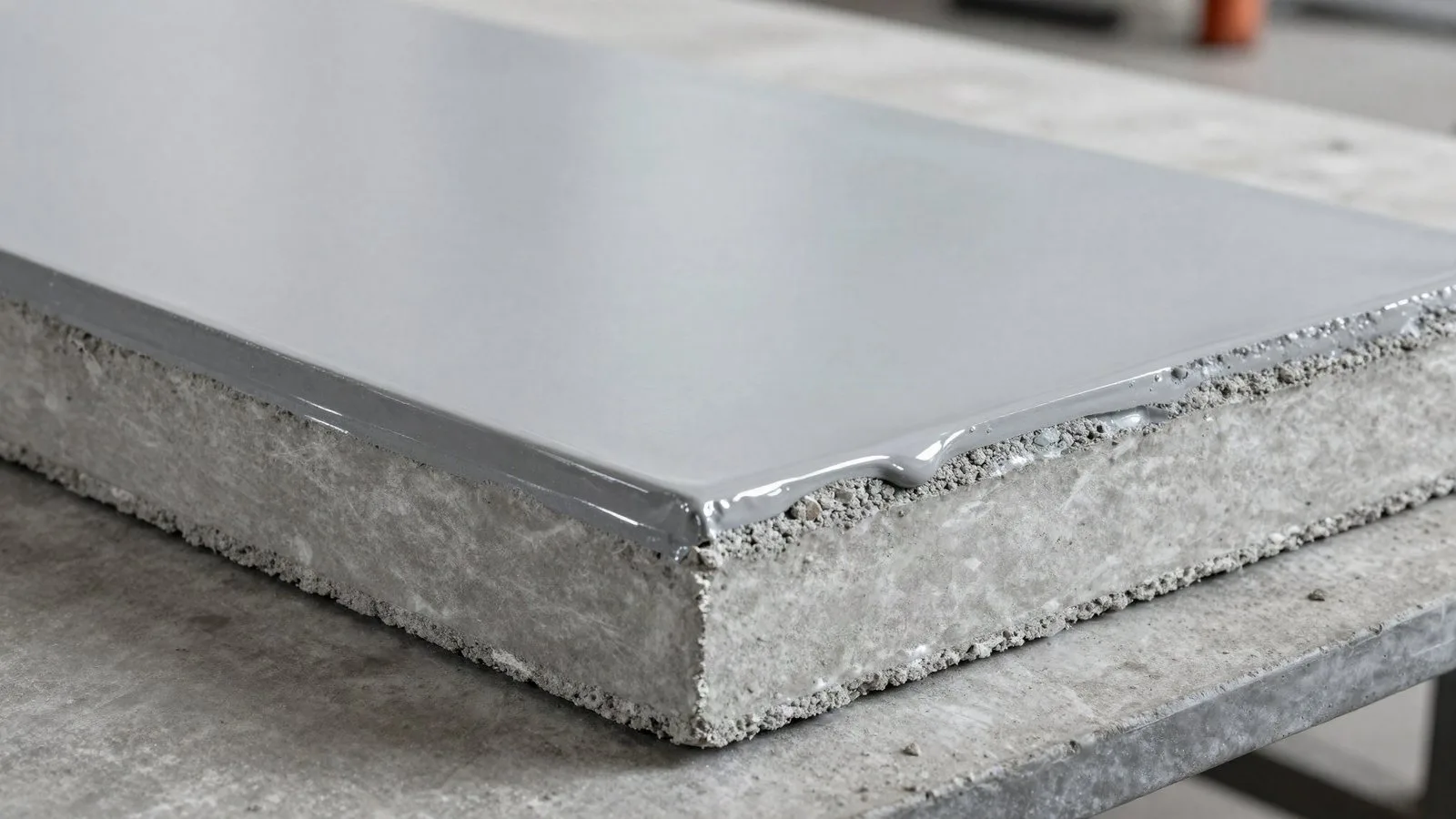
Treat this as a method to agree with your installer, not a standard, and follow your coating's own data sheet.
Polished floors: decide how deep the grinder goes
Polishing is different, because the grinder removes the troweled paste on purpose. The fibers sit through the whole depth of the slab. So every millimetre you grind exposes the fibers in that layer, cut flush. Good finishing only helps with the very top.
ACI notes that fibers do not change the color of fiber concrete, but visible fibers of a different color can change the look. That is why the owner should choose the exposure level before the pour, then approve a mockup ground to that depth. If the owner wants deep exposure with no fiber in sight, talk to the designer first.
Curing and moisture before the coating goes down
Curing compound can be a hidden conflict with epoxy over fiber concrete. NRMCA's curing guide, CIP 11, recommends wax-free curing materials for surfaces that will be painted or get a bonded covering. It also notes that some compounds are made to dissipate or to suit surface treatments. So agree the curing method with the installer before the pour. Do not skip curing to make coating easier, because the slab still needs it.
Moisture is the last gate. A quick check is the plastic sheet method, ASTM D4263, which indicates capillary moisture before coating. For a measured answer, ASTM F2170 reads relative humidity inside the slab with in-place probes. Floor covering makers generally ask for moisture testing before they install, so use the test and the limit your coating's data sheet names.
If you are planning a coated or polished floor, send us the slab section, the loading and the exposure. Our technical team designs the dose free, and every batch has its own QC certificate. To compare a concrete fiber supplier for the job, start on our buy page.
Frequently Asked Questions
Can you put epoxy over fiber reinforced concrete?
Yes. Tell the coating contractor about the fiber before the pour, finish late with flat blades, prepare to the profile the coating names, and deal with raised fibers before the main coats go on.
How do coating installers remove fibers before epoxy?
One method is to apply a thin first coat of epoxy after surface preparation, let it harden so the fibers stand stiff, then sand them off with a floor sander, vacuum and continue with the normal system. Agree the method with your installer and follow the coating's data sheet.
Should I use micro or macro fiber under an epoxy floor?
Choose by what the slab has to do, not by the coating. Micro fiber controls plastic shrinkage cracking; macro fiber improves post-crack behavior and can replace crack-control mesh where the design permits. Then plan finishing and preparation for that fiber.
Does curing compound affect epoxy adhesion?
It can. NRMCA recommends wax-free curing materials for surfaces that will be painted or get a bonded covering, so agree the curing method with the coating installer before the pour.
Will polishing a fiber slab expose the fibers?
Grinding exposes the fibers in every layer it removes, cut flush with the surface. Choose the exposure level before the pour and grind a mockup panel to that depth to see the result.