Glass fiber reinforced concrete — GFRC or GRC — is a distinct material rather than ordinary concrete with glass added. It is used to make thin, light, sharply detailed architectural elements that ordinary reinforced concrete cannot produce, and it has one chemistry problem that governs everything about how it is specified.
What GFRC is
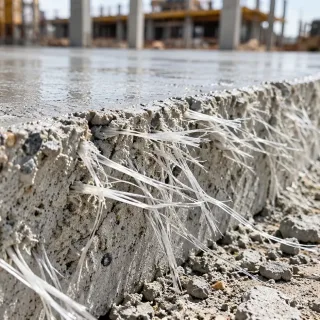
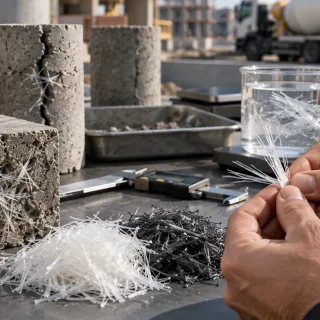
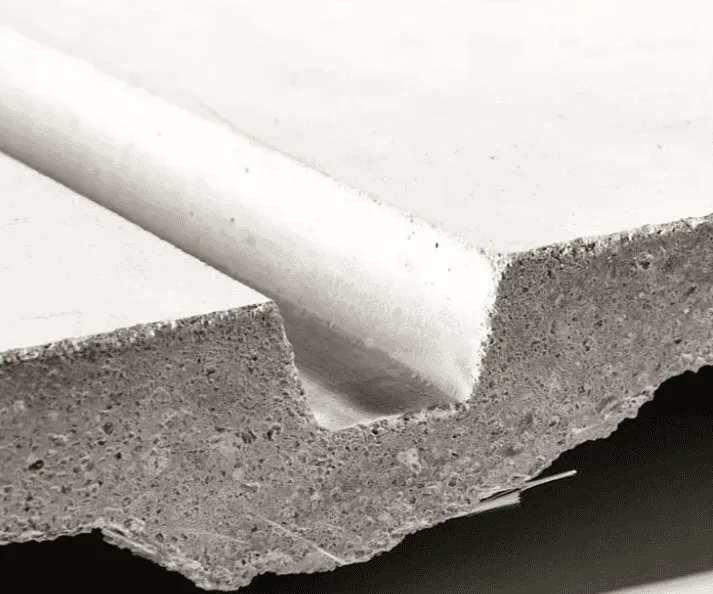
GFRC is a cementitious matrix — usually cement, fine sand, water, polymer and admixtures, with no coarse aggregate — reinforced with alkali-resistant glass fibre at roughly 3 to 5 percent by weight. Because there is no coarse aggregate and the reinforcement is the fibre itself, sections can be 10 to 20 mm thick instead of the 100 mm or more a steel-reinforced panel would need.
The result is a panel a fraction of the weight, able to hold fine surface detail, with no reinforcement cover requirement.
The alkali problem in glass fiber reinforced concrete
Ordinary E-glass is attacked by the alkaline pore solution of hardened cement, which sits at pH 12.5 to 13.5. The fibre surface is progressively etched, strength falls and the composite embrittles over years. Early GRC products in the 1970s failed this way and the material's reputation took a long time to recover.
The fix is alkali-resistant glass, AR-glass, containing around 16 percent zirconia, specified in ASTM C1666. Any permanent GFRC element must use AR-glass. If a supplier cannot state the zirconia content, that is the question to press.
How it is produced
Spray-up. Chopped fibre and slurry are sprayed simultaneously into a mould. Higher fibre content, better mechanical performance, more labour.
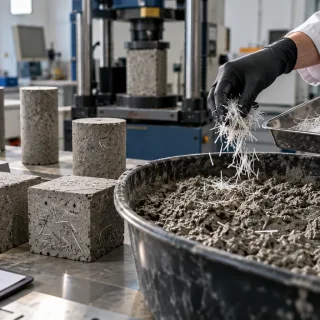
Premix. Chopped fibre is mixed into the slurry and then cast or poured. Lower fibre content and lower strength, but faster and better suited to repetitive units.
Where it is used
Architectural facade panels and cladding
Cornices, columns, balustrades and decorative restoration work
Permanent formwork
Street furniture, planters and urban sculpture
Sound barriers and cable ducts
The pattern: thin, light, visually detailed, not carrying primary structural load.
What it is not for
Glass fiber reinforced concrete is not a slab material. For an industrial floor, a tunnel lining or a raft, the reinforcement question is post-crack residual strength in a thick section under load, and there the answer is macro synthetic or steel fiber measured under ASTM C1609, not glass.
Glass fibre is also not the material for fire spalling protection — that role belongs to micro polypropylene, which melts at the right temperature to relieve vapour pressure.
GFRC against macro synthetic
These solve different problems and are rarely alternatives. GFRC makes a thin architectural element possible. Macro synthetic fibre gives a structural slab measurable capacity after cracking. A project may well use both: GFRC facade panels on a building whose floors are fiber-reinforced concrete.
Where the two do meet is precast: for thicker precast and facade units carrying handling stresses, macro synthetic at 2 to 5 kg/m³ is usually the more economical answer, and it will not rust-bleed on an exposed face. See the precast and facade page, the fiber range, and the standards page for classification detail. The cost calculators price a fiber dose against a mesh layer, and our technical desk will design the dose against your unit type.