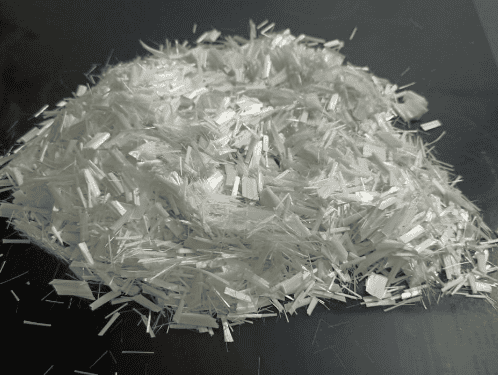
The use of fibers in construction dates back thousands of years. In ancient civilizations such as Egypt and Greece, natural materials like hair, straw, or plant fibers were mixed with clay and ceramics to improve durability and prevent cracking and failure. These early experiences laid the foundation for the development of modern fibers used in today’s concrete industry.
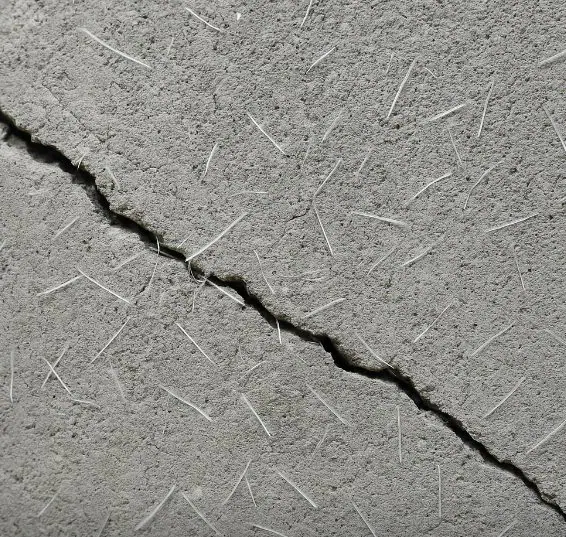
Concrete, as one of the most widely used construction materials, has high compressive strength but performs poorly under tensile forces and bending stresses. For this reason, incorporating fibers into concrete emerged as an effective engineering solution to enhance tensile strength, control surface cracking, and improve the overall durability of structures.
In this article, we introduce 10 commonly used types of fibers in concrete and examine their applications in improving mechanical performance and structural durability.
Introduction to 10 Commonly Used Fiber Types in Concrete and Their Applications
Concrete fibers are produced in various types, each designed—based on its material and properties—to improve specific characteristics of concrete. Below, you will find the most common fiber types used in concrete and their roles in increasing strength, durability, and overall performance.
1. Metallic Fibers
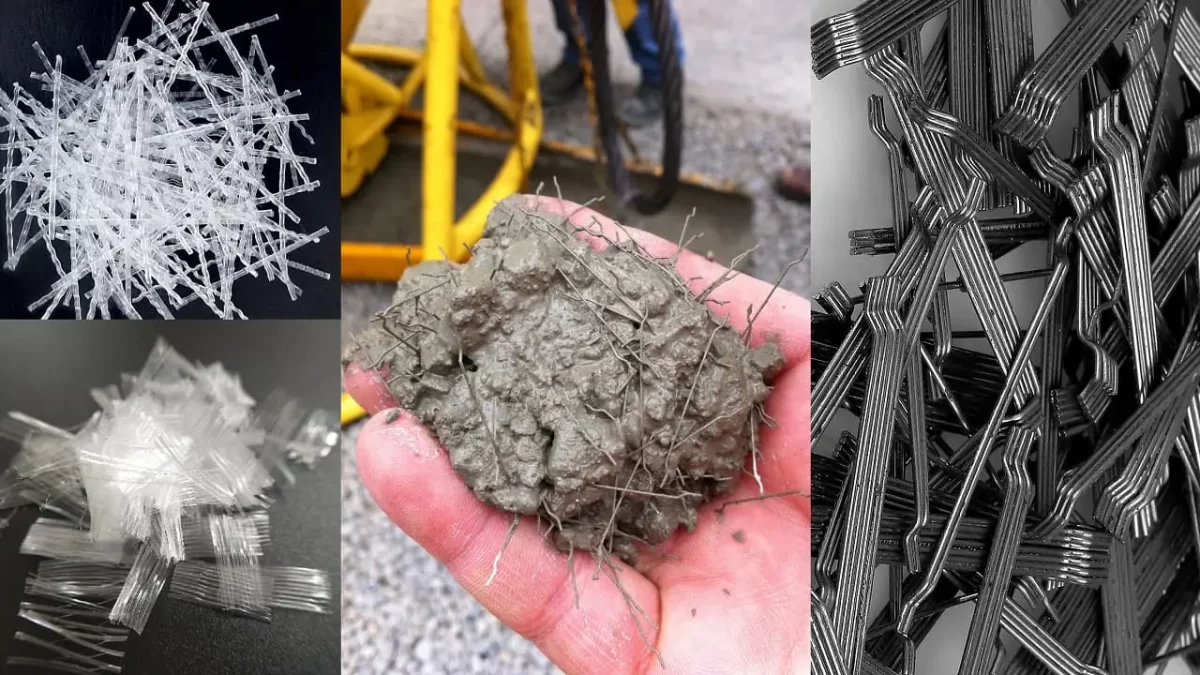
Metallic fibers, primarily steel fibers, are among the earliest and most widely used fiber types in concrete. These fibers enhance tensile strength, prevent sudden brittle failure under load, and increase impact resistance. They are commonly used in industrial flooring, precast elements, concrete pipes, and shotcrete. Their diameter is typically around 1 mm, with lengths ranging from 25 to 60 mm.
2. Polypropylene (PP) Fibers
Polypropylene fibers are among the most common fibers used in concrete due to their affordability, light weight, and high durability. Made from synthetic polymers, they offer excellent chemical resistance and help reduce concrete shrinkage. These fibers minimize drying shrinkage cracks and enhance concrete durability in moist environments.
Key applications include coastal structures, water tanks, and moisture-resistant flooring systems.
3. Carbon Fibers
Carbon fibers, with their exceptionally strong structure and low weight, are among the most advanced fiber types used in concrete. They have a high modulus of elasticity, excellent fatigue and corrosion resistance, and can provide tensile strength up to ten times greater than steel fibers. Carbon fibers are mainly used in specialized structures, structural strengthening, and high-performance concrete. Their high cost and sensitive handling requirements are the main challenges.
4. Polyester Fibers
Polyester fibers are synthetic polymer fibers known for their high resistance to tension, abrasion, and chemical attack. They help prevent the spread of shrinkage cracks, reduce permeability, and improve concrete durability.
They are commonly used in concrete pavements, parking structures, precast elements, and structures exposed to vibration and moisture.
5. Glass Fibers
Glass fibers, composed of very fine filaments (fiberglass), improve tensile strength and durability by providing strong bonding within the cement matrix. They are lightweight, cost-effective, and offer good thermal stability. Glass fibers are widely used in precast products, façade panels, flooring systems, and architectural concrete. Among them, E-glass is the most common and economical option.
6. Aramid Fibers (Kevlar)
Aramid fibers, commonly known by the brand name Kevlar, are among the strongest materials used in specialized concrete. They provide tensile strength up to five times greater than steel fibers and offer excellent resistance to heat and chemicals. As a result, they are used in special structures such as bridges, military facilities, and environments with extreme conditions. Their high production cost is the main limitation.
7. Macrosynthetic Fibers
Macrosynthetic (plastic) fibers can partially replace reinforcing steel in certain structures, reducing both weight and overall project cost. Made from polymer compounds, these fibers enhance flexural strength and reduce shrinkage cracking. Typical dosages range from 1 to 4 kg per cubic meter of concrete. They are widely used in warehouse floors, concrete pavements, and repair applications.
8. Microsynthetic Fibers
The application of microsynthetic fibers in concrete is broader than commonly recognized. Due to their fine and uniform structure, these fibers reduce early-age surface cracking, lower permeability, and improve shear resistance.
For example, microfibers—usually made of polypropylene—are extremely fine fibers that disperse uniformly throughout the concrete. With diameters of approximately 18 microns, they prevent early-age plastic shrinkage cracking, reduce permeability, and increase shear strength, improving durability in moist conditions. Microsynthetic fibers are widely used in shotcrete, piling works, and retaining walls.
9. Natural Fibers
Natural fibers such as straw, animal hair, coconut fiber, bamboo, and plant fibers are among the oldest concrete reinforcement materials. These fibers are environmentally friendly, reduce production costs, and are widely used in developing countries. Although their mechanical strength is lower than industrial fibers, their high water absorption capacity and good thermal insulation properties make them suitable for low-cost or local construction projects.
10. Cellulosic Fibers
Cellulosic fibers, derived from plant-based sources such as cotton or flax, are among the most natural and economical fibers used in concrete. By forming an internal network, they reduce shrinkage and surface delamination. To ensure uniform mixing, these fibers should be pre-wetted, and the water–cement ratio must be carefully controlled. Cellulosic fibers are commonly used in lightweight components, wall panels, and autoclaved concrete products.
Conclusion
Adding fibers to concrete is one of the most effective methods for improving mechanical properties and structural durability. Each of the commonly used fiber types in concrete offers unique advantages—from the high strength of carbon and aramid fibers to the cost-effectiveness of polypropylene and the accessibility of natural fibers. Selecting the appropriate fiber type should be based on project objectives, environmental conditions, and structural requirements. A proper understanding of fiber applications enables engineers to produce more durable, safer, and cost-effective concrete structures.
To view Poly Guard products, please click the provided link.